


Music Mixers article
Music Mixers for Beginners: A Complete Guide
New to music mixers? This beginner's guide demystifies mixing with simple explanations, first steps without jargon, confidence-building exercises, and practical mistakes to avoid.
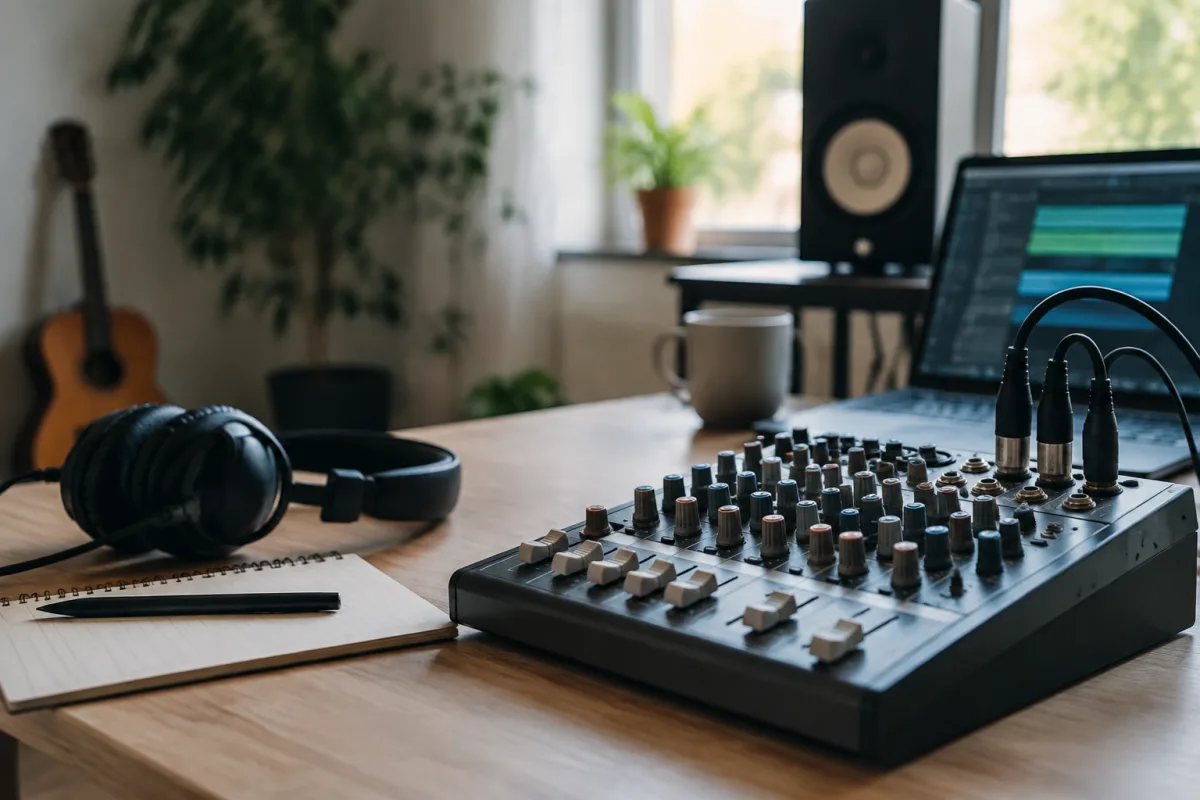
If music mixers seem intimidating with their rows of faders and mysterious buttons, you're not alone—most beginners feel overwhelmed at first. The good news is that learning to use music mixers is far simpler than it appears, and mastering basic mixing will dramatically improve your recorded and live sound quality. This beginner's guide will walk you through the fundamentals without jargon, building your confidence and showing you that mixing is genuinely achievable with practice and patience.
What Music Mixers Actually Do (Simplified)
At its heart, a music mixer is a traffic controller for sound. Imagine a mixer as a central hub where all your audio signals (from microphones, instruments, keyboards, backing tracks) come in, and you decide how loud each one should be, where it should appear in the stereo field, and what effects or processing it receives. The mixer then combines all these individual decisions into one final output that goes to your speakers, recording device, or audience.
You don't need to understand every button and switch to get started. Most mixing happens through a few basic actions: adjusting volume levels, positioning sounds left and right, and sometimes adding effects like reverb. Every experienced mixer started exactly where you are, learning through experimentation and repetition. The learning curve is real but very manageable with the right approach.
Getting Started Without Overthinking It
Your first real mixer session should be simple: bring in one audio source (perhaps a microphone), listen to it, and adjust its volume using the main fader. That's genuinely the core skill. Once you're comfortable with that single fader, add a second source. Gradually build your knowledge rather than trying to master everything simultaneously.
Start with a small, user-friendly mixer. You don't need a massive console with 32 channels and hundreds of features. Beginner-friendly mixers like the Behringer Xenyx or Soundcraft Si Impact series provide all the essential controls without overwhelming complexity. As your skills develop and your needs expand, you can upgrade to more advanced equipment.
Create a simple mental model: inputs on the left (where sound comes in), faders in the middle (where you control volume), and outputs on the right (where sound goes out). This basic framework explains 80% of what your mixer does. The remaining features enhance that core workflow rather than replacing it.
Essential Controls to Learn First
Channel faders are your primary tool—each fader controls the volume of one input. Push it up to make that sound louder, pull it down to make it quieter. Straightforward. Start here and spend at least a few sessions just getting comfortable with fader movement and how it affects your overall mix.
The master fader controls overall output volume. Think of this as your final volume dial. If everything on your mixer is perfectly balanced but too quiet or too loud, adjust the master fader rather than trying to remix everything.
Pan controls position sounds in stereo space, creating width and separation. Move the control left and that sound appears more on the left speaker, move it right and it appears on the right. This simple technique makes mixes sound more spacious and professional with minimal effort.
Gain (or trim) controls set how hot the input signal comes into your mixer. Think of this as the "pre-fader" volume—it determines the loudness of the incoming signal before the channel fader. For beginners, set gain to a moderate level and let the channel faders do the mixing.
Building Your First Mix: A Beginner Workflow
Step one: bring all your input levels to unity gain (typically marked with a line on the fader around the middle). This gives you equal starting volume on each channel, making comparison and balance easier.
Step two: listen to your mix from the perspective of a listener, not an engineer. Don't overthink it—simply listen and identify what sounds too quiet or too loud. This develops your ear and intuition, which is genuinely more important than understanding technical specifications.
Step three: adjust one fader at a time, moving it gradually while listening. Small adjustments often work better than large ones. Make a change, listen for 5-10 seconds, then decide if you need more adjustment.
Step four: use pan controls to create separation and width. If you have vocals and guitars, panning them slightly left and right creates a sense of space. Don't pan everything hard left and right—that sounds artificial. Subtle panning works best for beginners.
Common Beginner Mistakes to Avoid
The biggest beginner mistake is chasing perfection immediately. Your first mixes won't be studio-quality, and that's completely normal. Experienced mixers took hundreds or thousands of hours to reach their skill level. Give yourself grace and focus on improvement rather than perfection.
Mixing at high volumes creates listener fatigue and distorts your perception. Your ears get tired, and you compensate by making odd choices. Lower the overall volume when mixing, protecting your hearing and making better decisions. Mixing at 70-80 dB (moderate conversation volume) is standard practice.
Don't touch every control available. Beginners often assume more complexity equals better results. Restraint and simplicity frequently produce better mixes than complicated processing. Master the basics before exploring advanced features.
Resist the urge to add reverb to everything. Many beginners drench their mixes in effects, making everything sound distant and unclear. Effects should enhance, not dominate. Start without reverb and add only tiny amounts if something needs it.
Building Confidence Through Practice
Mixing improves dramatically with repetition. Mix the same material multiple times—each attempt teaches you something new. Your ear develops familiarity with the content, allowing you to focus more on technique than fighting the material itself.
Compare your mixes to professional recordings in the same genre. Listen to how they balance vocals, instruments, and space. This develops "reference ears" that intuitively guide your mixing decisions without conscious technical analysis.
Record your mixes and listen to them on different equipment—your phone, a car stereo, laptop speakers. What sounds good on studio monitors might not translate to consumer playback. This crucial check catches mixing mistakes before sharing your work publicly.
Share your early work with trusted musicians and accept constructive feedback. Beginner mixers often miss obvious balance issues that fresh ears immediately notice. Feedback accelerates your learning curve tremendously.
Equipment Considerations for Beginners
A decent set of headphones or small monitor speakers is more important than a fancy mixer. You need to hear what you're actually mixing. Cheap playback equipment means cheap-sounding mixes. Invest in listening equipment before upgrading your mixer.
A simple audio interface connects your mixer to your computer for recording, allowing you to capture your mixes digitally. Start with an affordable interface; expensive options exist for professionals, but beginners don't need them.
Acoustic treatment—sound-absorbing materials on your walls—improves your hearing environment significantly. Even basic treatment (foam panels on reflection points) reduces misleading room reflections that trick your ears into making bad mixing decisions.
To understand mixing theory and principles underlying modern practice, review the complete guide to music mixers, which covers mixing history, technical foundations, and advanced concepts as your skills develop.
Your Path Forward
Mixing is genuinely learnable, and you'll improve faster than you expect if you practice consistently. Start simple, work with one concept at a time, listen carefully, and don't overthink it. The nervous beginner anxiety fades quickly once you've completed a few mixes and realised you're capable of producing solid results. Embrace the learning process, enjoy the creative control mixing provides, and remember that every accomplished mixer started exactly where you are now.


Comments