


Guitar to Speaker article
Guitar To Speaker for Beginners: A Complete Guide
Master your first guitar amplifier setup with clear guidance on cable connection, amplifier selection, tone shaping, and confident troubleshooting.
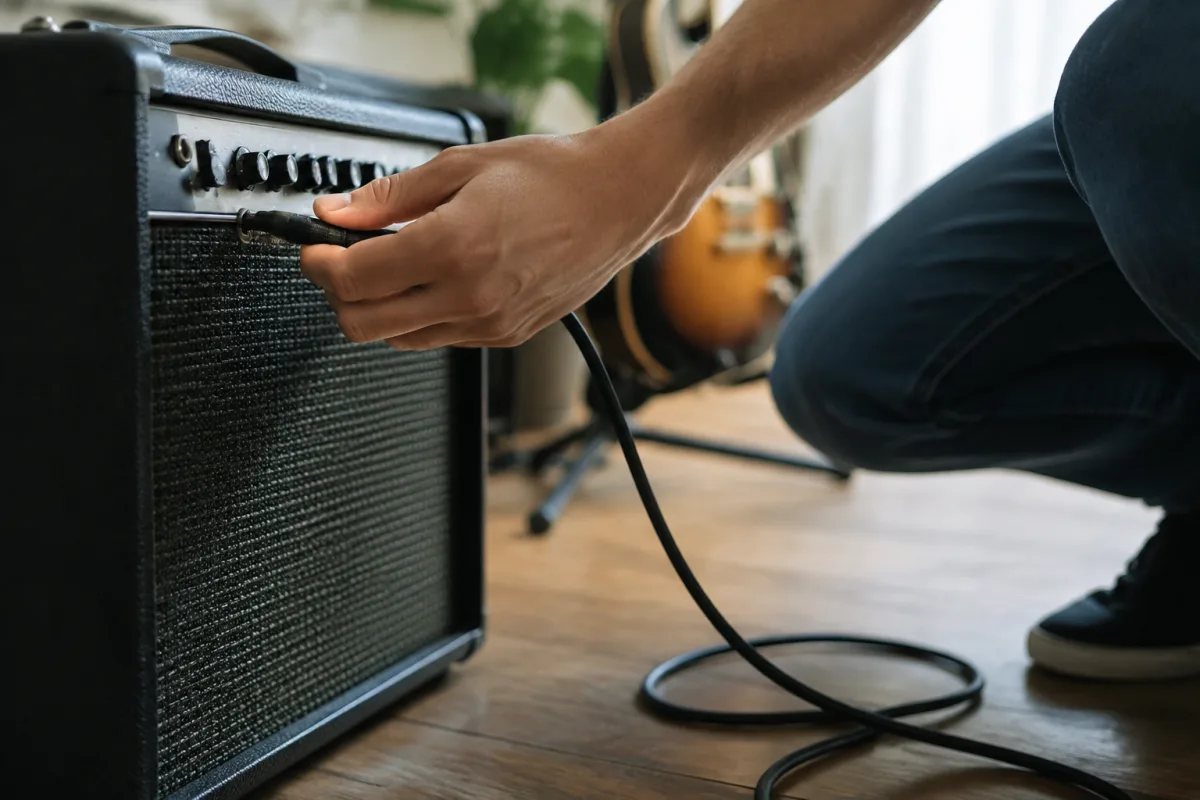
Picking up your first guitar and hearing it properly amplified is transformative. That moment when you plug in and sound flows through speakers creates immediate inspiration. However, connecting guitar to speaker confuses many beginners: Which cable goes where? Why are there different connector types? Do I need expensive equipment? This beginner's guide walks through simple, confident guitar-to-speaker connection, ensuring your first amplified experience is encouraging rather than frustrating.
Demystifying Guitar-to-Speaker Connections
Guitar connection is refreshingly straightforward despite appearing complex. Your guitar produces tiny electrical signals that require amplification before powering speakers. Signal flows from guitar, through cables and amplifier, finally reaching speakers that convert electrical signals into audible sound. This pathway is universal; every electric guitar player follows this identical route.
You don't need studio-grade equipment to hear your guitar beautifully. A modest amplifier costing £50–150 connects to any speakers and delivers adequate volume for bedroom practice and small rehearsals. Expensive equipment enhances tone quality, but beginners benefit more from confident basic connection than premium gear operated uncertainly.
All necessary equipment—guitar cable, amplifier, and speakers—uses standard connectors designed for idiot-proof connection. Plugging things in wrong doesn't break equipment; it simply produces no sound. This safety margin allows experimental exploration without damage risk. Experiment freely; the worst outcome is restarting and trying again.
Understanding Your Cable Connections
Guitar cables are simple: they connect your guitar's output jack to an amplifier's input jack. Both ends look identical—quarter-inch plugs that fit snugly into matching jacks. Guitar cables are designed specifically for instrument use; don't substitute audio cables from headphone systems or other sources—they're physically similar but may not produce optimal signal.
Inspect both ends of your guitar cable. Each end should have a visible plug with a small tip and surrounding barrel. The tip carries audio signal; the barrel provides ground connection. When plugging in, the cable's circular connector rotates slightly as you push it in—this rotation indicates proper connection. Don't force cables; gentle insertion is sufficient for secure connection.
Quality cables matter less for beginners than proper connection technique. A £5 cable works perfectly for practice once connected correctly. Expensive cables offer marginally improved signal clarity that experienced ears detect; you won't notice sonic differences initially. Focus on confident connection, not premium pricing.
Your First Amplifier: Choosing Beginner-Friendly Equipment
Beginner amplifiers fall into two categories: combo amps (amplifier and speaker combined in one unit) and head/cabinet systems (separate amplifier and speaker cabinet). Combo amps are perfect for beginners—single unit simplicity, no cable confusion, immediate functionality. Choose combo amps initially; once experienced, you can explore head/cabinet configurations if desired.
Wattage indicates maximum volume, not tone quality. A 10-watt amplifier is perfectly adequate for bedroom practice; 20-30 watts suits small rehearsals and performances. Avoid the beginner's mistake of assuming higher wattage sounds better. A clean, well-operated 10-watt amp sounds superior to a harsh 50-watt amplifier pushed too loud.
Features to prioritise: a clean channel (pure guitar tone without distortion) and a straightforward interface without overwhelming controls. Amplifiers with volume, bass, treble, and gain knobs provide all controls needed for excellent beginner results. Ignore fancy features until you understand basic tone shaping.
Your First Connection: Step-by-Step Setup
Gather your equipment: electric guitar, guitar cable, amplifier, and power source. Set the amplifier on a stable surface at comfortable height. Connect the power cable to the amplifier's rear panel. Look for the power socket (usually marked "AC In" or featuring a distinctive power connector) and insert the cable firmly.
Now connect the guitar cable from your guitar's output jack to the amplifier's input jack. Plug the guitar end first, rotating the connector until it seats fully. You'll feel slight resistance—this indicates secure connection. Next, plug the amplifier end into the amplifier's input jack using identical rotation. Both ends now connected, flip the amplifier's power switch to on.
Wait approximately 30 seconds for the amplifier to power up (this is normal; amplifier tubes and circuits need brief warmup). You should see a pilot light illuminate and hear faint hum from the speaker. Now play your guitar. Sound should flow from the amplifier's speaker at low volume. Gradually increase the amplifier's master volume control until the volume feels comfortable for practice.
Understanding Basic Tone Control
Your amplifier's knobs control tone character. Volume controls overall output level—increase for louder sound, decrease for quieter. Bass knob boosts or reduces low frequencies, making tone warmer (high bass) or thinner (low bass). Treble knob controls high frequencies; increase for brighter, sharper tone, decrease for darker, mellower character.
Start with bass and treble at noon position (middle). Play several notes, listening to the tone. Now increase bass by turning the knob right, listening to how the tone becomes warmer. Turn it back to centre, then decrease bass by turning left—notice the thinner tone. Perform identical experiments with the treble knob. This hands-on exploration teaches tone shaping intuitively.
For beginner practice, set volume at 25–30% of maximum, bass at noon, and treble slightly higher (1 o'clock position) for clarity. Play simple melodies, listening to how tone responds to different pickup positions, playing dynamics, and technique. This tonal familiarity develops naturally through playing, not through reading specifications.
Common Beginner Connection Mistakes
Many beginners panic when they don't hear sound immediately, assuming equipment is broken. Troubleshoot systematically: verify the amplifier is powered on (look for pilot light), ensure cables are firmly connected (wiggle connections slightly and listen for sound changes), check volume isn't at zero, and confirm the guitar's volume knob is fully turned up. Following this checklist resolves 95% of beginner connection issues.
Another frequent mistake is plugging the guitar cable into the speaker output jack (usually on the amplifier's rear panel) rather than the input. This produces no sound because speaker outputs send powerful amplified signal outward, not receive input. Input jacks are typically on the amplifier's front panel near the main controls.
Don't assume cable damage when you experience occasional crackling or noise. Loose connections cause most noise issues. Wiggle both cable ends gently; if noise disappears when you move the cable, the connection needs slight adjustment or the cable needs replacement. This diagnostic approach identifies problems quickly.
Many beginners purchase expensive cables believing they prevent noise. Affordable cables work perfectly once connected securely. Focus on confident connection technique rather than premium pricing. Most noise issues reflect poor connection, not cable quality.
Expanding Beyond Basic Connection
Once comfortable with basic guitar-to-amplifier connection, explore effects pedals (small devices that modify guitar tone) placed between guitar and amplifier. Effects are optional but fun; they demonstrate how modifying signal flow creates different tonal possibilities. Start with one effect (distortion or reverb) to understand cause and effect. Multiply effects gradually as comfort increases.
Eventually you might pursue more complex setups: multiple amplifiers, external effects processors, or recording interfaces. These expansions follow identical connection principles—audio flows from source, through processing, to output. Your foundation in basic guitar-to-speaker connection prepares you for any complex configuration you'll eventually attempt.
Embracing Your First Amplified Sound
Your first amplified guitar experience is momentous. The moment sound flows through speakers establishes that playing guitar is tangible, powerful, and immediately gratifying. Cherish this discovery; it sustains motivation through frustration and technical challenges ahead. Every professional guitarist remembers their first amplified note with joy.
Deepening Your Guitar-to-Speaker Knowledge
Once you're comfortable with basic connection and tone control, read the complete guide to guitar to speaker for comprehensive understanding of amplifier types, tone shaping techniques, effects integration, and professional setup configurations. That resource covers advanced connection strategies that elevate your sound beyond beginner fundamentals.
Guitar-to-speaker connection is simple once demystified. Your first setup requires basic confidence, not technical expertise. Follow these foundational principles, and you'll hear your guitar ring through speakers with clarity and warmth. Every amplified passage you play builds on this foundation, developing into the confident tone-shaping skills that define accomplished guitarists.



Comments