


Oasis Guitars article
Oasis Guitars for Beginners: A Complete Guide
Oasis songs are perfect for beginners, but don't get caught in the gear trap. Here's the straightforward path from inspiration to playing your first Oasis songs.
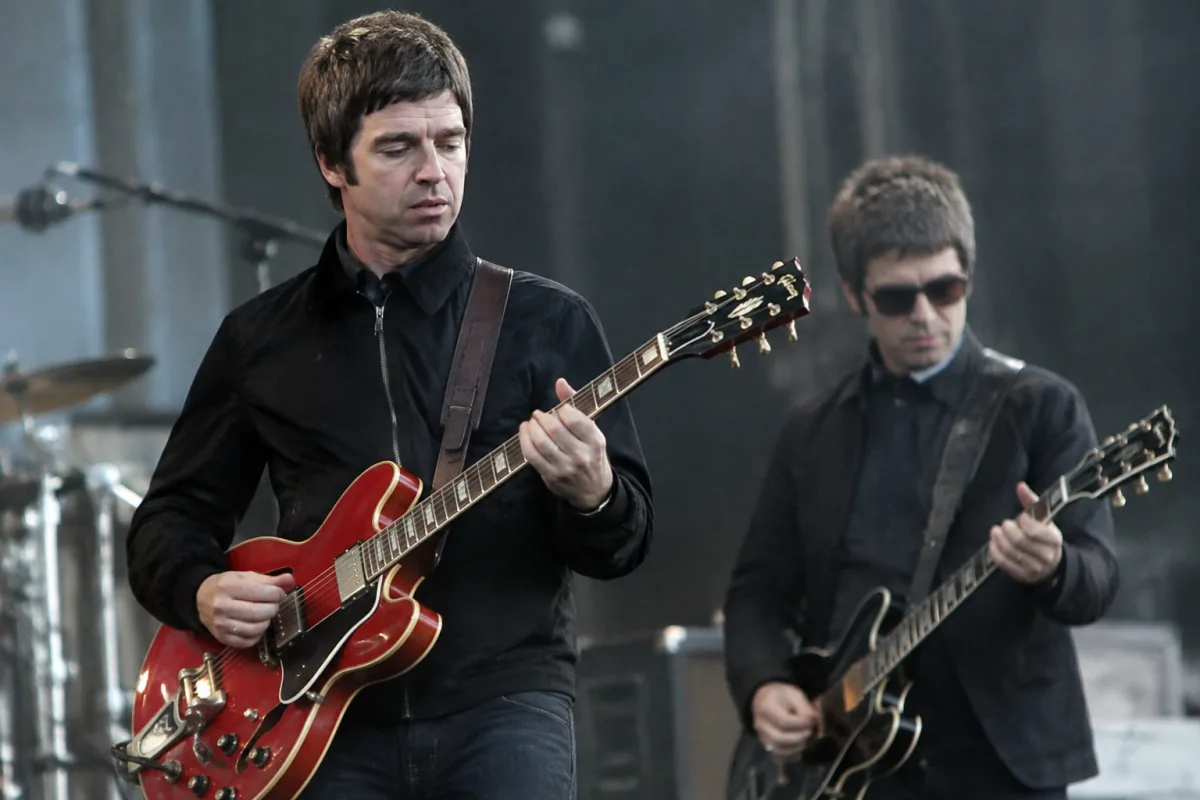
Starting Your Oasis Journey: The Beginner's Path to That Iconic Sound
If you've decided to learn guitar because of Oasis, you've picked an inspired starting point. Their songs are genuinely playable for beginners, their riffs are memorable, and their sound — raw, powerful, undeniable — is instantly recognisable. But before you rush out to replicate Noel's rig note-for-note, here's what actually matters when you're starting out.
The Good News: Oasis Songs Are Beginner-Friendly
This is crucial. Many of Oasis's biggest songs use straightforward open chords and simple power riff patterns. "Wonderwall," "Champagne Supernova," "Don't Look Back in Anger" — these are written in accessible keys (D, Em, G, A) that beginner guitarists genuinely tackle. Their chord changes are smooth, the strumming patterns are rhythmically clear, and there's no extreme finger gymnastics.
Compare that to many 90s bands whose music sounds deceptively simple but requires advanced technique. Oasis songs *are* beginner-accessible, which is partly why they're so compelling to new players. This is not a trap; it's actually an advantage.
The Guitars: Separating Myth from Practicality
Noel Gallagher famously played a Gibson Les Paul and an Epiphone Casino. Liam played various Fenders and Gibsons. If you're imagining you need that exact guitar, stop. You don't.
Here's what actually matters: the guitars Oasis played were decent mid-to-high-range instruments. A well-maintained £400–£600 guitar will teach you exactly what a £1,500 one teaches, just with slightly less polish. A cheap £100 guitar, meanwhile, will frustrate you constantly and make learning harder.
If you love the look of a Casino or a Les Paul, buying a beginner version (an Epiphone Casino or Epiphone Les Paul runs roughly £200–£350) is absolutely fine. You'll learn on it, and if you genuinely fall in love with the instrument, upgrade later. But don't spend money on a "signature" model thinking it'll make you sound like Noel — the player, not the gear, creates that tone.
The Amp: Where Beginners Make Their First Expensive Mistake
Here's the truth about Oasis's sound: it's shaped hugely by amplification. Noel's thick, saturated tone comes from cranking a Marshall amp — a genuinely expensive piece of equipment. Beginners often imagine they need a Marshall to sound right, and they blow their budget on an amp that exceeds their playing skill.
Start small. A 15-watt practice amp (£80–£150) is absolutely adequate for learning. Plug in, dial in a bit of gain, and you'll get enough drive to hear whether your playing is clean. As your technique improves, you'll naturally understand what an amp is actually doing to your tone.
The mistake is backwards: buying a powerful, expensive amp thinking it'll make you sound professional. It won't. Your playing matters infinitely more than your gear.
Pedals: Wait Until You're Ready
Oasis used various effects (distortion, reverb, delay) to shape their sound. As a beginner, forget pedals for now. They're a distraction and an expense. Your amp probably has drive and reverb built in; that's genuinely enough to start.
After six months of consistent practice, if you understand what distortion and reverb do, if you can hear the difference they make, then consider adding a single effects pedal. Until then, they're just shiny things that waste money.
The Actual Path Forward: Song Selection
This is where Oasis's beginner-friendliness shines. Start with "Wonderwall" — it's D major (a beginner key), the strumming pattern is straightforward, and it's genuinely satisfying to play. Once that feels secure, move to "Champagne Supernova" (Em, Am, another beginner-friendly progression).
Learning full Oasis songs — rather than isolated riffs or covers of covers — teaches you song structure, rhythm consistency, and how different sections work together. You're not just practising technique; you're making music.
After five or six Oasis songs, your fingers will be stronger, your ear sharper, and your confidence considerably higher. At that point, you're ready to explore beyond Oasis without losing the foundation they've given you.
Common Beginner Mistakes: Learning from Others
The biggest mistake is copying the gear obsession. New Oasis fans often chase the exact guitar, amp, and pedals before they can play a clean chord change. That's backwards. Play first, spend later.
The second mistake is rushing through Oasis songs in search of difficulty. "Wonderwall" doesn't get easier if you play it faster. Master the rhythm, lock in the feel, let your hands learn the muscle memory. Speed and precision follow naturally; they're not something you force.
The third mistake is isolation. Learning Oasis songs alone is rewarding, but sharing them with other players (a mate with a bass, someone on drums, another guitarist on rhythm) is infinitely more inspiring. Oasis songs were built for bands. If you can, find people to play with.
The Sound: Beyond the Gear
People often assume Oasis's tone comes from their equipment. It doesn't — not primarily. It comes from Noel's playing style: his use of distortion (fuzzy, saturated, but still clear), his rhythmic approach (chunky power chords, deliberate strumming), and his song construction (simple, memorable, effective).
If you focus on learning how to play Oasis songs *properly* — clean chord changes, solid rhythm, confident timing — you'll capture the essence of their approach. The exact amp and guitar matter far less than people think.
A Realistic Timeline
Playing your first Oasis song competently takes roughly 4–8 weeks of regular practice. Playing a full set of their songs (10–15 songs) comfortably takes 3–4 months. This timeline assumes daily or near-daily 30-minute practice sessions.
Don't rush. Oasis songs are meant to groove, and groove comes from comfort and confidence, not speed. A slower, cleaner version of "Wonderwall" is infinitely more musical than a sloppy fast one.
Next Steps: Moving Beyond Oasis
After you've genuinely mastered five or six Oasis songs, you've learned something crucial: British rock songwriting, rhythm-focused composition, and how to make simple progressions sound powerful. These skills transfer everywhere.
At that point, you can branch into other British rock bands (The Beatles, The Stone Roses, The Verve), or you can explore different genres entirely. Oasis has taught you enough that you're no longer dependent on their songs — you're ready to build your own voice.
For deeper context on Oasis guitars, their history, and the specific equipment used by the band, read our complete guide to Oasis guitars.


Comments