


PRS Strap article
Prs Strap for Beginners: A Complete Guide
A PRS strap is more than just an accessory—it affects your posture, comfort, and ability to play standing up. Discover why beginners should invest in quality and how to get the most from your strap.
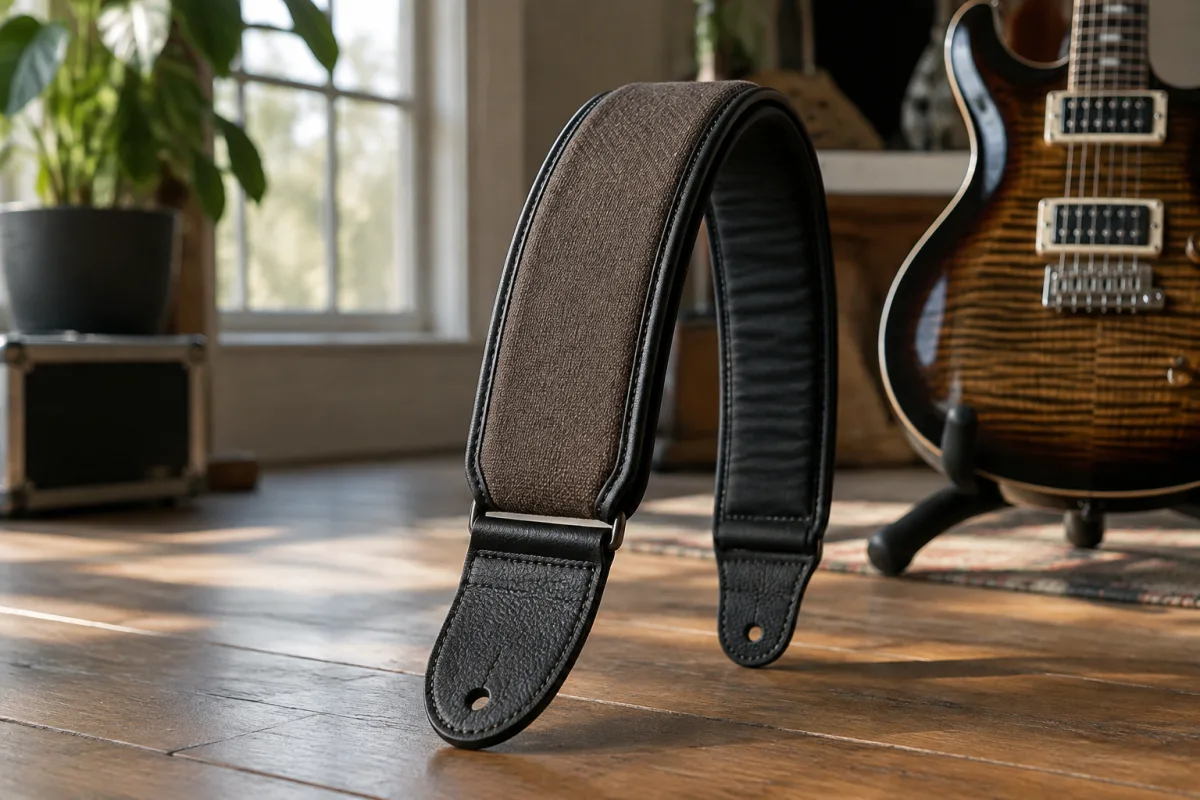
Your first guitar has arrived, and you're ready to start playing. You've spent time on setup, picked your strings, and you're standing with your new instrument in hand. Then someone asks: "Have you got a strap?" If you're playing guitar sitting down, this feels like an optional question. But if you want to stand and play—whether practising at home, playing at open mics, or eventually gigging—you need a strap. A PRS strap is a sensible choice, and here's why it matters for beginners.
Why Beginners Need a Good Guitar Strap
As a beginner, you might not immediately think about a strap as important gear. It seems simple enough—just something to hold your guitar while you stand. But the strap actually affects your posture, comfort, and ultimately how well you play.
A cheap strap forces you into poor posture. It slides down your shoulder, it doesn't distribute weight evenly, and you find yourself hunching forward to keep your guitar stable. After 20 minutes of practice, your neck and shoulders ache. That's no way to learn an instrument.
A PRS strap, by contrast, is built with beginners in mind. These straps are designed to hang comfortably across your body, distributing your guitar's weight evenly. You can stand straight, shoulders back, playing in a position that's ergonomic and sustainable for hours. That matters tremendously when you're developing muscle memory and technique.
Beyond comfort, a quality strap like a PRS strap keeps your guitar secure. You're not constantly adjusting, tugging, or re-centering it. You're focusing on playing rather than fighting with your gear. For beginners building confidence, this makes a genuine difference.
What Makes a PRS Strap Right for Beginners
PRS straps come in various styles and materials, but what they share is durability and thoughtful design. Here's what separates them from budget alternatives:
- Comfort padding: Most PRS straps feature a padded section that rests across your shoulder. This cushioning means you can practise for longer without discomfort.
- Adjustable length: A PRS strap adjusts to suit your height and preferred playing position, whether you're sitting-to-standing or prefer a higher or lower instrument position.
- Secure attachment: PRS straps use quality hardware that won't slip off your guitar's strap buttons during play, something cheap straps fail at embarrassingly often.
- Aesthetic variety: A PRS strap comes in designs that complement any guitar, from elegant solid colours to patterned designs that feel genuinely special when you're learning.
- Durability: Unlike budget straps that fray, tear, or degrade within months, a PRS strap will outlast most beginner setups. You're not replacing it constantly.
Beginner Mistakes with Guitar Straps
Before you pick your first PRS strap, let's address the common errors beginners make so you can avoid them.
Mistake #1: Choosing Based on Looks Alone
The most beautiful strap in the shop might be uncomfortable or poorly constructed. A PRS strap prioritises function alongside style. A budget-brand strap might look great but leave you with shoulder pain after 30 minutes. Test the comfort and construction first, then check if you like the appearance.
Mistake #2: Buying an Adjustable Strap and Never Actually Adjusting It
Many beginners get a PRS strap that adjusts perfectly for their height but never think about it again. Every guitarist has a preferred playing position. Some like their guitar higher, others lower. A PRS strap that's not adjusted to your preference forces awkward arm angles. Spend five minutes adjusting it properly when you first get it.
Mistake #3: Not Checking Your Guitar's Strap Buttons
Before you buy a PRS strap, look at your guitar's strap attachment points (the buttons on the body). Make sure they're solid. If they're cracked or missing, fixing them should come before investing in a quality strap. A beautiful PRS strap won't help if it won't attach securely.
Mistake #4: Assuming You Don't Need a Strap Because You Play Sitting Down
Even if you're purely a seated player right now, eventually you'll want to stand and play—whether for performances, confidence building, or just changing things up. A PRS strap isn't an optional accessory; it's part of your essential toolkit. Get one early rather than scrambling for it later.
Mistake #5: Buying the Cheapest Option Available
A PRS strap costs £30-50. A budget strap costs £5. That's a significant difference in your setup cost. But in your first year of learning, you're going to wear out that cheap strap, have it slip repeatedly, deal with fraying material, and eventually replace it. Spending the money on a PRS strap from the beginning means you're not buying twice.
Types of PRS Straps for Beginners
PRS offers several strap styles. As a beginner, here's what's worth knowing:
Basic padded straps: Simple, comfortable, affordable. These are perfect for beginners. You get quality construction without overthinking style decisions.
Designer series straps: These feature branded patterns and premium materials. They're more expensive but look genuinely special. If budget allows, they're worth it for the motivation factor—a strap you love makes practising feel more professional.
Vintage-style straps: Leather or tweed options that pair beautifully with certain guitars. As a beginner, these are optional, but if you're playing a vintage-style instrument or drawn to retro aesthetics, a PRS strap in that style creates wonderful visual harmony.
Getting Your PRS Strap Fitted Properly
Here's a step-by-step guide to setting up your PRS strap correctly when you first get it:
Step 1: Attach both ends securely. Make sure the strap buttons are firmly gripped. There should be no wiggle or slip when you tug gently.
Step 2: Adjust length with you wearing the guitar. Put the guitar over your shoulder and adjust until it feels natural. Most guitarists play with the instrument sitting roughly at the same height as if they were seated. If it feels awkwardly low or high, adjust it.
Step 3: Check your arm angle. When playing, your fretting arm should have a gentle bend at the elbow. Your picking/strumming arm should hang naturally. If either feels strained, adjust the strap length until it feels ergonomic.
Step 4: Move around. Walk, dance slightly, play some chords. Your guitar should stay in position without you constantly catching or adjusting it. If it doesn't, adjust the strap length further.
Making Your Setup Complete
A PRS strap is one part of becoming a complete beginner guitarist. You've sorted your strings, tuned your action, and now you've got a comfortable, secure way to play standing up. That's genuinely everything you need to start building proper technique.
Many beginners overlook strap quality because it seems like a minor accessory. But in your first months of playing, comfort matters. Posture matters. Security matters. A PRS strap delivers on all three fronts, letting you focus entirely on learning rather than fighting with your gear.
For more comprehensive information about guitar accessories, setup, and care, the complete guide to PRS straps covers everything from attachment methods to maintenance. But for now, as a beginner, know that a PRS strap is an investment in your comfort and progress. Your shoulders will thank you, and your playing will improve when you're not distracted by discomfort.


Comments