


Fender Telecaster Frets article
Fender Telecaster Frets for Beginners: A Complete Guide
Fender Telecaster frets might look intimidating at first, but they're your best friend when learning to play. Here's everything a beginner needs to know.
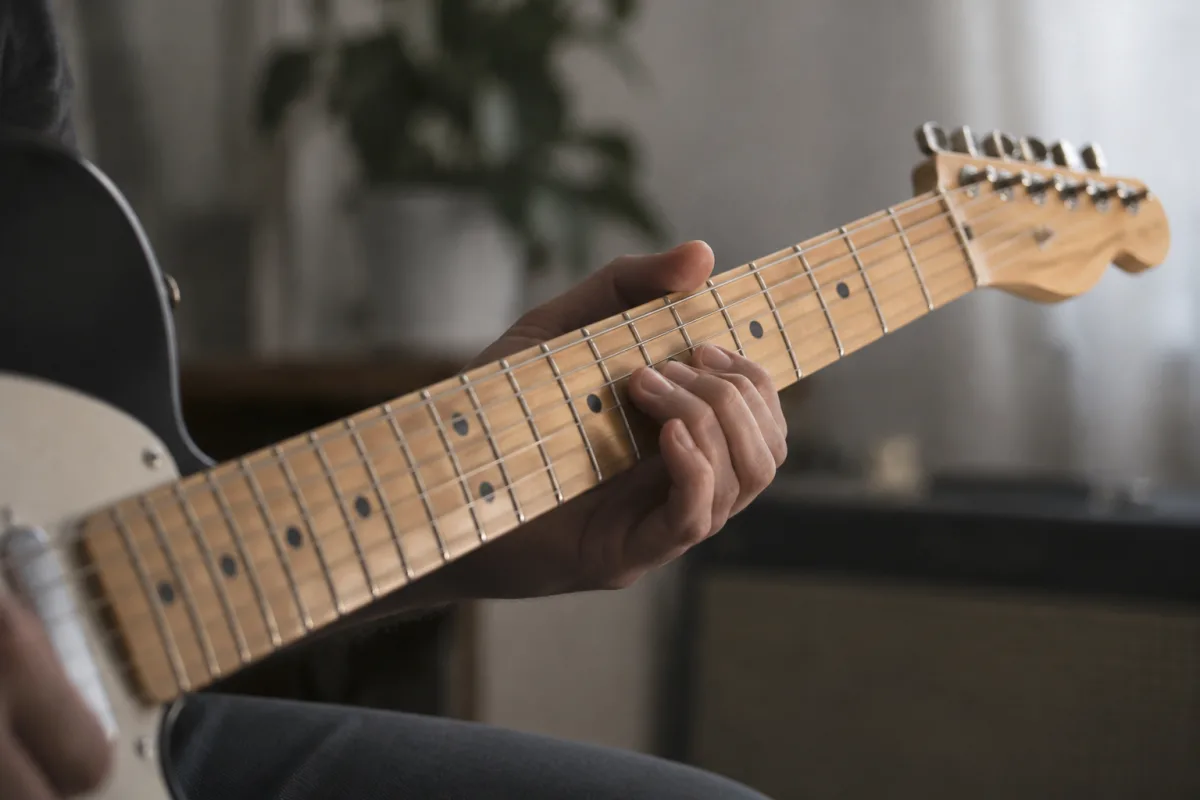
Picking up a Fender Telecaster for the first time? Those thin metal lines running across the neck might seem intimidating, but fender telecaster frets are actually your best friends when learning to play. In this guide, we'll walk you through everything a beginner needs to know about getting comfortable with your Telecaster's frets—from understanding their layout to avoiding common mistakes that trip up newcomers.
What You're Looking At: The Basics
Let's start with the simplest fact: fender telecaster frets are metal strips embedded into your guitar's fingerboard. On a standard Telecaster, you'll count 21 frets on most models (some have 22). Each fret represents one semitone—the smallest interval in Western music. When you press a string down at a particular fret, you shorten its length, which makes it vibrate faster and produce a higher note.
The good news? You don't need to memorise all 21 frets at once. Most beginner songs use just the first 5 or 6 frets, and you'll naturally learn the rest as you practise. The key is getting comfortable with the spacing and learning to position your fingers accurately.
Finding Your Way: The Fret Markers
Fender Telecasters typically feature dot inlays on the side of the fingerboard—usually at the 3rd, 5th, 7th, 9th, 12th, 15th, 17th, and 19th frets. These markers exist for exactly one reason: to help you navigate without looking. On a proper Telecaster, fender telecaster frets are spaced with precision, so once you know where these marker dots are, you'll always know where you are on the neck.
The 12th fret is special—you'll often see a double dot here. That's the halfway point of the string's vibrating length, and it's an excellent landmark for getting your bearings. If you ever feel lost, find that double dot and you've got your bearings sorted.
Common First-Timer Mistakes
Every beginner struggles with the fender telecaster frets in the same ways. Here are the traps to avoid:
- Pressing too hard: You don't need to bend the neck. A light, firm press directly behind the fret (slightly towards the headstock, not on top of it) is all that's needed. Pressing too hard tires your hand out quickly.
- Finger placement: Your finger should land just behind the fret wire itself, not in the middle of the space between two frets. This gives the string the support it needs to ring clearly.
- Muting adjacent strings: As a beginner, your fingers are probably larger than the gaps between strings. Expect some muting at first—it's normal. As your hands develop strength and control, you'll naturally avoid this.
- Jumping around frantically: Resist the urge to practice scales across all the fender telecaster frets at once. Stick to one position (say, frets 1–5) for weeks. Muscle memory builds slowly and needs repetition.
- Ignoring intonation feel: By design, frets get slightly closer together as you move up the neck. This is intentional and correct—it compensates for how string tension changes. Don't overthink it.
Building Finger Strength and Accuracy
Your fingers will ache for the first few weeks. This is entirely normal and temporary. The muscles in your fingers and hand are adapting to a new task. The fender telecaster frets, in a sense, "train" your hand to find its way instinctively.
The best thing you can do is practise short, focused sessions daily rather than long, exhausting ones. Fifteen to twenty minutes a day will build muscle memory faster than three-hour weekend binges. Start by practising single notes on one or two strings, making sure each note rings clearly. Once you can do that cleanly, move on to simple chords and melodies.
The Telecaster's Unique Feel
One thing many beginners notice is that Fender Telecasters have a slightly stiffer neck and narrower string spacing compared to some other guitars. This is part of what makes a Telecaster feel like a Telecaster. The fender telecaster frets are set up to allow for this characteristic tone and playability. It means you'll develop precision faster—there's less room to be sloppy—but also that your fingers might need a bit longer to adjust.
If you're used to a thicker, wider neck, be patient. Within a few weeks, your Telecaster will start to feel natural, and you'll appreciate the quick, responsive feel it gives you.
When You're Ready to Move Beyond the Basics
Once you've mastered basic open chords and simple single-note melodies using the first handful of fender telecaster frets, you're ready to explore further up the neck. Many brilliant songs use frets 5 through 12, and once you get there, a whole new world of music opens up.
For more detailed information about the technical side of Fender frets—their history, different types, and maintenance—check out the complete guide to Fender Telecaster frets, which covers the subject in comprehensive depth.
The main thing to remember is that every guitarist—from complete beginners to professionals—started exactly where you are now. Fender Telecaster frets might feel unfamiliar today, but with consistent, patient practice, they'll become second nature. Keep your expectations realistic, practise daily, and enjoy the journey. You're building skills that will stay with you for life.


Comments