


Strymon Guitar Pedals article
Strymon Guitar Pedals for Beginners: A Complete Guide
Strymon guitar pedals have a reputation for quality, but they're surprisingly beginner-friendly. This guide shows you how to start and why Strymon is worth the investment.
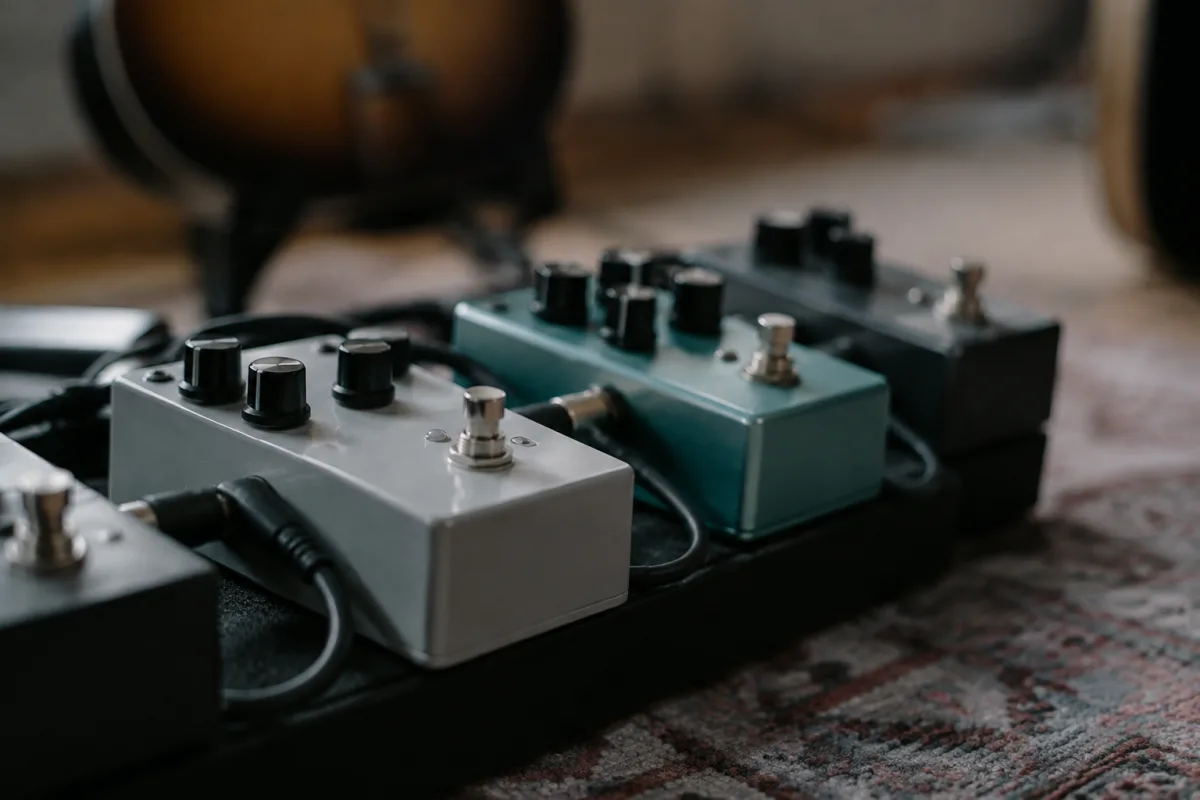
Strymon guitar pedals have a fearless reputation among musicians, and beginners sometimes feel intimidated before they’ve even heard one. The reality is far friendlier: Strymon makes some of the most user-friendly, beautiful-sounding effects available, and they’re excellent for beginners curious about tone shaping. This guide is written specifically for someone just stepping into the world of Strymon pedals.
What Makes Strymon Pedals Special?
Strymon is an American effects company founded by musicians who understand that great tone matters. Their pedals cover modulation (chorus, flanger, phaser), delay, reverb and other texture-creating effects. What sets Strymon apart is obsessive attention to sound quality and user experience. Strymon pedals sound lush and spacious, never thin or artificial. And unlike some boutique pedal brands that sacrifice usability for prestige, Strymon designs interfaces that make sense even to beginners.
Additionally, Strymon pedals hold their value exceptionally well in the secondhand market, which matters if you decide a particular pedal isn’t for you. There’s active demand from players all over the world.
Understanding Strymon’s Product Range
Strymon makes several product families, and understanding them helps beginners choose their first pedal wisely. The BigSky is their flagship reverb — vast, beautiful, and genuinely inspiring, but expensive. The TimeLine is their premium delay with hundreds of algorithms. The Mobius is a multi-effects pedal covering modulation and some reverb effects. And the Volante is a tape echo emulator for players who crave vintage warmth.
For absolute beginners, the Mobius or a smaller, more focused pedal (like the Deco or El Capistan) often make more sense than jumping straight to the flagship BigSky or TimeLine. You learn the fundamentals without overwhelming yourself with options.
Why Beginners Should Consider Strymon
You might assume that premium-priced pedals are only for advanced players. That’s not true. In fact, Strymon pedals often teach beginners better than cheap alternatives because they respond so directly to your playing. If you turn a knob on a Strymon pedal, you hear the change immediately and clearly. This direct feedback accelerates learning. Moreover, Strymon interfaces are intuitive. The knobs and screens make sense; you don’t need a PhD in engineering to understand what you’re doing.
Importantly, every Strymon pedal includes an expression pedal input and MIDI connectivity, which means you can grow into the pedal as your skills develop. You won’t outgrow it.
Your First Strymon Pedal: Where to Begin
If you’re brand new to effects and you’re drawn to Strymon, here’s a practical pathway:
- Start with a delay or reverb. These are the most musical effects for most players. A delay adds rhythmic depth; a reverb adds space and atmosphere. Both are immediately rewarding.
- Consider the Mobius as your first pedal. It’s more affordable than the flagship units, covers multiple effect types and teaches you how Strymon pedals behave. It’s genuinely an excellent learning tool.
- Spend time with the manual. Strymon manuals are well-written and thorough. Learning how your pedal works builds confidence and opens creative possibilities.
- Play with the onboard tutorials. Many Strymon pedals include guided examples of different sounds. Use them to explore what’s possible.
- Experiment fearlessly. There’s no wrong way to turn a knob. Play with the pedal, listen carefully and discover what appeals to you.
That’s all you need. Don’t feel pressured to understand every feature immediately. Gradual exploration beats rushed complexity every time.
Avoiding Common Beginner Mistakes
Beginners often buy a Strymon pedal expecting it to solve problems with their guitar tone. Effects are seasoning, not medicine. If your underlying tone is poor, no Strymon pedal will fix it. Conversely, if your tone is good, Strymon effects make it better. Start with a clean, honest guitar-to-amp signal, then add effects intentionally.
Don’t assume that having a Strymon pedal means you need to use it constantly. The best use of a reverb or delay is often subtle — barely noticeable but genuinely transforming the vibe of your playing. Restraint often sounds better than heavy-handed effects. Additionally, don’t buy multiple Strymon pedals at once. Learning one deeply beats trying to master five simultaneously.
Avoid relying on presets without understanding what they’re doing. Open the editor on your computer (all Strymon pedals support USB editing) and tweak individual parameters. You’ll learn far faster this way.
Learning to Use Your First Strymon Pedal
By the end of week one, you should comfortably dial in basic, pleasing sounds. By week two, you’re experimenting with the depth and range available in your pedal. By month one, you’ve genuinely internalised how the pedal responds to your hands and ears, and you’re making deliberate creative choices with it.
This gradual learning matters because it means the pedal becomes part of your creative voice, not just an effect applied on top. The best musicians use effects so naturally that listeners forget there’s a pedal involved — the sound just feels right.
Where to Buy and What to Expect
Strymon pedals are widely available from major retailers like Thomann, Gear4Music and specialist music shops. Authorised dealers provide warranty coverage and good advice. The secondhand market (Reverb.com, eBay) is active and reliable because Strymon pedals rarely fail and players aren’t desperate to get rid of them. If budget is tight, buying used is a smart option for your first Strymon.
Expect to spend £150–300 for an entry-level Strymon pedal and £350–600 for flagship units like the BigSky or TimeLine. These are genuinely expensive, but the sound quality and durability justify the investment.
Building Your Pedalboard Around a Strymon
A single Strymon pedal is enough to begin. As you grow and want to expand, you might add a drive pedal (overdrive or distortion) before your Strymon, which adds grit before the effects are applied. Many players build entire pedalboards around a Strymon reverb or delay as the anchor.
Remember that most Strymon pedals run on 9-18V power, and they’re compatible with nearly every pedalboard power supply made. This makes integration simple.
Next Steps
Once you’ve spent a month genuinely connecting with your first Strymon pedal, you might naturally become curious about their other offerings. A reverb player might add a delay. A delay player might explore modulation. There’s a living community of Strymon users online, and they’re enthusiastic about sharing patches, tips and inspiration. For deeper exploration of Strymon’s full range and creative possibilities, explore the complete guide to Strymon guitar pedals, which covers the full product lineup and advanced techniques.
Most importantly, remember that a Strymon pedal is a creative tool, not a status symbol. The fact that it’s expensive is irrelevant to whether it helps you make music you love. Use it thoughtfully, explore fearlessly and trust your ears.
FAQ
Is a Strymon pedal worth the money for a beginner?
If you’re genuinely interested in texture and tone shaping, yes. You’ll use a quality Strymon pedal for years and grow into its capabilities. Budget options often sound cheap and reinforce bad habits. A good Strymon is an investment in your creative voice.
What’s the difference between the Mobius and the BigSky?
The Mobius covers modulation effects (chorus, flanger, phaser) whilst the BigSky is a reverb-only pedal. The BigSky has thousands of reverb algorithms; the Mobius has dozens. Both are excellent, but they serve different creative purposes.
Do I need a computer to use a Strymon pedal?
No. Strymon pedals work beautifully right out of the box with knobs and screens. A computer (via USB) lets you edit deeper, but it’s optional for beginners.
Can I use a Strymon pedal with bass guitar?
Absolutely. Strymon pedals work with bass and other instruments. The effects are slightly different on bass frequencies, but that’s often inspiring rather than limiting.
How much power does a Strymon pedal need?
Most Strymon pedals run on 9V standard power supplies, though some premium models prefer 18V for more headroom. A quality pedalboard power supply handles this effortlessly.
Will I outgrow a Strymon pedal?
Unlikely. Strymon pedals are deep, with hundreds of possible sounds and creative applications. Professionals use the same pedals. You’re buying something that grows with you.


Comments