


Strymon Guitar Pedals Buying guide
Strymon Guitar Pedals: A Complete Buyer's Guide
Strymon has earned a reputation for pristine reverb, delay, and modulation effects that deliver studio-quality tone at the pedalboard level. Understanding differences between models ensures you choose wisely.
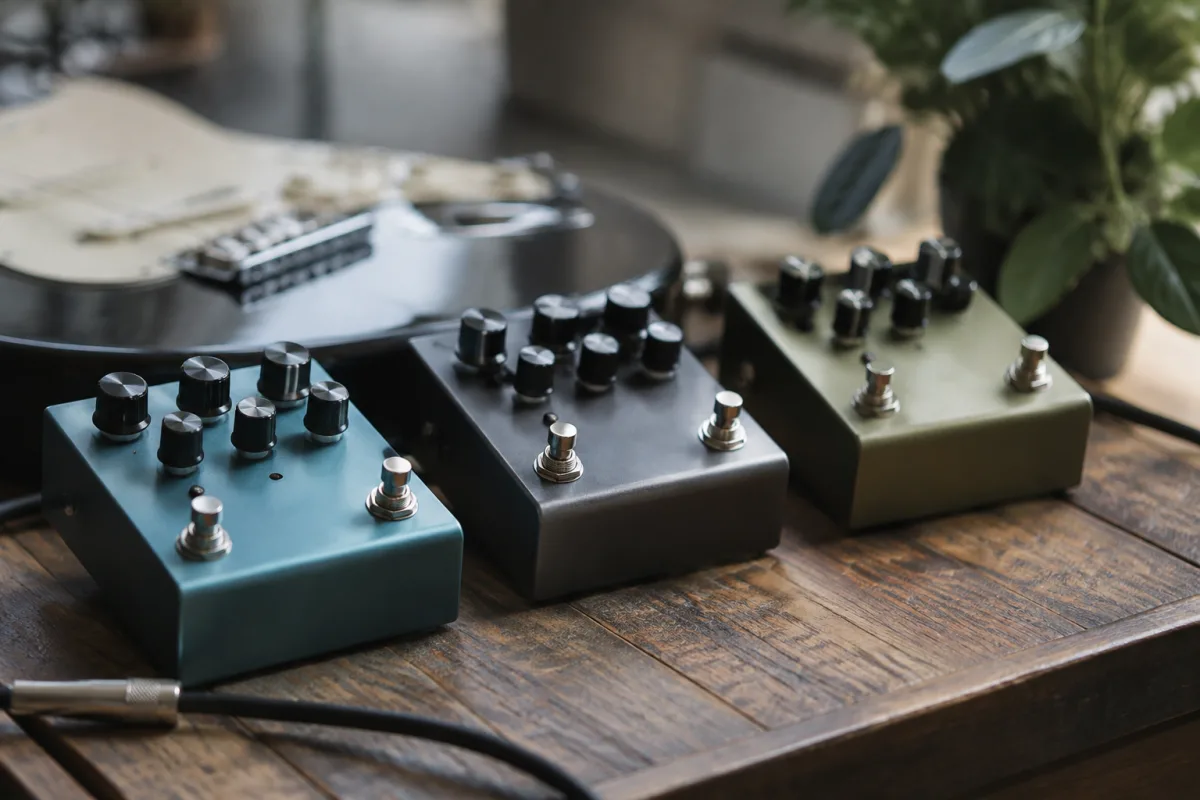
Strymon has earned a reputation as one of the most respected effects pedal manufacturers in modern music, particularly celebrated for pristine reverb, delay, and modulation effects that deliver studio-quality tone at the pedalboard level. Their pedals command premium prices justified by thoughtful design, powerful processing, and tone quality that stands apart from competitors. If you're considering investing in Strymon guitar pedals, understanding the differences between models, evaluating features that matter for your music, and recognising common pitfalls ensures you choose wisely. This guide breaks down everything you need to evaluate before purchasing.
Understanding Strymon's Effect Categories
Strymon organises their pedals into distinct effect families. Reverb pedals like the Big Sky deliver lush, complex reverb processing with intuitive controls and massive tonal possibilities. Delay pedals such as the TimeLine or Volante offer precision delay algorithms ranging from pristine digital delays to tape emulations and creative ambient textures. Modulation pedals including the Mobius provide chorus, phaser, flanger, and tremolo effects with sophisticated parameter control. Combination pedals like the ObeAH (now replaced) or specialized units offer multiple effect types in a single footprint. Strymon also creates compact versions of popular pedals (Big Sky Max, TimeLine Max) for pedalboard space efficiency. Understanding which effect category solves your specific tonal needs prevents overspending on unnecessary features. A guitarist primarily seeking gorgeous reverb doesn't need the multi-effect versatility of Mobius.
Evaluating Quality and Build Robustness
Strymon's build quality is legendary, and examining construction details confirms why their pedals command respect from touring professionals. The enclosure should feel substantial—no cheap plastic or flimsy materials. Test all footswitches by pressing firmly; they should respond crisply without wobbling or exhibiting play. The knobs should turn smoothly through their full range without scratching or dead zones. Examine the solder points inside if buying second-hand; Strymon's internal assembly is typically immaculate, with cleanly soldered joints and organized component layout. The power connector should be robust and secure; Strymon uses quality components here to prevent connection issues. Examine the outputs and inputs for secure connectors that don't wobble. The footswitch tops should be clearly labelled and recessed to prevent accidental mid-performance activation. Strymon's attention to build quality directly correlates to durability and long-term reliability.
Comparing Feature Sets and Functionality
Strymon pedals differ significantly in feature complexity and control accessibility. Entry-level Strymon pedals offer streamlined interfaces with essential controls, suitable for players seeking simplicity and immediate usability. Professional-grade Strymon units like TimeLine or Big Sky provide extensive parameter control, preset management, and MIDI integration for players needing comprehensive sound design capability. Consider your technical comfort level: do you prefer minimal controls and deep-dive editing via menus, or do you want knobs for every parameter? Strymon pedals typically balance menu-driven complexity with accessible knob control, but the ratio varies across models. Research specific models to understand control philosophy before purchasing; a pedal with 47 parameters feels overwhelming if you prefer simplicity, whilst a streamlined 6-knob interface frustrates deep-dive sound designers.
Price Tiers and Value Evaluation
Strymon guitar pedals occupy the premium end of the effects market, reflecting quality and capabilities. Compact Strymon pedals like the Brigadier (reverb/delay combination) or Iridium (amp modelling) cost £200–£350, representing entry-level access to Strymon quality. Full-featured original-size Strymon pedals (Big Sky, TimeLine, Mobius) cost £350–£500 used, or £500–£700 new. Limited edition or discontinued models often command higher prices on the second-hand market due to rarity and perceived vintage status. Ultra-premium Strymon pedals or pedal bundles can exceed £1,000 for combined units. Vintage Strymon pedals from the company's earliest years command collector premiums. Understanding this price landscape prevents overpaying for particular models whilst revealing exceptional value when it exists. Generally, Strymon pedals represent good value for professional performers despite premium pricing; hobbyists might find more affordable alternatives acceptable.
Assessing Sound Quality and Tonal Characteristics
Strymon's reputation rests partly on pristine audio quality and sophisticated algorithms. Their reverbs are celebrated for naturalness and depth; they recreate acoustic spaces convincingly rather than creating synthetic or thin reverb character. Delays are praised for transparent, musical quality; they preserve the original tone whilst adding spatial dimension. Modulation effects from Strymon tend toward smooth, musical character rather than extreme or alienating effects. Evaluating sound quality requires listening to Strymon pedals through genuine amplifiers, ideally your own setup. YouTube demo videos provide reference points, but your ears and equipment ultimately judge suitability. Listen critically for noise floor (Strymon pedals are extremely quiet), tonal character of effects at various settings, and how effects blend with your amp's natural tone. A pristine-sounding reverb from Strymon won't help if its character doesn't match your musical aesthetic.
Common Strymon Purchasing Mistakes
Avoid these frequent errors when investing in Strymon guitar pedals:
- Assuming all Strymon pedals suit all players: Premium pricing doesn't guarantee perfect fit for your needs. Some Strymon pedals are overkill for casual players; others aren't enough for complex sound designers.
- Buying based on brand reputation alone: Strymon deserves their reputation, but specific pedals vary in suitability for your genre and playing style. Research models thoroughly rather than buying blindly.
- Overlooking feature complexity: Extensive parameter control and menu navigation confuse some players. Evaluate specific interface design, not just feature count.
- Ignoring MIDI capabilities: Touring musicians benefit enormously from MIDI integration; home players often find it unnecessary complexity. Assess your actual needs before paying premium prices for features you won't use.
- Skipping the manual before purchasing: Strymon manuals are comprehensive and revealing. Reading them before purchase confirms whether the pedal's philosophy and controls match your expectations.
- Neglecting power supply requirements: Strymon pedals require proper power supplies (often sold separately). Budget for quality power infrastructure alongside pedal cost.
New vs. Second-Hand Strymon Pedals
New Strymon guitar pedals come with manufacturer warranties and the certainty of pristine condition. You avoid potential repair costs and have recourse if something fails. Warranty support from Strymon is generally responsive and helpful. Second-hand Strymon pedals often cost significantly less—sometimes 30–50% below retail—and represent exceptional value for budget-conscious players. The trade-off: you forfeit warranty protection and must assess previous owner care and any potential issues. Quality second-hand Strymon pedals are exceptional investments if condition is verified thoroughly. Request detailed photos, ask about maintenance history, and insist on trial periods or return policies. Many professional players upgrade regularly and sell previously owned Strymon pedals in excellent condition; these represent genuine bargains for discriminating buyers.
Integration with Your Existing Pedalboard Setup
Strymon pedals integrate with most pedalboard configurations but require thoughtful planning. Power supply compatibility matters; each pedal draws specific current, and inadequate power causes unstable operation or degraded sound quality. MIDI integration with other pedals extends capability but adds complexity. Footswitch configuration should allow convenient activation during performance. Consider pedalboard real estate; Strymon's compact versions solve space constraints at the cost of some features. Plan your signal chain carefully—whether Strymon pedals precede or follow other effects dramatically affects overall tone. Test Strymon pedals in your actual pedalboard setup before committing to permanent installation; integration surprises reveal themselves only through hands-on experience.
Learning Curve and Sound Design Depth
Strymon pedals reward deep exploration but don't require mastery before usability. New players can create excellent reverb or delay tones using default presets and basic control tweaking. More experienced sound designers appreciate the extensive parameter control and preset management for creating signature tones. YouTube tutorials and Strymon's own documentation facilitate learning. Online communities share presets and techniques. Allocate time for exploring your Strymon pedal's capabilities; surface-level use underutilises its potential. The investment in learning pays dividends in expanded tonal palette and refined sound design.
Making Your Purchasing Decision
Investing in Strymon guitar pedals represents commitment to tone quality and professional-grade effects processing. Clearly identify what tonal problem you're solving or what creative possibility you're exploring. Research specific Strymon models suited to your requirements. Read manuals and watch demonstrations before purchasing. Evaluate whether new or second-hand better serves your budget and needs. For comprehensive context about specific Strymon models and applications, visit our complete guide to Strymon guitar pedals. Trust your ears, research thoroughly, and invest in Strymon pedals matching your genuine needs and musical style.


Comments