


Pick Jazz 3 article
Pick Jazz 3 for Beginners: A Complete Guide
Jazz picks are thicker, smaller, and shaped differently from standard picks. This guide helps beginners understand what makes them special, choose the right thickness, and develop comfortable technique.
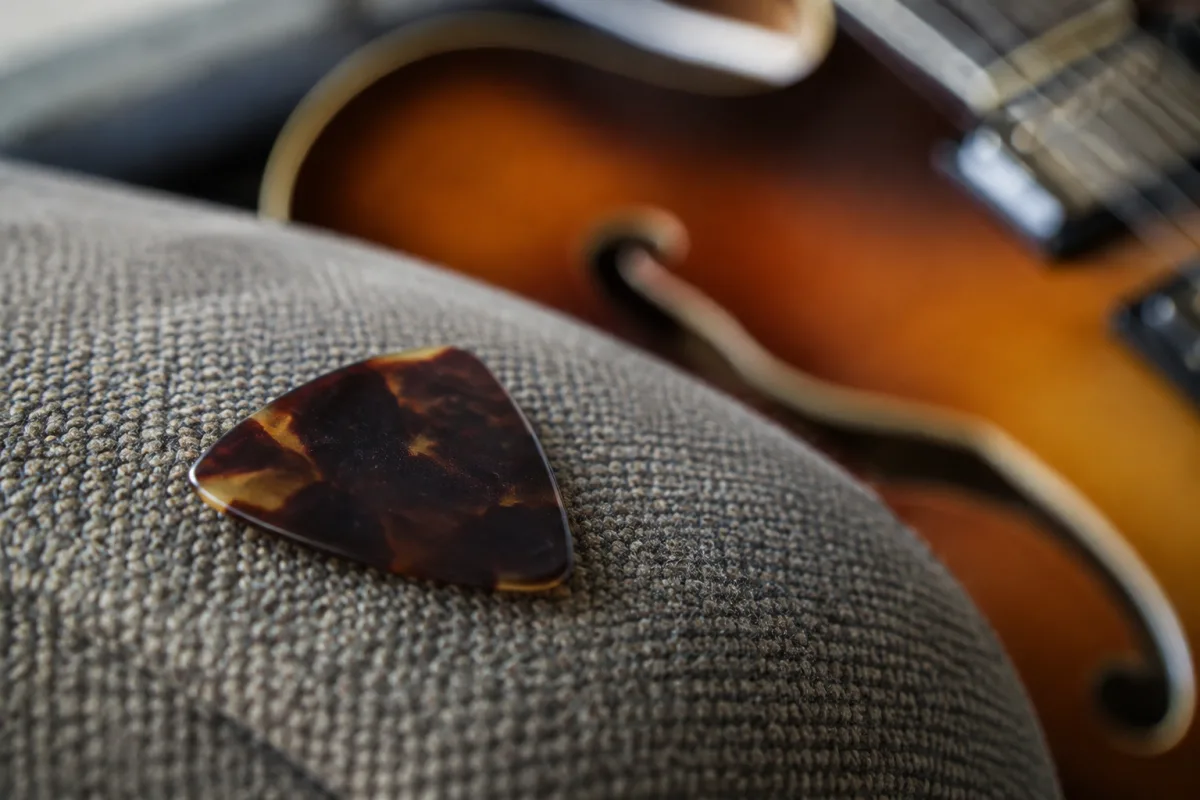
Jazz picks look intimidating the first time you encounter them. They're thicker, smaller, and shaped entirely differently from standard guitar picks. Beginner players often dismiss them thinking they're unnecessarily difficult. But jazz picks unlock possibilities that standard picks simply can't match—precision, control, and a distinctive tone that defines jazz guitar and bass. This guide walks you through understanding jazz picks, choosing the right one, and developing comfort with them as a new player.
How Jazz Picks Differ From Standard Picks
Standard teardrop picks are flexible and large, requiring minimal finger pressure. Jazz picks are rigid triangular shapes, roughly 15mm across, with a sharp point and thick body. This construction creates fundamental differences in feel and sound.
The thickness provides rigidity. Rather than bending against string tension, jazz picks maintain their shape. This rigidity produces sharper attack—the initial edge of each note comes through distinctly. The result is articulation that standard picks blur. Jazz musicians value this articulation because it allows distinct note separation even when playing rapidly or with complicated overlapping rhythms.
The small size requires precision in your grip and hand position. Initially this feels awkward. Within weeks of regular playing, your hand adjusts and jazz picks feel completely natural. Thousands of developing jazz players navigate this transition daily; it's genuinely temporary discomfort.
What "Jazz 3" Means
Jazz picks come in various thickness measurements and materials. "Jazz 3" typically refers to a standard pick size that's become jazz convention—roughly 1.38mm thick, triangular shape, with a 46-degree cutting angle. Different manufacturers make Jazz 3 picks with variations, but most fall within predictable ranges.
Jazz 3 is often considered entry-level for jazz picking. It's thick enough to produce characteristic jazz tone but not so extreme that beginners struggle with rigidity. It's an excellent starting point and many professionals never graduate beyond Jazz 3, finding it optimal for their playing style.
The Thickness Spectrum
Jazz picks range from roughly 0.8mm to 2mm thickness. Thinner picks (0.8-1mm) are more flexible and easier for beginners to adapt to. They produce slightly rounder tone. Thicker picks (1.5mm+) provide stiffer resistance and produce sharper attack. Jazz 3 sits comfortably in the middle—accessible to beginners whilst delivering genuine jazz tone.
Your ideal thickness depends on grip strength, hand size, and personal tone preference. Beginners should start with Jazz 3 or slightly thinner (around 1mm). Trying multiple thicknesses becomes interesting after you've developed consistent technique. Initial focus should be adapting to jazz picks generally rather than optimising thickness.
Materials and Sound
Most jazz picks are plastic (celluloid, delrin, or acrylic). Each material produces subtly different tone characteristics. Delrin produces warm, round tone. Celluloid produces brighter tone. Acrylic sits between them. For beginners, material differences are relatively subtle—pick technique matters far more than material. Start with standard delrin Jazz 3; material preferences can be explored later.
Metal picks exist and produce distinctive sound, but they're niche and genuinely difficult for beginners. Save metal picks for experimentation once you're comfortable with plastic jazz picks. Most developing jazz players never use metal picks; they're specialty items for specific sounds.
Adjusting Your Grip to Jazz Picks
Standard pick technique places the pick loosely between thumb and index finger. Jazz picking requires a slightly different grip—the pick sits more firmly held, positioned at the fingertip rather than the knuckle. This gives you precise control necessary for jazz articulation.
Initially this grip feels tense and awkward. Your hand will fatigue faster than with standard picks. This is normal adaptation strain. Spend 15-20 minute practice sessions using jazz picks to allow your hand to adjust gradually. Pushing too hard too fast creates unnecessary hand fatigue and frustration. Graduated, consistent practice builds comfort far more effectively than marathon sessions.
Common Beginner Mistakes With Jazz Picks
Mistake 1: Gripping Too Tightly. Beginners often clench jazz picks rigidly, which creates tension and poor tone. You want a firm grip but not white-knuckle tension. Your hand should feel strong but relaxed—a distinction that takes practise to develop.
Mistake 2: Moving to Thicker Picks Too Quickly. It's tempting to think "if Jazz 3 is standard, I should use something thicker to sound better." Thicker picks are harder to control initially. Master Jazz 3 first. Graduating to thicker picks comes naturally once you've developed consistent technique.
Mistake 3: Using Jazz Picks for Non-Jazz Styles. Jazz picks produce distinctive tone that doesn't suit rock or pop styles. If you're learning rock guitar, stick with standard picks. Once you're comfortable with standard technique, adding jazz picks for jazz-specific playing makes sense. Don't try learning pick technique with jazz picks unless you're specifically learning jazz.
Mistake 4: Expecting Immediate Comfort. Beginners sometimes try jazz picks once, find them awkward, and abandon them. Two weeks of consistent practice is necessary before comfort develops. Don't judge jazz picks after one session; commit to experimentation over a realistic timeframe.
Developing Consistent Technique
Jazz picking technique emphasizes consistent attack and tone across all strings. This consistency is harder to develop than standard picking but becomes increasingly rewarding. Slow practice is essential. Playing scales slowly with jazz picks, focusing on even tone and articulation, builds technique far better than attempting fast passages and sacrificing consistency.
Practice using upstrokes and downstrokes equally. Jazz picking frequently alternates directions rapidly; developing fluid bidirectional technique is essential. Standard picks mask sloppy directional transitions. Jazz picks reveal them immediately, creating honest feedback that improves technique.
Sound Characteristics You'll Develop
Jazz picks produce punchy, articulate tone with clear note separation. Each note speaks distinctly even in rapid passages. This articulation is why jazz musicians favour jazz picks—it's essential for communicating complex harmonic and rhythmic ideas clearly. As you develop technique, you'll discover this articulation creates possibilities standard picks simply can't match.
The tone also feels direct and responsive to your technique. Light touches produce softer tone. Firm touches produce brighter, punchy tone. This responsiveness creates a intimate connection between your playing and the resulting sound—a quality that many musicians find deeply satisfying.
Transitioning From Standard to Jazz Picks
If you already play with standard picks, transitioning to jazz picks is a gradual process. Don't try to switch immediately for all playing. Instead, dedicate 10-15 minutes of each practice session to jazz pick work. Maintain your standard pick practice for everything else. Over weeks, the jazz pick section expands and your comfort grows.
This graduated approach prevents frustration and maintains technique in your primary picking style whilst developing new skills. It's an efficient path toward fluency with both picks rather than sacrificing one for the other.
When and How to Expand
After developing comfort with Jazz 3, explore variations. Try slightly thicker picks if you want sharper attack. Try slightly thinner picks if you want more flexibility. Try different materials (acrylic, celluloid) to hear tonal differences. This exploration becomes interesting once you have a foundation; too much variation too early creates confusion.
For comprehensive information about jazz picks and their characteristics, explore our complete guide to jazz picks, which covers the full range of options and advanced techniques.
Starting Your Jazz Pick Journey
Buy a pack of Jazz 3 picks and commit to two weeks of consistent practice. Your hand will adapt far faster than you expect. The articulation and tone you'll discover will reward your effort. Many standard pick players eventually integrate jazz picks into their playing and wonder why they waited so long to explore them. Start confidently knowing that temporary awkwardness leads to lasting musical possibilities.


Comments