


Overdrive Guitar article
Overdrive Guitar for Beginners: A Complete Guide
Curious about overdrive? This guide demystifies overdrive guitar for beginners, explaining what it does and how to start exploring.
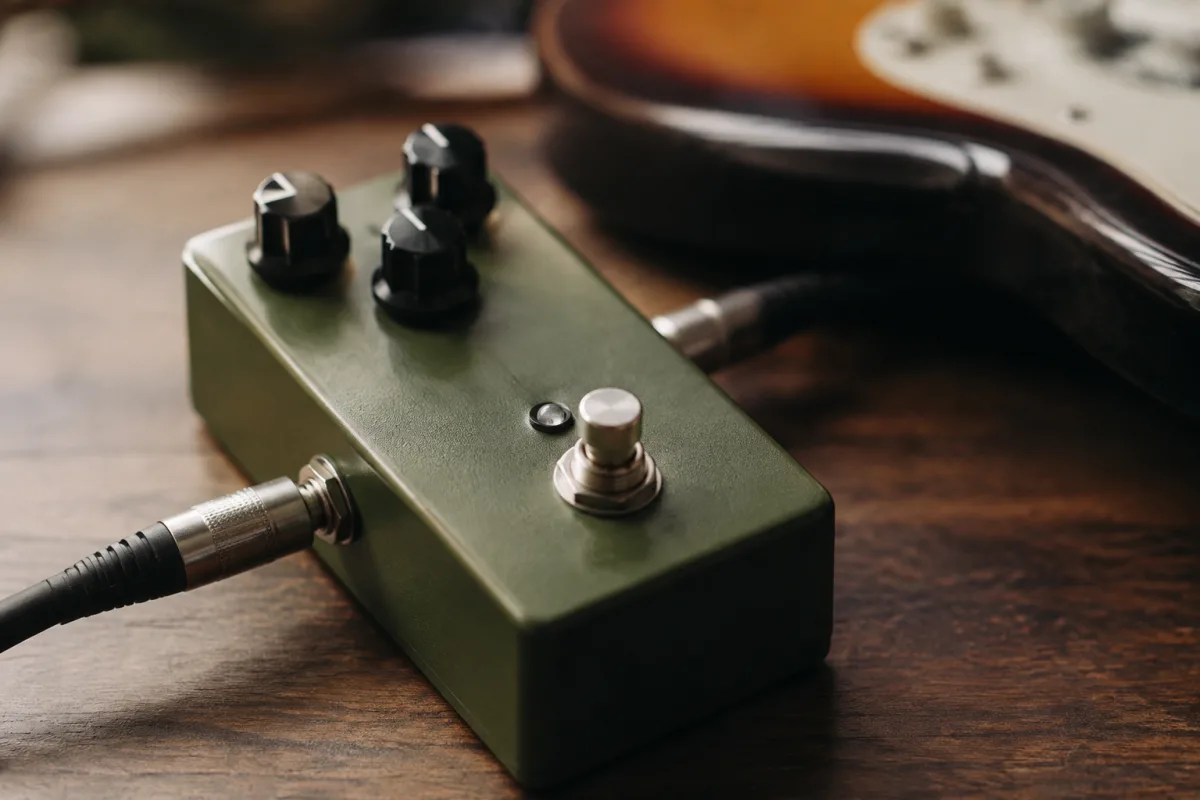
If you're a beginner guitarist curious about what "overdrive" really means, you've probably heard the term thrown around by more experienced players and assumed it was mysterious or complex. It's not. Overdrive is one of the most beginner-friendly effects to explore, and understanding it opens up a huge range of classic and modern rock tones. This guide walks you through the basics, removes the mystique, and shows you how to find your first overdrive sound with confidence.
What Overdrive Actually Does (Without the Technical Jargon)
Your guitar plugs into an amplifier. The amp converts your guitar's electrical signal into sound waves. "Overdrive" means intentionally pushing the amp's input past its clean limit, creating harmonic saturation and light distortion—a crunch or growl in the tone.
Imagine a clean jazz tone (your default). Now imagine that tone being slightly compressed, denser, and adding a gritty character underneath. That's overdrive. It's not brutal distortion (which sounds like a wall of fuzz); it's the sweet spot where the amp is working hard but still responsive to how hard or softly you play.
Here's the key insight for beginners: overdrive reacts to your playing dynamics. If you play gently, an overdriven amp softens and cleans up slightly. If you dig in hard with your pick, the amp cranks to full grit. This responsiveness is why overdrive feels "musical" and forgiving for learning—the tone changes based on your technique, rewarding good finger control.
Overdrive vs. Distortion: Know the Difference
Beginners often conflate overdrive and distortion. They're related but distinct, and knowing the difference helps you choose the right tone for your music.
Overdrive is moderate gain (amount of crunch) with responsive dynamics. Think classic rock (AC/DC, early Aerosmith, classic blues rock). The tone is thick and colored, but you can still hear the individual notes and your technique affects the sound. Overdrive comes from the amp being pushed hard.
Distortion is high gain with a compressed, unified tone. Think heavy metal and modern rock. The notes blur together, and subtle technique differences are lost under the sheer intensity. Distortion is a deliberate effect, usually from a distortion pedal or amp pushed beyond its safe limits.
For a beginner, overdrive is easier to play on. Distortion rewards aggression and can hide sloppy technique—which isn't ideal for learning. Start with overdrive; graduate to distortion later as your technique solidifies.
Three Ways to Get Overdrive Tone as a Beginner
Method 1: Turn Up Your Amp. The simplest approach. A 15–30-watt practice amp pushed to 8–9 out of 10 on the volume knob naturally overdrives. This is how classic rock was born—players didn't have overdrive pedals, they just cranked their amps. Downside: loud. If you live with others, this isn't practical.
Method 2: An Overdrive Pedal. A dedicated overdrive pedal (Ibanez Tubescreamer, Boss BD-2, Behringer OD-300) costs £20–150 and lets you toggle overdrive on and off while keeping your amp volume low. This is the most practical beginner solution. Plug your guitar into the pedal, plug the pedal into your amp, and turn the pedal on for overdrive, off for clean tone. You can practice at bedroom volumes while getting full gig-ready tones.
Method 3: Multi-Effects Unit or Amp with Built-In Overdrive. Many practice amps include a button or knob to engage overdrive without cranking the volume. Some budget multi-effects units (Behringer, Boss ME-50) include overdrive models. These are convenient but offer less tone control than dedicated overdrive pedals. Still, they're better than nothing.
For your first exploration of overdrive, Method 2 (an overdrive pedal) is ideal. It's affordable (£30–80 for a quality entry-level option), portable, and teaches you the fundamentals of effect control.
Key Knobs on an Overdrive Pedal Explained
Don't be intimidated by knobs. Every overdrive pedal has the same basic controls, and learning them is quick.
Gain (sometimes called "Drive" or "Level"). This controls how much crunch and saturation you get. Turn it up for more growl; turn it down for light, subtle warmth. Start at 12 o'clock (middle) and experiment. There's no "correct" setting—it's purely your preference.
Tone (EQ or Filter). This shapes the frequency balance. Think of it as a simple equaliser. Turning the knob toward "Treble" adds brightness and bite; toward "Bass" adds warmth and thickness. Start at 12 o'clock and listen to how adjusting it changes your tone.
Volume (or Output Level). This controls the overall volume when the overdrive is engaged. Many beginners neglect this knob and assume the pedal is designed to boost volume. Not always. Set it so that when the pedal is on, the volume matches your clean tone. Then tweak from there.
That's it. Three knobs. Every overdrive pedal has variations (some add a third EQ band, some add a boost), but the core three are universal. Don't overthink it.
First Steps: Learning to Use Overdrive Properly
Follow this simple progression:
- Set all knobs to 12 o'clock (middle position).
- Play a simple chord or riff with the overdrive off (clean tone). Listen to how it sounds.
- Engage the overdrive. Play the same riff. Listen to the difference. This is overdrive.
- Slowly turn the Gain knob up and down while playing. Notice how more gain adds crunch; less gain softens it.
- Turn the Tone knob and listen. Experiment with high and low extremes to feel the effect.
- Adjust the Volume so your overdriven tone matches the volume of your clean tone.
- Play for 10–15 minutes at these settings, getting used to the feel.
- The next day, tweak the knobs again and play. Your ears and muscle memory will develop rapidly.
Within a week of casual playing, you'll have an intuitive understanding of how overdrive responds to your touch and technique. This is the learning curve—short and rewarding.
Common Beginner Mistakes to Avoid
Mistake 1: Assuming more gain always sounds better. Maximum gain sounds impressive at first, but it obscures your technique and makes every note sound the same. Start conservative; dial up gain incrementally as your technique improves and you understand what tone you're chasing.
Mistake 2: Using overdrive to hide sloppy technique. Overdrive is forgiving, but it's not a substitute for clean playing. Muted strings, finger noise, and rhythm sloppiness are amplified by overdrive just as much as they are by clean tone. Use overdrive as you develop technique, not as a cover-up.
Mistake 3: Buying the most expensive overdrive pedal as a first. A £80–120 premium pedal sounds marginally better than a £30 entry-level option. For learning, a budget overdrive is perfectly adequate. Upgrade after you understand what you're chasing tonally.
Mistake 4: Forgetting to turn down the volume knob when engaging overdrive. Many beginners flip the overdrive on and suddenly the tone is much louder. Then they assume the pedal is broken or "too aggressive." Actually, they just need to dial back the Volume knob. Read the manual (seriously) and adjust.
Mistake 5: Ignoring the complete guide to overdrive guitar. This beginner guide focuses on fundamentals and first exploration. For deeper dives into amp-based overdrive, tone-stacking with multiple pedals, and advanced playing techniques, the comprehensive overview covers context beyond beginner scope.
Your First Overdrive Experience: A Simple Plan
If you're determined to explore overdrive, here's a practical path:
- Borrow an overdrive pedal from a friend or visit a music shop and play one for 20 minutes.
- Decide whether you like the vibe and want to invest.
- If yes, budget £30–60 for an entry-level pedal (Behringer is reliable; Boss and Ibanez are industry standards).
- Buy from a retailer with a 14-day return window.
- Play every day for a week, experimenting with the knobs.
- After a week, decide whether overdrive is central to your musical interests or just curiosity. Keep it if it's central; return it if it feels unnecessary.
Why Overdrive Matters for Your Development
Learning to use overdrive teaches you how effects respond to your technique. It also opens up an enormous library of classic rock and modern music that depends on overdrive as a foundation. Blues-rock, classic rock, and modern indie rock all rely on subtle overdrive tones. Understanding this effect gives you access to genres and sounds you've been hearing but couldn't articulate.
Additionally, overdrive is forgiving—it encourages musical risk-taking. Your mistakes sound less jarring; your good moments sound more polished. This psychological benefit matters more than beginners realise. Tone exploration builds confidence.
Final Thoughts
Overdrive is not complicated, expensive, or exclusive to advanced players. It's a beginner-friendly, highly rewarding effect to explore. Start with a budget overdrive pedal, spend a week experimenting, and decide whether it fits your musical path. The investment is small; the learning is enormous. By the time you've spent a month with overdrive, your understanding of tone, dynamics, and effect control will have expanded dramatically.


Comments