


Orange Amp Pedal Buying guide
Orange Amp Pedal: A Complete Buyer's Guide
Orange amp pedals deliver quality and portability, but they're not for everyone. This buying guide helps you decide whether an Orange amp pedal fits your needs or whether alternatives serve you better.
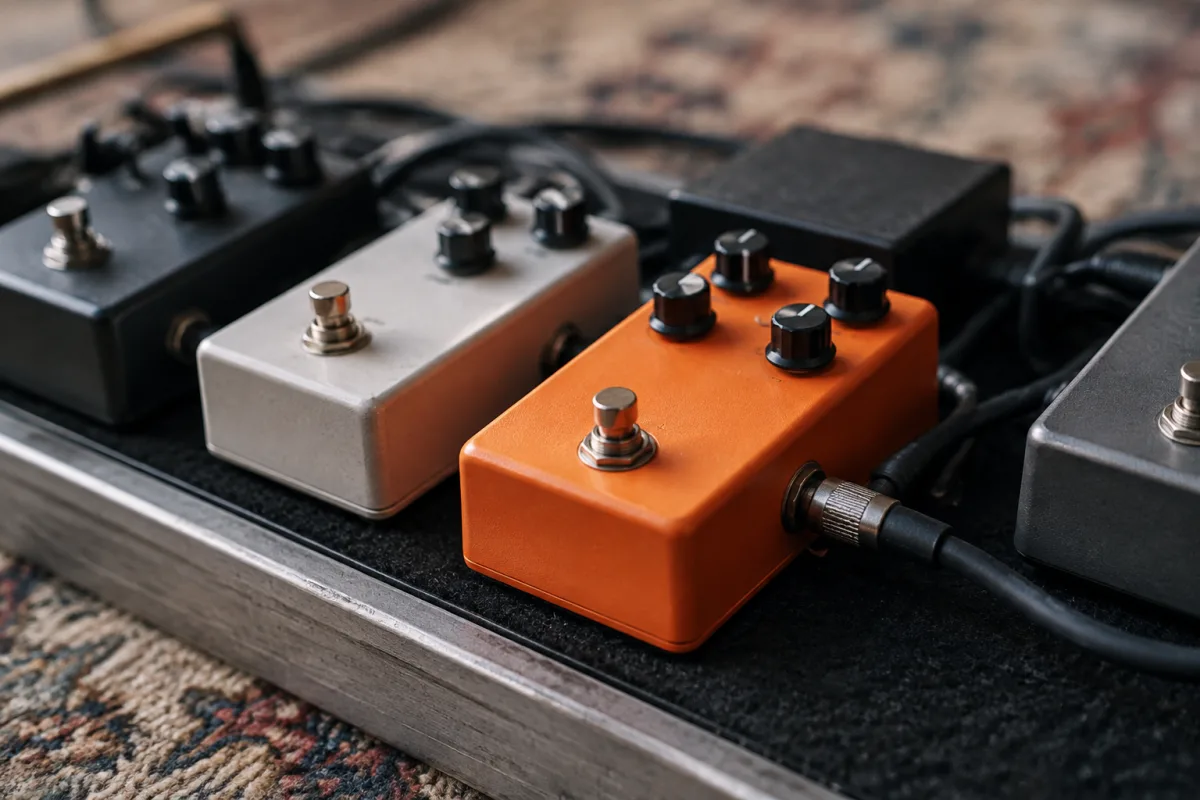
Orange amplifiers have built a reputation for solid construction, warm tone, and reliability. Their pedal-format offerings extend that reputation into compact, pedalboard-friendly packages. But an Orange amp pedal typically costs £200–£400, which is significant. Before investing, you need to know whether Orange's reputation justifies the premium, who actually benefits from an Orange amp pedal, and what alternatives exist. This guide cuts through brand loyalty and gives you buying reality.
What Orange Amp Pedals Actually Are
An Orange amp pedal is a compact amplifier optimised for guitar or bass, delivering the warm, punchy tone Orange is known for in a pedalboard-friendly format. Unlike overdrive or distortion pedals that colour your tone, an amp pedal is designed to work as your primary amplifier—either directly into a powered cabinet, into a mixing console, or into a traditional amp.
The appeal is obvious for touring musicians: a tiny pedal replaces a heavy amp stack. The challenge is reality-checking whether you actually need one versus simply wanting one because of Orange's brand prestige.
Key Specs to Understand When Buying Orange Amp Pedals
Output Power
Orange amp pedals typically deliver 5–20 watts depending on the model. This is sufficient for many gigging scenarios, but significantly less than a traditional amp. If you're replacing a 100-watt head, you're losing volume capacity. Know what you're trading away.
Cabinet Configuration
Some Orange amp pedals include onboard cabinet emulation; others require you to pair them with a powered cabinet or amp. Know what you're getting. A pedal alone isn't a complete system.
Tone Character
Orange amplifiers are known for warm, slightly vintage tone with good harmonic content. This appeals to blues, classic rock, and vintage-minded players. If you prefer bright, modern, scooped-midrange tones, Orange might not resonate with your ears.
Build Quality and Components
Orange uses quality components and robust construction. This justifies some price premium. But "quality" doesn't mean "objectively better"—it means consistent, reliable, and built to last.
Controls and Flexibility
Most Orange amp pedals offer gain, tone, and volume controls. Some include more sophisticated routing and effects loops. Assess whether the control set matches your needs or whether you're paying for features you don't use.
Who Should Buy an Orange Amp Pedal
Be honest about whether this actually fits your situation:
- Touring musicians with strict weight/space constraints – If you're touring internationally and every kilogram matters, an Orange amp pedal saves serious weight and space compared to a traditional rig.
- Players gigging regularly at smaller venues – Where 5–20 watts is genuinely sufficient for the room size and you want reliability and good tone.
- Session musicians working in studios with existing monitors – You need a consistent, portable amp solution that works reliably across different sessions.
- Players drawn to Orange's specific tone character – If you've heard an Orange amp and love that warmth, the amp pedal delivers it portably.
- Those building sophisticated pedalboard rigs – Where a dedicated amp pedal integrates better than trying to fit a traditional amp.
Who Shouldn't Buy an Orange Amp Pedal
- Playing large venues where you need higher wattage – A 20-watt amp doesn't compete with a 50–100 watt head in terms of power or tone generation from sheer headroom.
- Home players with existing amplifiers – You already have an amp. An Orange amp pedal is redundant unless you're specifically upgrading.
- Budget-conscious musicians – At £200–£400, there are many alternatives (multi-effects units, traditional compact amps, software solutions) costing less.
- Players who haven't heard an Orange amp in person – Don't buy based on brand reputation alone. Tone preference is personal. Try one first if possible.
- Those still learning what tone they prefer – Orange's warm character might not fit your evolving taste. Start cheaper, upgrade when you're certain.
Price Tiers and What You Get
- Entry-Level Orange Pedals (£200–£250) – Basic amp pedal with essential controls (gain, tone, volume). No fancy cabinet simulation or effects loop. Sufficient for straightforward playing.
- Mid-Range (£250–£350) – More control, better tone sculpting options, possibly cabinet emulation or headphone output. Most gigging musicians find this tier satisfying.
- Premium/Specialty (£350–£400+) – Enhanced features, more sophisticated routing, effects integration, or boutique finishes. Marginal improvements for most players.
Most players find mid-range Orange amp pedals deliver genuine quality without excessive cost. Entry-level models are fine; premium models offer diminishing returns.
Orange vs. Alternatives: What Else Should You Consider?
Smaller Traditional Amps
Fender Blues Jr, Orange Crush, Marshall Origin—traditional amps in the 5–20 watt range. Often cheaper than Orange amp pedals and more versatile for bedroom use. But heavier and less pedalboard-friendly.
Multi-Effects Units
Boss ME-50, Line 6 Helix—multi-effects with amp modelling that can replicate Orange tone convincingly. Cost similarly to Orange amp pedals but offer far more flexibility.
Software amp simulation
Neural DSP, Amplitube, LePou Plugins—if you record digitally or use USB audio interfaces, software solutions cost £50–£200 and deliver superb tone with total flexibility. Not ideal for live performance but excellent for recording.
Budget compact amplifiers – Vox Pathfinder, Orange Crush Combo—£100–£200 and surprisingly good. Not Orange amp pedals, but half the price and twice the versatility for casual players.
New vs. Used: Making the Financial Decision
New Orange Amp Pedals
Full warranty, pristine condition, consistent quality. At full retail (£250–£400), this is a serious investment.
Used Market
Orange amp pedals hold value reasonably well. Used models cost £150–£300, representing genuine savings. The used market is active because touring musicians upgrade rigs regularly. Used Orange gear is generally reliable but check cosmetic condition and verify all controls work.
For most players, used offers better value without sacrificing reliability. Orange's build quality means second-hand units are typically still solid.
Integration Reality Check
Before buying, verify the Orange amp pedal actually fits your setup:
- What will you run it into? – A powered cabinet, a traditional amp's effects return, a mixing console, a headphone amp? Each requires different cabling and integration.
- Pedalboard power – An amp pedal is power-hungry. Does your pedalboard's power supply have sufficient capacity?
- Tone preview – Have you heard an Orange amp in person? Don't buy based on reputation. Tone preference varies; try one first if possible.
- Weight and portability gains – Is your current rig actually burdensome? If you're not touring, weight savings don't matter.
The Honest Verdict on Orange Amp Pedals
Orange amplifiers are excellent. Their amp pedals deliver genuine quality in a compact package. But they're not objectively superior to all alternatives—they're the right choice for specific use cases: touring musicians who value Orange's tone and reliability, and players drawn to that specific warm, vintage character.
For bedroom players, home recordists, or those building their tone preferences, starting with cheaper alternatives makes sense. For touring professionals who know they want Orange's character portably, an Orange amp pedal is a solid investment.
Don't buy based on brand prestige alone. Test one if possible, understand your actual needs, and compare alternatives. If after that assessment you still want an Orange amp pedal, you've made an informed choice rather than a gear impulse.
For deeper exploration of Orange amplifiers, comparing specific pedal models, and understanding their place in wider amp pedal options, our complete guide to Orange amp pedals covers the full landscape. But this buying guide gives you the framework for making a choice that actually serves your music and situation.



Comments