


Mxr Guitar Pedals article
Mxr Guitar Pedals for Beginners: A Complete Guide
MXR guitar pedals might look complex, but they're designed to be intuitive. This beginner's guide walks you through which MXR guitar pedals to choose first, how to dial in your sound, and the common mistakes beginners make.
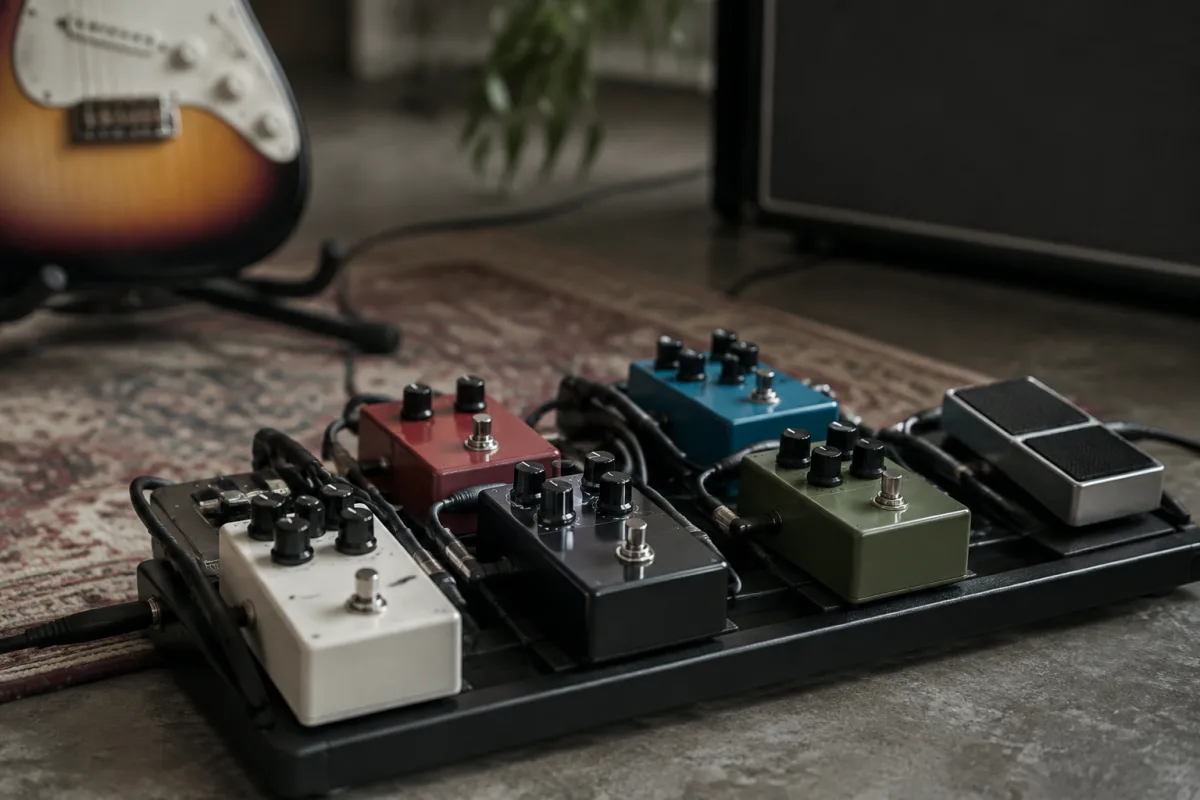
Stepping into MXR guitar pedals can feel intimidating if you've never used effects before. You'll see mysterious controls, knobs that do unfamiliar things, and manuals packed with technical terminology. The good news is that MXR guitar pedals are actually designed with the player in mind—not to confuse you, but to let you shape tone intuitively. This beginner's guide walks you through the essential MXR guitar pedals, shows you how to start using them confidently, and reveals the common beginner mistakes that stop players from enjoying their gear.
Understanding Your First MXR Guitar Pedals
MXR guitar pedals come in many varieties, but most beginners start with one of three types: overdrives/distortions, modulations (chorus/flange), and delays. Each does something fundamentally different to your tone.
Overdrive and Distortion Pedals. These are the most popular MXR guitar pedals for beginners. An overdrive pedal adds warmth and sustain to your tone; a distortion pedal adds aggression and thickness. The difference: distortion is more aggressive; overdrive is more subtle. If you're buying your first MXR guitar pedals, an overdrive is more versatile and forgiving than distortion.
Modulation Pedals. Chorus, flange, and phaser are the most common MXR guitar pedals in this category. They add movement and spaciousness to your tone. Chorus is the most forgiving for beginners—it makes your single guitar sound like two guitars playing in harmony. Flange and phaser are more dramatic and take experimentation to sound natural.
Delay Pedals. These MXR guitar pedals create an echo of your playing. Subtle delays add space to your tone; longer delays create obvious repeats. Beginners often use delay too much—a little goes a long way. Start with conservative settings.
Setting Up Your First MXR Guitar Pedals
Once you've chosen which MXR guitar pedals to start with, setup is straightforward but important.
Power Supply Matters. Most MXR guitar pedals run on a 9-volt battery or AC adapter. Battery-powered is convenient for portable use; an AC adapter is cheaper long-term if you're using MXR guitar pedals regularly. Get the right power supply from the start—don't cheap out here, as dodgy power supplies cause hum and noise that'll ruin your tone.
Where in the Chain? If you're using multiple MXR guitar pedals, order matters. Standard chain: guitar → modulation pedals → overdrive → delay → amplifier. This order lets each MXR guitar pedals effect sit nicely in your tone without fighting. Beginners shouldn't worry about this yet—start with one pedal, get comfortable, then add others.
Plugging In. Use quality cables between your guitar, MXR guitar pedals, and amp. Cheap cables introduce noise and introduce signal loss. This is worth spending £5–10 extra on.
Dialling In Your First Sound With MXR Guitar Pedals
Once your MXR guitar pedals are set up, keep settings simple at first.
Start With Everything at Neutral. Most MXR guitar pedals have their controls at 12 o'clock for neutral settings. Play through your MXR guitar pedals with these defaults. Does it sound right? Good. Now adjust one control at a time. Change only the drive or level knob; play for 30 seconds; listen to the difference; then adjust another control. Slow experimentation teaches you what each MXR guitar pedals control does.
Use Less Than You Think. Beginners invariably overuse MXR guitar pedals effects. A little overdrive sounds better than maximum drive; subtle delay sounds better than obvious echo. Start conservatively and only increase if you need more.
Mix With Your Amp's Tone. Your amp's gain and tone settings interact with your MXR guitar pedals. If your amp is already high-gain, adding MXR guitar pedals distortion on top creates mud rather than tone. Learn to balance your amp and MXR guitar pedals together—each doing part of the job, not both doing everything.
Common Beginner Mistakes With MXR Guitar Pedals
Buying Too Many MXR Guitar Pedals at Once. Tempting, but overwhelming. Start with one. Master it. Then add a second. You'll learn faster and spend less money experimenting with settings you'll never actually use.
Maxing Out Controls on MXR Guitar Pedals. Every knob turned to 11 is a beginner mistake. Most MXR guitar pedals sound terrible at extreme settings. Spend most of your time in the 12 o'clock to 3 o'clock range.
Ignoring Your Amplifier's Role. Many beginners assume MXR guitar pedals do all the tone-shaping work. They don't. Your amp's gain, tone, and presence settings matter more. MXR guitar pedals add character to an already-good tone; they don't fix a bad amplifier setup.
Using Batteries Instead of Proper Power. Batteries run down, introducing sag and tone changes. If you're practising regularly, invest in an AC adapter for your MXR guitar pedals. It's cheap and eliminates a variable.
Chaining Too Many MXR Guitar Pedals Without Testing. When you add a second or third MXR guitar pedals to your setup, introduce them one at a time. Each MXR guitar pedals effects affects the others' interaction. Play with two MXR guitar pedals for a week before adding a third.
Building Confidence With MXR Guitar Pedals
The first week with MXR guitar pedals should be exploratory and fun, not stressful. Pick one sound (a slight overdrive, for example) and use the same MXR guitar pedals settings for an entire week's practice. Record yourself. Listen back without judgment. Does the tone inspire you to play more? Then you've found something worth keeping.
As you improve, add complexity. Maybe your next MXR guitar pedals addition is a subtle chorus for clean tones. Then a delay for lead lines. Build your palette slowly and purposefully, not all at once.
Maintenance and Care for MXR Guitar Pedals
MXR guitar pedals are robust and reliable, but basic care matters.
Keep your MXR guitar pedals on a pedalboard or secure surface. Dropping them damages both the pedals and your pedalboard. Clean the enclosures occasionally with a soft cloth—they'll stay looking fresh and feeling premium.
Check cable connections regularly. Loose connections introduce intermittent noise or signal drops. Firmly seat all plugs and cables.
Final Thoughts
MXR guitar pedals are your first step into tone-shaping. Start simple, resist the temptation to buy everything at once, and spend time really learning one MXR guitar pedals effect before moving on. A single, well-understood MXR guitar pedals effect enhances your playing more than ten confusing ones. For a comprehensive overview of all MXR guitar pedals types and models, check out the complete guide to MXR guitar pedals.


Comments