


Mxr Guitar Pedals Buying guide
Mxr Guitar Pedals: A Complete Buyer's Guide
MXR guitar pedals have earned their reputation through decades of professional use, but buying the right pedal requires understanding fundamental differences between effect types and recognizing genuine value.
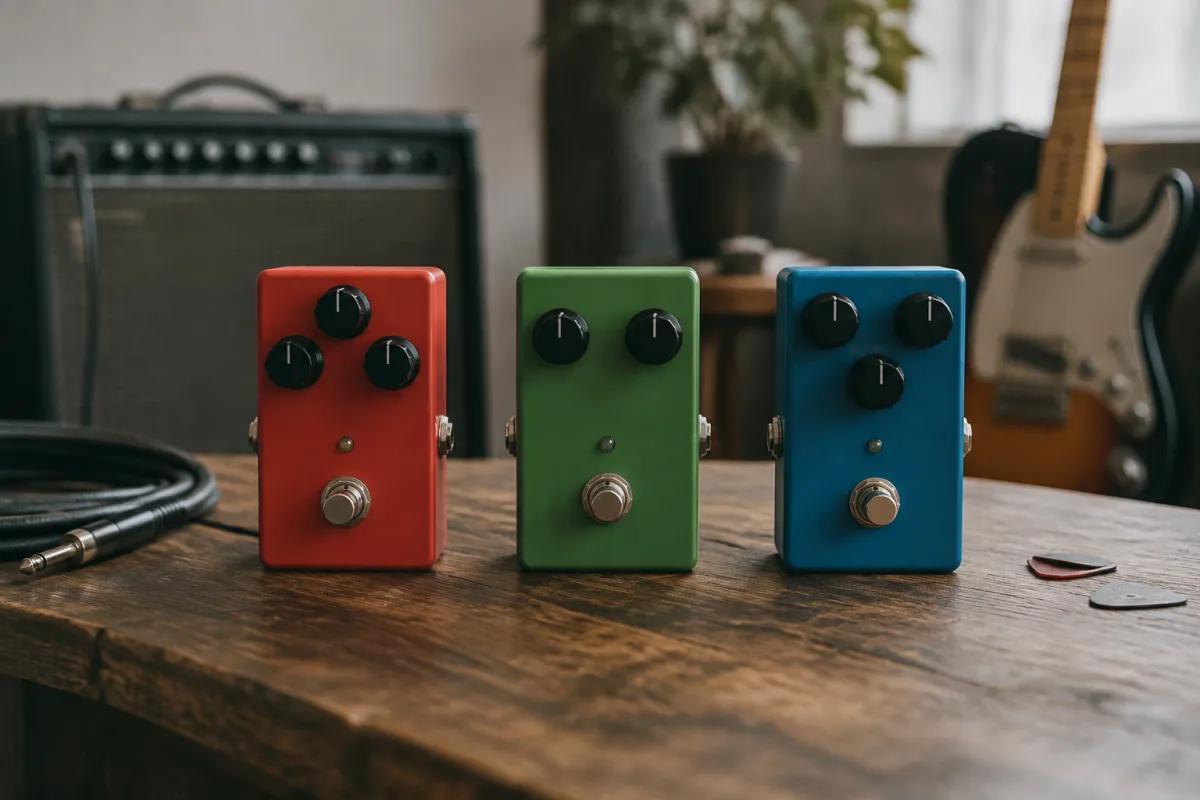
MXR guitar pedals have earned their reputation through decades of professional use and reliability—from classic distortions played on stadium stages to modulation effects heard on countless recordings. But buying MXR pedals requires understanding the fundamental differences between effect types, recognizing which pedals justify their price points, and knowing how to evaluate specific models against alternatives. This guide helps you navigate MXR's extensive catalogue, compare options within your budget, and select effects that deliver genuine value rather than chasing brand cachet or following trends.
MXR's Effect Categories and Design Philosophy
MXR specialises in four primary effect categories: distortion and overdrive, modulation (phaser, flanger, chorus), delay, and utility pedals like wah and volume controls. Each category demands different evaluation criteria. Distortion pedals emphasise tone shaping and sustain characteristics—two MXR distortions can sound dramatically different despite similar external specifications. Modulation pedals focus on sweep range, speed, and mix control—how pronounced is the effect and how much control do you have over its character? Delay pedals prioritise feedback control, tap tempo responsiveness, and whether the effect can serve either as a subtle enhancement or a prominent, experimental element. Understanding that different effect types have different value propositions prevents the common mistake of comparing pedals across categories using irrelevant criteria. A pedal that's exceptional as a rhythm distortion might be mediocre as a utility pedal, and vice versa.
Classic vs. Modern MXR Designs
MXR's catalogue includes both vintage reissues of legendary pedals and modern designs incorporating contemporary technology. Classic pedals like the Phase 90 (phaser), Distortion+ (overdrive), and Carbon Copy (delay) are enduring standards because they excel at fundamental effect delivery without unnecessary complexity. These pedals suit players who want proven, reliable effects without menu-diving or preset management. Modern MXR pedals add features like tap tempo, expression pedal compatibility, and expanded controls, appealing to players wanting tonal flexibility and performance integration. Neither approach is categorically better; the choice depends on your playing style and technical comfort. A rhythm guitarist in a rock band might prefer the simplicity and focus of a classic Distortion+, whilst a solo artist wanting real-time effect modulation benefits from modern designs with expression compatibility. Evaluate based on your actual needs, not perceived prestige or trendiness.
Price Tiers and Effect Types
| Price Range | Effect Types | Features | Best For |
|---|---|---|---|
| £60–£100 | Basic distortion, overdrive, phaser | Essential controls only, fixed parameters, proven designs | Beginners, simplicity-focused players, classic tone seekers |
| £100–£180 | Overdrive, delay, modulation, wah | Enhanced controls, expression compatibility, improved flexibility | Intermediate players, genre-specific specialisation, live performance |
| £180–£300 | Premium distortion, complex modulation, multi-effect building blocks | Advanced tone-shaping, tap tempo, blend controls, professional features | Experienced players, touring musicians, studio work, specific tonal visions |
| £300+ | Signature models, multi-function units | Custom voicing, built-in expression, professional-grade construction | Professional touring players, signature sound seekers, specialised applications |
Key Specifications and What They Mean
When comparing MXR pedals, certain specifications directly impact playability and tone shaping. Input and output impedance determine how the pedal interacts with your guitar's signal and downstream equipment—most MXR pedals handle impedance transparently, but older or modified rigs might reveal impedance mismatches. The noise floor (how much hiss or hum the pedal adds) matters primarily for high-gain distortion pedals; MXR's modern designs generally keep noise minimal. Input/output buffering affects tone colouration when the pedal is in bypass mode; this is largely irrelevant for most players but matters to tone-purists who notice subtle colouration. Frequency response describes the effect's character: distortion pedals with presence boosts around 5-10kHz sound brighter and cut better in mixes, whilst those boosting mid-range frequencies sound fatter and more aggressive. Sweep range on modulation pedals determines the effect's intensity. A wide sweep produces dramatic phasers and flangers; narrow sweeps offer subtle enhancement. Read user descriptions rather than spec sheets to understand how sweep range translates to audible character.
Evaluating MXR Pedals: Build Quality and Reliability
MXR pedals are built to withstand touring use—stomping, cable stress, temperature changes, and humidity swings. Inspect the enclosure for solid construction without flex or rattle when you press the footswitch. The footswitch itself should feel responsive and consistent through repeated presses; cheap switches develop dead spots or require progressively more force. Check input and output jacks for tightness; loose jacks introduce intermittent signal loss that's maddening to troubleshoot mid-performance. Examine the LED indicator (the light showing whether the effect is on): MXR uses bright LEDs that remain visible on bright stages. Test this if possible—a dim LED is a minor annoyance but worth noting. Examine the power input, which on vintage MXR pedals uses 9V battery or optional adapter; modern designs often feature USB charging or multi-unit power supply compatibility. Battery-only operation is reliable but inconvenient for touring; adapters add cost but improve practicality. Secondhand MXR pedals hold value well because build quality often exceeds that of contemporary competitors—a 15-year-old Distortion+ typically sounds and functions identically to a new one.
Distortion and Overdrive: The MXR Forte
MXR's reputation rests substantially on distortion and overdrive pedals, which demand specific evaluation. The Distortion+ offers legendary mid-range punch without relying on high-gain saturation; it suits rock, blues, and alternative players seeking aggressive tone without pure metal extremes. The Micro Amp provides clean boost without distortion, valuable for pushing already-driven amplifiers harder or adding punch to rhythm playing. The Fullbore Metal provides extreme saturation for metal and hard rock, offering more gain and high-end presence than the Distortion+. Evaluate these pedals by their character, not just gain amount: mid-heavy distortions cut through mixes differently than high-treble alternatives. Play through each at volumes realistic to your playing environment; bedroom-level testing can be misleading because distortion character often changes dramatically at higher volumes. Also consider how the pedal stacks with your amplifier's natural tone—a bright amp needs different distortion than a dark amp to achieve similar final tone.
Modulation, Delay, and Experimental Effects
MXR's modulation pedals (Phase 90, Flanger, Chorus) are particularly popular because they deliver consistent, inspiring effects. The Phase 90 is legendary for smooth, musical phasing without the obvious artificiality that some budget phasers produce. Flanger effects range from subtle tape-like swoosh to dramatic, experimental jet-plane sounds depending on parameter settings. Modern MXR modulation pedals include expression compatibility, allowing you to sweep effect intensity by foot during performance—a feature valuable for progressive or experimental players. Delay pedals like the Carbon Copy and M169 Reverb-Delay combo offer tap tempo (tapping the footswitch to set tempo manually) and feedback control for everything from subtle rhythmic enhancement to ambient, experimental territories. These pedals excel in solo artists' rigs where real-time parameter control enhances performance. In band contexts, subtle delay adding dimension typically outperforms dramatic, attention-grabbing delay.
Avoiding Common Purchasing Mistakes
Don't buy an effect because it's popular or because a famous guitarist uses it; just because Eddie Van Halen used a particular pedal doesn't mean it's optimal for your tone or playing style. Avoid assuming that higher price automatically means better sound—MXR's classic, affordable pedals often outperform newer designs for specific applications. Don't overlook the value of simplicity; many players waste money on complex, multi-parameter pedals they never fully understand when a single-purpose classic pedal would serve better. Avoid chaining too many MXR pedals without evaluating the cumulative effect on your signal—each pedal adds a tiny bit of colouration, and stacking five effects can muddy tone if you're not intentional about it. Finally, don't assume secondhand MXR pedals are risky purchases; they hold value precisely because build quality and reliability are exceptional. A used MXR pedal from a reputable seller is often safer than a new budget alternative from unknown manufacturers.
Testing Before Purchase and Warranty
Always test MXR pedals through your own equipment if possible. A pedal might sound fantastic through a music shop's system but disappointing through your amplifier. Many shops offer 14-day returns for mail-order purchases—take advantage of this to test in your actual playing environment. If buying new through a shop, inquire about warranty coverage; MXR typically includes manufacturer warranty for component defects, usually covering 1–2 years of use. Secondhand purchases might lack warranty coverage, but the pedal's build reliability generally compensates. Ask the seller directly about any issues or modifications. MXR pedals rarely require repair, but a history of problems (loose jacks, intermittent switching) is worth knowing. Finally, consider whether you're buying for immediate use or for potential future resale. MXR pedals hold value exceptionally well compared to competitors; a £100 MXR purchase typically resells for £70–£80 years later, meaning your true cost of ownership is relatively low.
For comprehensive information about different MXR pedal models, their specific applications, and how they compare to competitors, explore the complete guide to MXR guitar pedals. MXR's reputation for reliability and tone quality is well-earned, and buying thoughtfully means you'll own effects that serve your playing for years and continue delivering the tone you're seeking.


Comments