


Marshall Pedals article
Marshall Pedals for Beginners: A Complete Guide
Marshall pedals are perfect for beginners looking to add distortion and crunch to their tone. This guide demystifies Marshall pedals with straightforward setup, easy controls, and encouraging first steps.
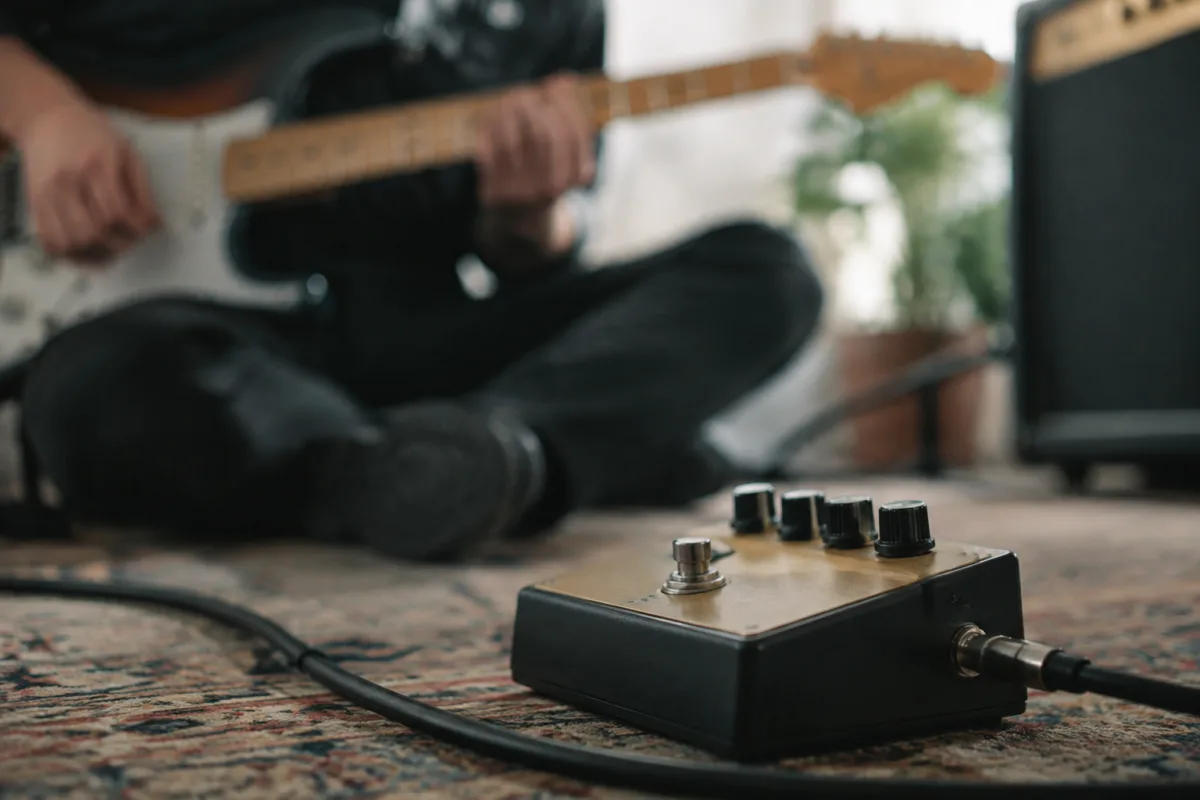
Marshall pedals seem like professional-grade equipment—the kind of thing experienced musicians use. But here's a secret: beginners can absolutely benefit from Marshall pedals, and using one doesn't require mastery of complex electronics. This beginner's guide demystifies Marshall pedals, shows you how to get started without feeling overwhelmed, and proves that adding a Marshall pedal to your setup can dramatically improve your tone immediately. You're not too inexperienced for this—you're exactly ready.
What Marshall Pedals Actually Do
A Marshall pedal is an effects unit that adds distortion, crunch, or overdrive to your tone. Marshall built their reputation on amplifier distortion that defined rock music for decades. Marshall pedals capture that legendary amplifier character in compact, affordable form. Simply put, a Marshall pedal makes your guitar or bass sound heavier, crunchier, or more aggressive—depending on which model you choose.
The beauty of Marshall pedals for beginners is straightforwardness. Unlike complex effects units with endless parameters, most Marshall pedals have just a few knobs. Turn them, and you hear the effect immediately. There's no hidden menu system or confusing interface. What you see is what you get.
Starting Simple: The Marshall Shredmaster
If you're beginning with Marshall pedals, the Shredmaster is an ideal entry point. This legendary pedal is beloved by beginners and professionals alike. Here's why it works so well: it has three straightforward controls (gain, tone, volume), produces thick, natural distortion that doesn't sound artificial, and handles everything from light crunch to full-on heavy metal tones.
Using the Marshall Shredmaster as a beginner is refreshingly uncomplicated. Plug your guitar or bass into it, plug it into your amplifier, turn it on, and adjust the three knobs. The gain dial controls distortion intensity; the tone knob shapes colour (lower = warmer, higher = brighter); the volume knob controls output level. That's genuinely all you need to know to get great results.
Your First Setup: Keeping It Easy
As a Marshall pedals beginner, you don't need a complex pedalboard. Start with just one pedal. Here's your setup:
- Your instrument (guitar or bass)
- A cable from your instrument to the Marshall pedal
- Another cable from the Marshall pedal to your amplifier
- A power source for the pedal (battery or AC adaptor)
That's it. No multi-effects units. No daisy-chaining five pedals together. One Marshall pedal between your instrument and amplifier transforms your tone immediately. This simplicity is why Marshall pedals suit beginners perfectly—you're not fighting complexity; you're just adding colour to your sound.
Dialing In Your First Tone
When you turn on your Marshall pedal for the first time, start with all three knobs in the centre (neutral) position. This gives you a moderate amount of distortion with balanced tone and volume. Play a few chords or notes and listen. If it sounds good, congratulations—you've got a usable tone already.
Now slowly turn the gain dial clockwise to add more distortion. Listen as your tone becomes crunchier. Then turn the tone control up to add brightness or down to add warmth. These adjustments directly affect your sound, and you'll hear every change immediately. This hands-on learning is far more effective than reading specifications. Play with the knobs and trust your ears.
Common Beginner Mistakes With Marshall Pedals
Avoid these frequent errors when starting with Marshall pedals:
- Maxing out the gain: Beginners often assume louder or more distorted automatically sounds better. Actually, excessive distortion becomes muddy and loses definition. Restraint usually sounds superior to excess.
- Ignoring the volume knob: Your Marshall pedal has its own volume control separate from your amplifier's volume. This output volume should match your amplifier's input level, preventing quiet tone or unwanted noise.
- Assuming every cable matters: Your cables just need to work. Expensive boutique cables don't make Marshall pedals sound better for beginners. Save money and upgrade later if desired.
- Plugging in wrong direction: Remember: instrument → pedal → amplifier. Reversing this order won't work. If you hear nothing, double-check your cable routing.
- Expecting it to sound like your favourite artist immediately: Marshall pedals are tools; mastering them takes time. Be patient with yourself. Your tone will improve rapidly through experimentation.
The Joy of Creating Tone
One of the most exciting aspects of Marshall pedals for beginners is the creative freedom they provide. You can dial in subtle warmth for jazz playing, add crunch for blues, or create full-on heavy tones for rock. Your Marshall pedal adapts to your music, not the other way around. This flexibility encourages experimentation and helps you develop your personal sound.
Spend fifteen minutes with your Marshall pedal exploring what sounds good to you. There's no wrong answer. If a particular setting makes you smile when you play, that's the right tone for you. Trust your instincts and never let someone else's preferences override your own enjoyment.
Power and Battery Considerations
Most Marshall pedals work with a 9V battery or an AC-to-DC power adaptor (both inexpensive). For beginners, batteries are convenient initially—no cables required. However, batteries die during important moments, so invest in an AC adaptor relatively soon (typically £15–£40). With an adaptor, your Marshall pedal works continuously without battery replacement worries.
Keep spare batteries in your gig bag anyway—you never know when one might fail unexpectedly during a rehearsal or performance.
Learning Through Play
The best way to master Marshall pedals as a beginner is through regular use. Play through your pedal every practice session. Notice how different gain and tone settings suit different songs or playing styles. After a few weeks, you'll have instinctive understanding of your Marshall pedal's personality and possibilities. This experiential learning beats manual memorisation every time.
Expanding Later (But Not Yet)
As you become comfortable with your Marshall pedal, you might eventually add other effects—reverb, delay, modulation, or different distortion pedals. But as a beginner, resist this urge. Master one pedal thoroughly before adding more. A setup with multiple effects units can become overwhelming, especially when learning. One quality Marshall pedal will serve you beautifully for months or years.
When you're ready to explore Marshall pedals more deeply, read our comprehensive guide to Marshall pedals, which covers the full range of models, advanced techniques, and professional applications.
Your Journey Begins
Starting with Marshall pedals isn't intimidating or complicated—it's exciting. You're about to discover how dramatically a single effects unit can transform your tone and inspire your playing. Connect your pedal, plug in your instrument, and spend an hour exploring different settings. You'll be amazed at what you can create. Welcome to the wonderful world of Marshall pedals; you're going to love this.


Comments