


Marshall Guitar Effects Pedals article
Marshall Guitar Effects Pedals for Beginners: A Complete Guide
Marshall guitar effects pedals are accessible tools for beginner guitarists to explore sound and develop tone. This guide covers essentials without overwhelming you.
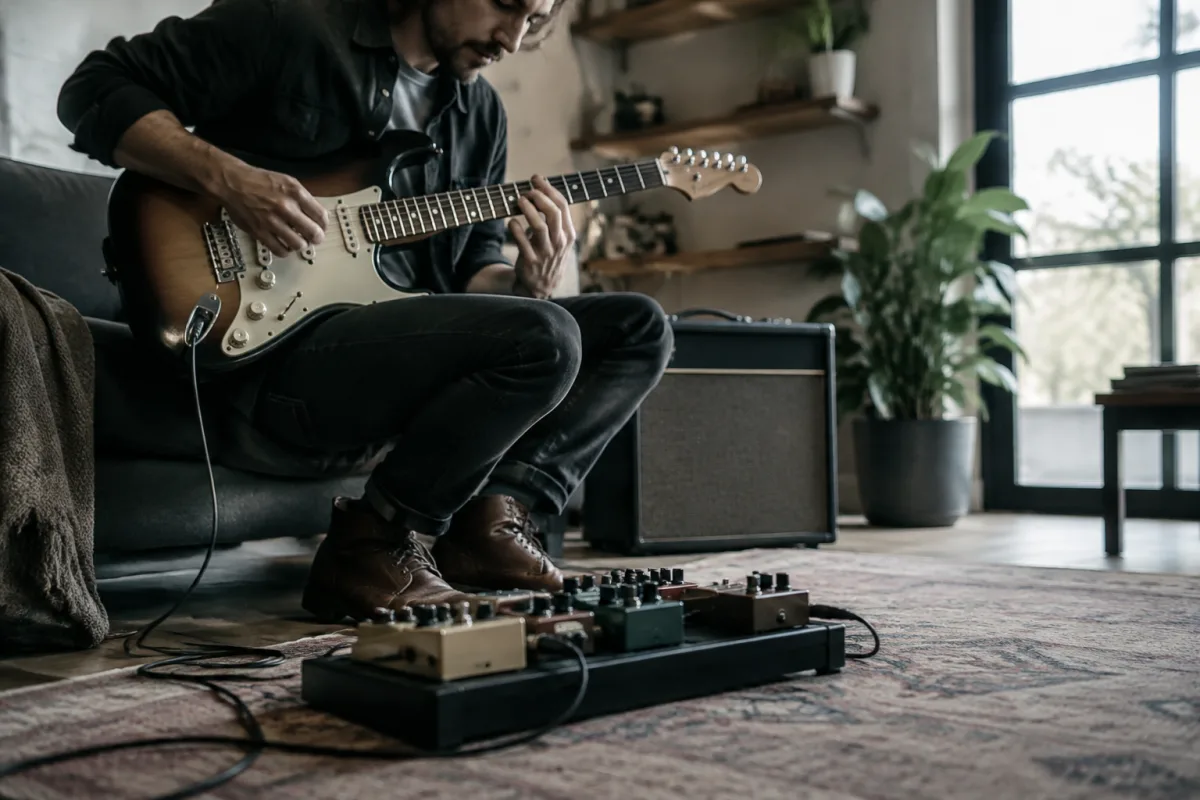
If you're learning guitar and curious about effects, Marshall guitar effects pedals represent an excellent introduction to sound modification. Marshall has built its reputation on powerful amplification and tone-shaping hardware, and their effects pedals carry that expertise forward. Whether you're interested in adding subtle effects to your practice sessions, exploring different sounds to find your musical identity, or simply curious about what a Marshall effects pedal actually does, this guide walks you through the essentials. You'll discover why effects matter to developing guitarists, what different Marshall pedals actually do, common beginner misconceptions, and how to choose your first effect without overwhelming yourself or breaking the bank. Effects can feel intimidating initially; this guide removes that barrier and puts you on a clear path to exploring your sonic possibilities.
Why Beginners Often Overlook Effects—And Why You Shouldn't
Many new guitarists assume effects are purely for advanced players or specific music genres. That's a misconception. Effects are powerful tools for musical expression at any skill level, and experimenting with them accelerates your development as a player. When you add reverb to your playing, suddenly your guitar sounds more spacious and professional. When you add overdrive, your clean amp takes on aggression and attitude. These transformations aren't tricks; they're legitimate sonic tools that professional and amateur musicians use daily. Marshall guitar effects pedals make experimentation affordable because Marshall's entry-level pedals deliver genuine quality without premium pricing. You won't get a lifeless sound that makes you regret the investment. Instead, you'll get pedals that inspire creativity and reward practice. For a beginner, that's invaluable—it keeps playing exciting and prevents plateaus that lead to abandoning guitar altogether.
Understanding What Effects Actually Do
Before committing to any Marshall guitar effects pedals, understanding the major categories helps you identify what you're actually looking for:
Distortion and overdrive: These pedals intensify and compress your signal, adding aggression and sustain. Overdrive is subtler, adding warmth and mild breakup; distortion is more extreme, creating the thick, heavily compressed sound associated with rock and metal. Marshall is legendary for distortion voicing, so their distortion and overdrive pedals are particularly good. For beginners, starting with light overdrive (rather than heavy distortion) makes sense; it enhances your tone without completely transforming your sound.
Reverb and delay: Reverb simulates room ambience—that natural shimmer you hear in concert halls. Delay repeats your notes, creating echos that range from subtle to dramatic. Both add space and dimension to clean guitar tones. They're subtle enough that beginners can experiment without drastically changing their sound, making them excellent entry points into effects.
Modulation effects (chorus, flange, phaser): These create movement and texture by modulating your signal. Chorus thickens the tone by simulating double-tracking; flange and phaser create swept, swooshing sounds. These are more "flavour" effects—they're optional rather than foundational, but they're excellent for exploring different tones once you've grasped the basics.
Compression: This pedal evens out your signal's dynamics, making quiet notes louder and loud notes quieter. It's subtle but powerful for tightening your tone and increasing sustain. Beginners often overlook compression, but experimenting with it early in your journey reveals its value.
Marshall's Effect Pedal Range: What's Available
Marshall makes several levels of effects pedals, each serving different needs and budgets:
Marshall Shredmaster or similar multi-effect modellers: These are all-in-one units containing multiple effects in a single package. They're affordable entry points because you get reverb, delay, distortion, and modulation all at once. The downside? You can't use each effect independently, so you're limited in customisation. For pure exploration and budget consciousness, multi-effect units are practical, but serious players usually prefer individual pedals.
Marshall single-effect pedals: Dedicated pedals handling one effect type (e.g., a Marshall Reverb Pedal, Overdrive Pedal). These give you more control and let you build your pedalboard gradually, adding effects as your needs clarify. They're modular and professional, though they cost more collectively than all-in-one units.
Marshall amplifier-mounted effects: Some Marshall amplifiers include built-in effects. If your amp already has reverb and delay, you might not need separate pedals. Check your equipment before buying redundantly.
For beginners, starting with one or two individual Marshall pedals is usually smarter than diving into multi-effect units. You learn each effect deeply, understand whether you like it, and build your sonic palette intentionally rather than being overwhelmed by dozens of settings.
The Learning Curve: What to Expect When You Start
Adding your first Marshall guitar effects pedal to your setup changes how you practice and play:
Initial confusion is normal. A Marshall overdrive pedal might ship with ten controls: gain, tone, level, mode switches, etc. Initially, this seems overwhelming. Don't get lost in tweaking every knob obsessively. Set it to a basic "on" position and play. You'll intuitively understand what each control does through experimentation. Trust the learning process.
Your tone will feel unfamiliar at first. When you add a new effect, your guitar sounds noticeably different. This can feel weird initially. Stick with it; your ear adapts quickly, usually within a few practice sessions. What felt alien on day one feels normal by day five.
You'll discover creative possibilities. Once you're comfortable with one effect, you'll start imagining combinations and applications. This is where effects become genuinely fun. You're not just learning guitar anymore; you're learning sound design. That creativity feeds back into your playing and keeps you motivated.
Common Beginner Mistakes with Effects
Learning from others helps you avoid frustration:
- Buying too many pedals at once: Beginning with one or two Marshall pedals makes sense. Adding five pedals simultaneously overwhelms you. You can't learn each one properly, and you're overspending. Build gradually as your understanding deepens.
- Assuming effects fix bad playing: A Marshall guitar effects pedal makes good tone sound better, but it won't hide poor technique or weak fundamentals. Effects are enhancement, not compensation. Develop your core playing first; effects amplify what's already there.
- Neglecting cables and power: Cheap guitar cables introduce noise and signal degradation. Marshall pedals work best with quality patch cables. Powering pedals matters too; battery power eventually fails and creates intermittent problems. A proper power supply removes this headache.
- Leaving settings unchanged: Many beginners set a Marshall pedal to one position and never experiment. That's like buying a restaurant with a full menu and eating the same dish forever. Spend 20 minutes experimenting with each control. You'll discover sounds that make your heart skip.
- Plugging directly into headphones: Some beginner setups involve headphones only. Effects sound best through speakers where you can hear them fully. If you're practising with headphones, at least experiment with your effects through an amp occasionally to hear the full picture.
- Forgetting the bypass switch: Most Marshall pedals have a bypass switch letting you toggle the effect on and off. Practice using this switch so you can quickly compare how your guitar sounds with and without the effect. This trains your ear to understand what each pedal contributes.
Budget Considerations and Value
Marshall guitar effects pedals typically cost between £50 and £200 per unit, depending on the effect type and the specific model. Entry-level Marshall pedals (£50–£100) are genuinely good and deliver noticeable quality without premium pricing. Mid-range models (£100–£150) offer more refinement and control options. Professional-grade models exceed £150 but are overkill for most beginners. For your first Marshall effects pedal, budget £60–£120. You're getting a quality product that will last years and inspire regular use.
Building Your Effects Journey
Starting your Marshall effects pedal journey means choosing one effect to explore deeply. A good starting point is overdrive or reverb—both are intuitive and transform your tone noticeably without overwhelming you. Once you're comfortable and understanding how that pedal shapes your sound, you're ready to add a second effect. This gradual approach keeps learning manageable and prevents gear acquisition from taking precedence over actual playing.
When you're ready to explore the full range of Marshall guitar effects pedals, detailed reviews, specifications, and recommendations for building a complete pedalboard, our complete guide to Marshall guitar effects pedals provides comprehensive coverage. But with the fundamentals in this guide, you're ready to select your first effect with confidence and start shaping your unique sound.


Comments