


Kick Pedals article
The Complete Guide to Kick Pedals
Discover how kick pedals give bassists expressive hands-free control over tone and effects. Essential guide to expression pedals, controllers, and live performance techniques.
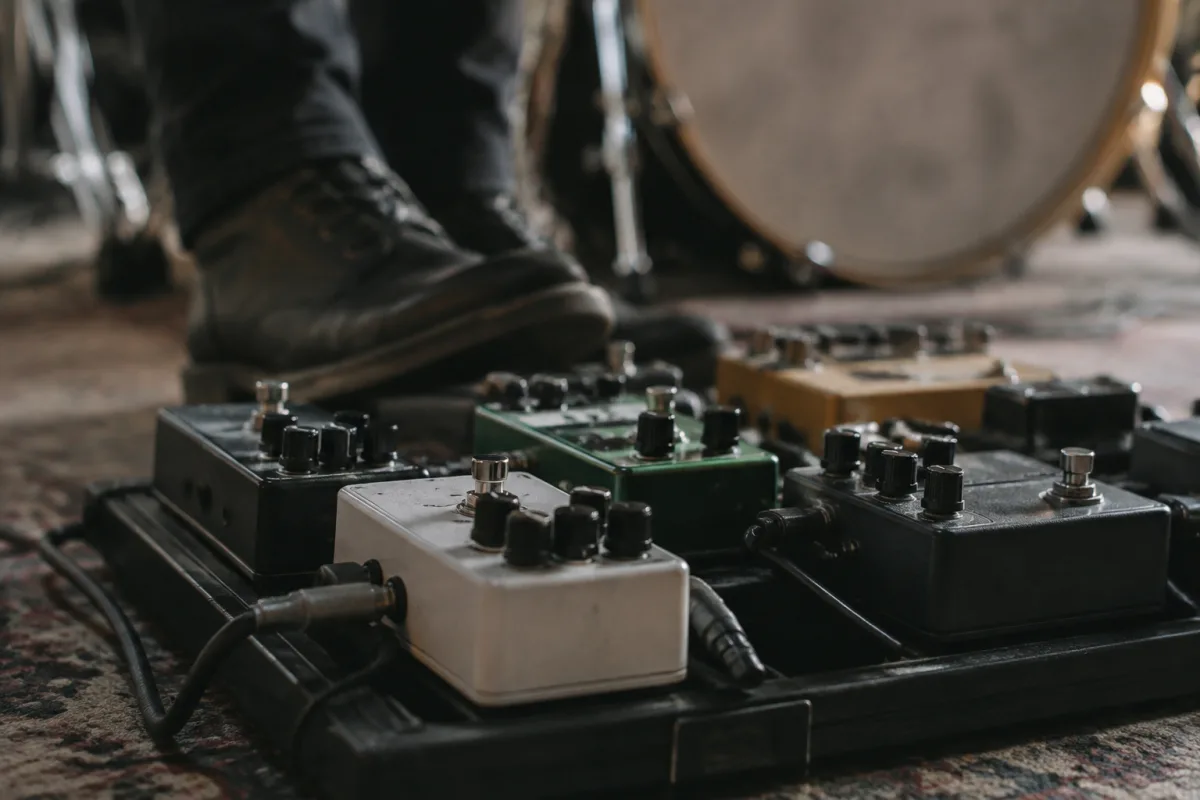
For bassists who want to control effects, adjust amplifier settings, or trigger samples whilst keeping both hands on the neck, kick pedals offer a practical solution. Sometimes called foot controllers or expression pedals, kick pedals allow musicians to manipulate tone and triggering with their feet—freeing hands for playing and expressiveness. Whether you're a gigging bassist managing complex rig changes live, a studio musician layering textures, or an innovative performer integrating foot control into your onstage technique, understanding kick pedals is essential to modern bass guitar playing.
What Are Kick Pedals?
Kick pedals are foot-operated devices that send control signals to your amplifier, effects units, or MIDI instruments. Rather than reaching for knobs or switches during performance, bassists use kick pedals to control elements hands-free. A typical kick pedals unit might adjust your amplifier's volume, toggle distortion on and off, sweep a wah filter, or trigger drum machines—all whilst your hands remain on the bass.
The mechanism is usually simple: you press down on the pedal (like an accelerator), and the further you depress it, the more the parameter changes. Most kick pedals send either analogue voltage signals (for analogue gear) or MIDI control messages (for digital instruments and controllers).
Why Bassists Use Kick Pedals
Hands-Free Control
The primary advantage of kick pedals is obvious—your hands stay on the bass, never reaching for knob adjustments. This is invaluable in a live setting where stopping your groove to adjust an effect pedal looks unprofessional and breaks momentum. A kick pedals system lets you maintain feel and energy whilst reshaping your tone in real-time.
Expressive Possibilities
Kick pedals enable expressive, dynamic tone-shaping. A wah-like sweep of your amp's EQ, a gradual volume swell, or a real-time morphing between two effects create sonic movement that static settings cannot. Professional bassists use kick pedals specifically for this expressive capability—turning a single note into a statement through foot control.
Complex Rig Management
Modern bass rigs often include multiple effects, amp channels, or switching systems. Managing all this manually during a live performance is overwhelming. Kick pedals, especially MIDI-enabled ones, can be programmed to switch multiple devices simultaneously with a single pedal press—automating complex rig changes that would otherwise require manual intervention.
Live Performance Confidence
When every tone change is under your complete control via kick pedals, you gain confidence and ownership over your sound during performance. You're not at the mercy of preset amp settings or forgetting to toggle an effect—you have responsive, real-time control at your feet.
Types of Kick Pedals
Expression Pedals
The most common kick pedals style, expression pedals send variable voltage or MIDI data proportional to how far you depress the pedal. A kick pedals expression pedal controlling your amp's volume works exactly like a car's accelerator—press harder for more volume, release for less. These kick pedals are intuitive and widely compatible with analogue and digital gear.
Footswitches
Simpler kick pedals footswitches are toggles that send a single on/off command. Press to activate an effect; press again to deactivate. Unlike expression pedals that vary continuously, kick pedals footswitches are binary—on or off. They're useful for switching between preset amp channels or toggling effects, but offer no continuous expression.
Multi-Pedal Controller Systems
Advanced kick pedals systems integrate multiple expression pedals and footswitches into a single pedalboard. Professional systems like the Behringer FCB1010 MIDI footcontroller allow programmable scenes, meaning one pedal press can trigger multiple simultaneous actions across your entire rig. These kick pedals are expensive but offer extraordinary control for complex setups.
Volume Pedals
Specialised kick pedals for volume control are simpler than expression pedals—they're designed solely to manage output level. A dedicated volume pedal in your kick pedals rig is valuable when you need reliable, quick volume swells without complex routing or MIDI programming.
Choosing the Right Kick Pedals for Your Setup
Compatibility
Before purchasing kick pedals, confirm they're compatible with your amplifier or effects chain. Analogue amps and older effects require voltage-controlled kick pedals; modern MIDI-capable gear benefits from MIDI kick pedals. Check your amp's footswitch input specifications to ensure the kick pedals you choose will actually work with your setup.
Feel and Responsiveness
Some kick pedals are stiff and require forceful pressing; others are too sensitive and respond to slight movements. Test kick pedals in person if possible to assess the responsiveness curve. A well-designed kick pedals unit should feel natural and intuitive—you should be able to make minute adjustments without accidental overshoots.
Durability
Kick pedals take abuse in live and studio environments. Heavy-duty kick pedals with metal construction and sealed potentiometers last longer than cheap plastic models. Invest in quality kick pedals that will survive years of gigging without developing scratchy controls or unreliable responsiveness.
Practical Setup for Kick Pedals
Position your kick pedals on your pedalboard or directly in front of your amplifier where you can easily reach it with your dominant foot whilst standing comfortably. Ensure clear sightlines—you shouldn't have to look down to control your kick pedals during performance. Cable management is crucial; neatly route kick pedals cables to prevent tripping hazards or accidental disconnection during a set.
If using multiple kick pedals (expression pedal plus footswitches), position them logically—frequently used controls near the centre, less-used pedals at the edges. Program your kick pedals to match your muscle memory so pressing specific areas feels natural.
Kick Pedals in Different Genres
Funk and slap bassists often use kick pedals to add percussive wah and envelope effects, creating rhythmic texture. Jazz bassists might employ kick pedals for subtle volume and tone shaping. Heavy music players use kick pedals to toggle distortion effects in and out, adding aggression on cue. Experimental bassists program kick pedals to trigger samples or control MIDI instruments, merging bass playing with production.
Conclusion
Kick pedals transform a bassist from a two-handed musician into a three-limbed performer—your feet become expressive control surfaces alongside your hands. Whether you're seeking hands-free effect toggling, expressive real-time tone-shaping, or complex rig automation, kick pedals are essential tools for modern bass playing. Choose kick pedals suited to your amp and effects compatibility, prioritise build quality and feel, and you'll unlock a new dimension of control and expressiveness in your bass rig.



Comments