


Guitar Effects Compressor article
Guitar Effects Compressor for Beginners: A Complete Guide
If you're curious about guitar effects compressor pedals, you're exploring one of the most misunderstood yet genuinely transformative effects available to guitarists.
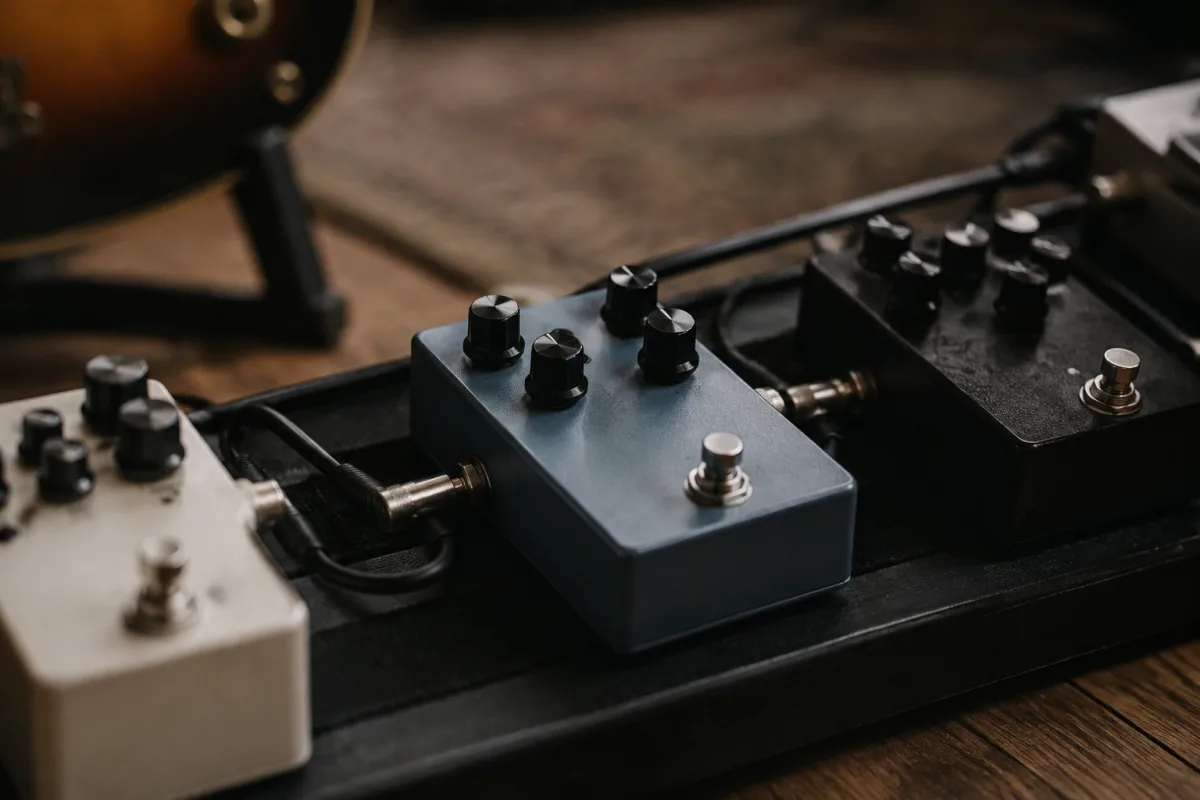
If you're curious about guitar effects compressor pedals, you're exploring one of the most misunderstood yet genuinely transformative effects available to guitarists. A guitar effects compressor doesn't scream for attention like distortion or delay—it works quietly behind the scenes, shaping your tone in subtle ways that accumulate into significant changes. Whether you're recording in the studio, playing live, or simply wanting cleaner, more professional tone, understanding how guitar effects compressor works and how to use it confidently transforms your playing. This guide walks you through compression from first principles, making this potentially intimidating effect approachable and genuinely useful.
What Does a Guitar Effects Compressor Actually Do?
A guitar effects compressor reduces volume when your signal gets loud, while leaving quieter passages alone. This creates dynamic control—your loud notes don't spike out of control while quiet notes remain present and audible. Imagine a volume limiter that prevents shouting but preserves whispers. That's essentially what guitar effects compressor does.
This sounds simple until you realise the profound implications. Compressed guitars sound tighter, more focussed, and more professional. Dynamics feel controlled yet natural. Notes sustain longer. Tone smooths out without sounding broken or lifeless. A quality guitar effects compressor is genuinely transformative, which is why session players and touring professionals rarely leave it off their pedalboards.
Demystifying Compressor Controls
Guitar effects compressor pedals intimidate beginners because they include controls that seem complicated. Understanding what each control does removes the mystery:
Ratio: This determines how aggressive compression is. A 2:1 ratio means for every 2dB of signal above the threshold, only 1dB emerges—gentle compression suitable for most playing. A 4:1 ratio is more noticeable. A 10:1 or higher ratio is extreme limiting. Beginners should start with low ratios (2:1 to 4:1) and increase gradually. Aggressive compression is tempting but often sounds artificial until you develop ears for it.
Threshold: The level where guitar effects compressor starts working. Set threshold high and only your loudest peaks compress. Set it low and everything compresses. Most beginners start with threshold set conservatively (halfway or lower) so gentle compression affects most of your playing. As you develop comfort, adjust threshold to compress only specific dynamic elements.
Attack: How quickly guitar effects compressor responds when signal exceeds threshold. Fast attack (short milliseconds) compresses immediately—useful for controlling pick attack on lead playing. Slow attack lets initial transient through before compressing—preserves natural brightness and attack. Most beginners prefer moderate-to-slow attack (10-50ms) that compresses without completely eliminating attack.
Release: How long guitar effects compressor holds compression after signal drops below threshold. Fast release (under 100ms) returns to normal quickly—each note releases independently. Slow release (200ms or more) maintains compression across multiple notes—creates smooth, connected sound. Beginners often start with medium release (100-150ms) and adjust based on how connected they want notes to feel.
Makeup gain: Since compression reduces volume, makeup gain brings overall level back up to prevent quieter tone. This compensates for compression's volume reduction without requiring separate boost pedal. Always adjust makeup gain after setting other parameters.
Getting Started: Beginner-Friendly Settings
Rather than tweaking all parameters endlessly, start with proven beginner-friendly settings and develop understanding through experience:
Bass player starting point: Set ratio to 4:1, threshold midway, attack moderate (20-30ms), release medium (150ms), makeup gain at unity. This compresses bass dynamics without over-controlling. Adjust from here based on how your bass feels and sounds.
Lead guitarist starting point: Set ratio to 2:1, threshold moderately high, faster attack (5-10ms) to control pick attack, release moderate (100ms), makeup gain at unity. This preserves attack while controlling volume spikes, useful for sustaining leads.
Rhythm guitarist starting point: Set ratio to 3:1, threshold midway, attack medium (15-20ms) for balanced control, release medium (150ms) for connected feel, makeup gain at unity. This tightens rhythm playing without over-processing.
These aren't magic settings—they're starting points. Adjust based on your guitar, amplifier, and musical goals. The key is understanding the direction each control moves you, then tweaking intelligently.
Common Compressor Misconceptions
Several myths about guitar effects compressor confuse beginners:
"Compression kills sustain": Wrong. Gentle compression (low ratio, moderate settings) actually extends sustain by maintaining volume as signal naturally decays. Aggressive compression can make sustain artificial-sounding, but proper compression enhances it. A correctly set guitar effects compressor improves sustain.
"Compression removes attack": Only if your attack setting is too fast. Fast attack suppresses pick noise; moderate-to-slow attack preserves it. Beginners choosing slow attack (50ms+) maintain attack while compressing decay. This is why knowing attack matters.
"I'll immediately hear compression working": Often not. Gentle compression (which is usually appropriate) sounds subtle—barely perceptible on first hearing. You notice improved consistency, tighter tone, enhanced sustain—not dramatic volume changes. Some players compress for weeks before realising how much the effect transforms their playing.
"Compression is only for recording": Professional live players use compression constantly. It tightens stage tone, prevents volume inconsistency from performance to performance, and creates focussed presence. Live compression is genuinely important.
Common Beginner Mistakes
These predictable errors trap first-time compressor users:
- Setting ratio too aggressively: A 10:1 ratio sounds impressive but often sounds artificial and squeezed. Start at 2:1 or 4:1 where compression feels natural. You can increase ratio later.
- Attack too fast: Compressing pick attack immediately removes the natural brightness that makes guitars sound alive. Unless deliberately going for ultra-smooth tone, fast attack (under 5ms) often disappoints beginners. Moderate attack (15-30ms) usually sounds more musical.
- Forgetting makeup gain: After compressing signal down, forgetting makeup gain makes your tone quieter than input. Always adjust makeup gain to match input level. This prevents tone loss.
- Threshold too low: Compressing everything including soft passages can make playing feel numb and unresponsive. Higher threshold that compresses only peaks often feels more musical. Experiment with threshold position relative to your normal playing level.
- Using expensive compressor as beginner: Budget compressors (£50-100) do compression perfectly well. Premium models offer more control and refinement but aren't essential learning. Start budget; upgrade only after understanding what you need.
Placement in Your Signal Chain
Where you place guitar effects compressor in your pedalboard affects how it interacts with other effects. Generally, compressor works best early in your chain—before distortion, modulation, and time-based effects. This way compression shapes your fundamental tone before effects processing adds character.
Exception: Some players prefer compressor after distortion to compress the distorted signal. This creates different character—cleaner distortion with dynamic control applied afterwards. Experiment with placement and discover what you prefer. Guitar effects compressor near the beginning of your chain is standard; other positions are creative choices.
Compression in Different Musical Contexts
Bass guitar: Compression is nearly universal for bass. It controls dynamic range, creates tighter tone, and prevents volume inconsistency. Bass players typically use moderate compression with longer release. This smooths playing and maintains presence in dense mixes.
Lead guitar: Compression enhances sustain and creates focussed presence. Fast attack preserves pick attack; moderate release maintains connection between notes. Lead compression supports solos sounding polished and intentional.
Rhythm guitar: Compression tightens rhythm playing, prevents volume spikes during aggressive sections, and creates consistency. Moderate compression with balanced attack/release settings supports solid rhythm performance.
Fingerstyle guitar: Compression can be subtle—preserving finger dynamics while tightening overall tone. Some fingerstyle players avoid compression; others find gentle compression enhances their playing. Personal preference matters.
Recognising When Compression Is Working
Subtle compression effects are hard to spot. Listen specifically for:
Sustain improvement: Notes ring longer without volume quickly fading away. Compressed signal maintains level as it naturally decays.
Tighter tone: Playing feels more connected and controlled. Loud peaks don't suddenly spike; quiet passages remain present.
Enhanced presence: In mixes, compressed guitar cuts through without being aggressively loud. Presence seems better-defined.
Consistent dynamics: Playing feels steady from performance to performance. Wild dynamic swings are smoothed into intentional variation.
If you're hearing dramatic volume pumping or tone that sounds squeezed, your compression is probably too aggressive. Back off ratio, increase attack time, or raise threshold. Compression should enhance your tone subtly—it shouldn't announce itself.
Moving Forward with Compression
Compression is a life-long learning process. Professionals spend years refining compression technique and developing preferences. Start simple, use beginner settings, and adjust gradually as your ears develop. Don't overthink it—compression is intuitive when given time to explore.
Many guitarists eventually own multiple compressors for different instruments or musical contexts. This happens after developing compression understanding through dedicated study and experience. Start with single quality unit and develop mastery before expanding.
A guitar effects compressor is genuinely transformative when understood and used properly. Start with modest settings, develop ears for what's happening, and adjust gradually. Within weeks, you'll recognise how compression enhances your tone. For detailed exploration of compression technology, different compressor types, and advanced techniques, read our comprehensive guide to guitar effects compressors. Compression is one of professional guitar's open secrets—it quietly transforms what's possible.


Comments