


Guitar Effects Compressor Buying guide
Guitar Effects Compressor: A Complete Buyer's Guide
Choosing a compressor means understanding compression ratios, attack and release times, and which circuit design matches your tone. This guide demystifies the specs so you can buy with confidence.
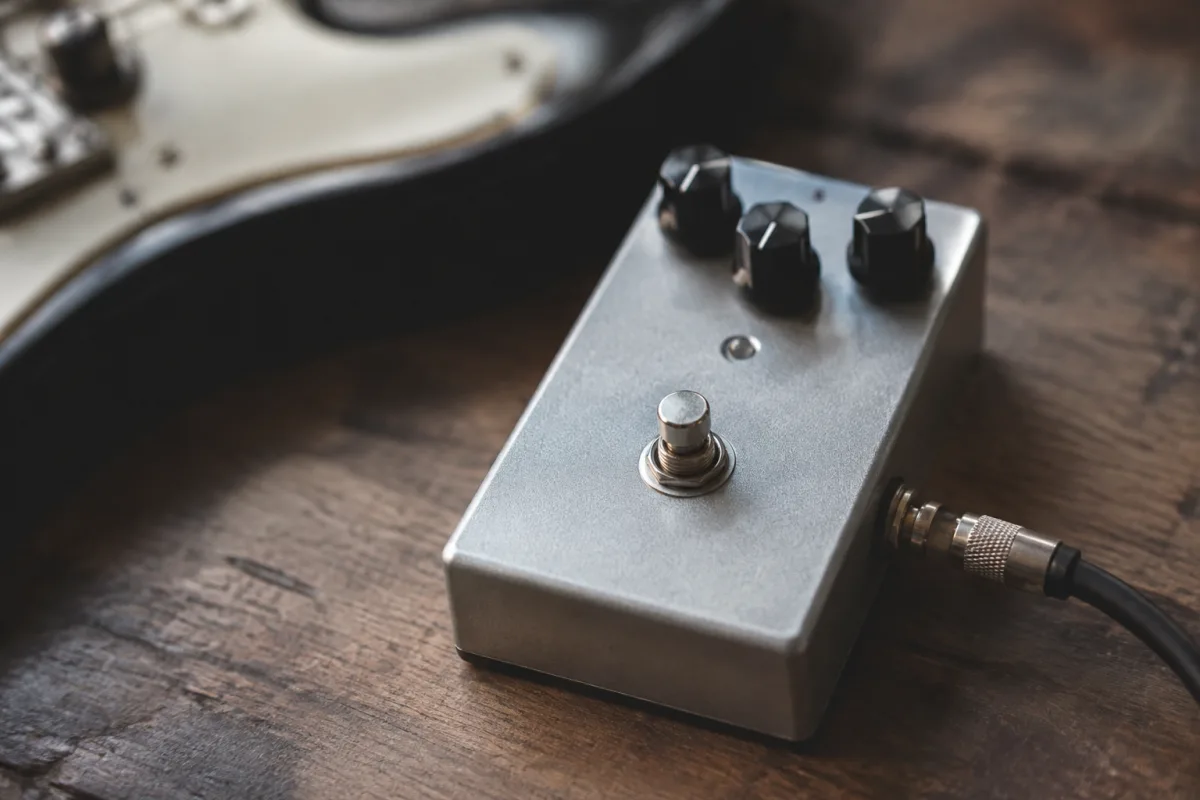
Understanding Guitar Effects Compressor Specifications
A guitar effects compressor is one of the most transformative pedals you can add to your rig—yet it's often misunderstood by players who haven't used one. This buying guide walks you through the key specifications, design types, and features that distinguish quality compressors, so you can make an informed choice based on your style and playing demands.
What Does a Compressor Do?
A compressor controls the dynamic range of your signal—it reduces the volume of loud peaks whilst leaving quieter signals untouched. The result: your tone sits more consistently in the mix, sustain is enhanced, and you gain control over dynamics without constantly adjusting your volume knob.
Different compressor types achieve this in different ways, and understanding the difference is key to choosing the right pedal for your sound.
Compression Ratio and Threshold
Two core specifications define how aggressively a compressor works:
Compression ratio: How much the compressor reduces volume once the signal crosses the threshold. Expressed as X:1 (e.g., 4:1, 8:1, ∞:1).
- 4:1 ratio: For every 4 dB the signal exceeds the threshold, the output rises only 1 dB. Mild, transparent compression.
- 8:1 ratio: More aggressive. Each 8 dB of input excess becomes 1 dB of output. Clear compression effect, audible but not radical.
- ∞:1 (limiting): Once the threshold is crossed, output stays flat. Hard limit—no signal ever exceeds the set level.
Threshold: The input level at which compression begins. Below threshold, no compression. Above threshold, compression applies according to the ratio.
For buying purposes, know that lower ratios (2:1–4:1) suit bass and slap guitar, preserving dynamics and articulation. Higher ratios (8:1+) suit rock and lead guitar, controlling wild peaks and sustaining notes.
Attack and Release Times
Attack and release determine how quickly the compressor responds to changes:
Attack: How fast the compressor reacts once the signal crosses the threshold. Measured in milliseconds (ms).
- Fast attack (0.5–5 ms): Clamps peaks immediately. Smooths pick attacks. Used in funk, slap bass, and shredding.
- Slow attack (20–100+ ms): Lets initial pick transient through before compressing. Preserves note definition and natural tone. Used in rock, country, and most styles.
Release: How quickly the compressor stops compressing once the signal drops below threshold. Measured in milliseconds.
- Fast release (50–200 ms): Quick return to normal. Snappy, dynamic feel. Good for funk and slap.
- Slow release (300 ms–2 seconds): Compressor "ducks" gradually, adding sustain and smoothness. Popular in rock and lead guitar.
The combination of attack and release defines the "character" of a compressor. Fast attack + slow release yields maximum sustain and smooth tone. Slow attack + fast release preserves dynamics and natural attack.
Compressor Types: Which Suits Your Playing?
Different circuit designs produce different sonics:
Optical Compressors (Tube-Style)
Uses a photocell to sense signal level and reduce gain. Warm, musical, natural-sounding. Attack and release are not always user-adjustable; instead, they follow the circuit's inherent curve.
Best for: Rock, blues, country, any style where you want smooth, musical compression without obvious effect.
Examples: Boss CS-2, MXR Dyna Comp.
Fet Compressors (Transistor)
FET (Field Effect Transistor) compressors respond extremely fast, with user-adjustable attack and release. Aggressive, punchy character.
Best for: Funk, slap bass, aggressive rock, any style demanding fast response and thick sustain.
Examples: Boss CS-3, Effectrode Tube Compressor (hybrid FET/tube).
VCA Compressors (Voltage Controlled)
VCA (Voltage Controlled Amplifier) designs offer maximum control and precision. Very fast attack, adjustable release, and often multiple controls (threshold, ratio, makeup gain). Clean, transparent.
Best for: Professional use, complex pedalboards, situations requiring exact dynamic control.
Examples: Boss CP-1X, Empress Compressor.
Note: For most guitarists, optical compressors are the sweet spot: warm tone, simple operation, natural character. FET compressors suit bassists and funk players. VCA is for specialists.
Key Controls on a Guitar Effects Compressor
Basic pedals have few controls; advanced units have many. Essential controls:
- Level/Output: Master output volume to maintain unity gain or add boost. Essential—you need to compensate for volume loss from compression.
- Sensitivity/Threshold: How easily the compressor engages. Higher sensitivity = lower threshold = compression starts earlier.
- Sustain/Ratio: How hard the compressor works. More sustain = higher ratio = more aggressive.
- Attack: Speed of response. Fast = smooth, slow = punchy.
Advanced pedals add Tone, EQ, Mix (blend), or multiple modes. Nice features, but basic controls suffice for most players.
Why Output Level Matters
A critical beginner mistake is ignoring output level. Compression reduces the volume of peaks, but it doesn't automatically maintain your overall level. If you compress a loud signal without boosting output, your tone becomes quieter.
A quality compressor includes an output knob so you can dial in "makeup gain"—boosting the compressed signal to match your bypass level. This is not optional; it's essential for maintaining your place in the mix.
Some budget compressors lack output control, which is a red flag.
Price Tiers and Value
Guitar effects compressors range widely:
- Budget (£30–£80): Minimal controls, basic optical or FET design. Works but limited flexibility. Trial-and-error purchase.
- Mid-range (£80–£200): Established designs (Boss CS-2, MXR Dyna Comp) with proven sound. Excellent value, used by professionals.
- Premium (£200–£400): Advanced controls, multiple modes, professional build. For touring musicians or tone specialists.
Mid-range compressors offer the best value. A Boss CS-2 or MXR Dyna Comp, both under £150, are industry standards used by everyone from session musicians to touring legends. Upgrading to premium rarely justifies the cost unless you need extreme flexibility.
Buying Considerations for Different Styles
Bass guitar: Look for a compressor with adjustable attack and fast response (FET design ideal). Bass needs aggressive sustain control. Examples: Boss CS-3 or Darkglass Tone Scientist.
Rock and lead guitar: Optical compressors are perfect—warm, smooth, forgiving. Boss CS-2 or MXR Dyna Comp.
Funk and slap: FET compressor with fast attack to control pick transient. Aggressive ratio (8:1+) and slow release for sustain.
Jazz and clean tones: Subtle compression. Low ratio (2:1–4:1), slow attack to preserve articulation. Optical design ideal.
Common Mistakes When Buying
- Ignoring output level: A compressor without output control creates volume loss that forces you to compensate elsewhere. Avoid.
- Not trying before buying: Compressor character is sonic and subjective. Borrowing one from another musician or trying at a shop reveals whether you like the tone.
- Assuming more controls = better: Simplicity is often superior. The original MXR Dyna Comp (three knobs) is considered the best-sounding compressor ever made. Complex units aren't inherently better.
- Choosing a compressor for the wrong style: A FET compressor designed for aggression isn't ideal for jazz. Match the design to your aesthetic.
- Placing it wrong in the chain: Compressors typically go early in the chain, after tuner, before modulation and time-based effects. Wrong placement diminishes effectiveness.
Final Thoughts on Selecting Your Compressor
If you're new to compression, start with a mid-range optical compressor (Boss CS-2 or MXR Dyna Comp). Both are affordable, legendary, and immediately rewarding. Once you've lived with one, you'll understand your compression preferences and can explore other designs with confidence.
For detailed comparisons between specific models, advanced techniques, and how compression works with other effects, read our comprehensive guide to guitar effects compressors.
FAQ
Q: Should a beginner use a compressor?
A: Not necessarily. Compression is transformative but not essential when learning basics. Add it once you're comfortable with fundamental technique and tone.
Q: Will a compressor fix poor technique?
A: No. A compressor smooths dynamics but doesn't teach you to play cleanly. Develop your technique first; add compression to enhance what you've already built.
Q: Can I use a compressor with distortion?
A: Yes. Place the compressor before the distortion (early chain) to smooth your input, or after distortion (late chain) to control the distortion's volume. Experiment both ways.
Q: Is optical or FET compression better?
A: Neither is objectively better—they're different tools. Optical is smoother and more forgiving; FET is faster and more aggressive. Choose based on your style.
Q: How do I know if a compressor is working?
A: Engage the pedal and turn up the sustain/ratio knob. You should hear your notes sustaining longer, especially on the higher frets. Turn off the pedal and compare—the difference is obvious.
Q: Can I put two compressors in my chain?
A: Yes, but rarely necessary. Stacking compressors can over-smooth tone and introduce artifacts. Master one first; add a second only if you have a specific sonic goal.



Comments