


Cool Guitar Effects article
Cool Guitar Effects for Beginners: A Complete Guide
Cool guitar effects seem intimidating to beginners, but they're genuinely simple. This guide gets you experimenting with reverb, delay, and distortion immediately—without confusion or expense.
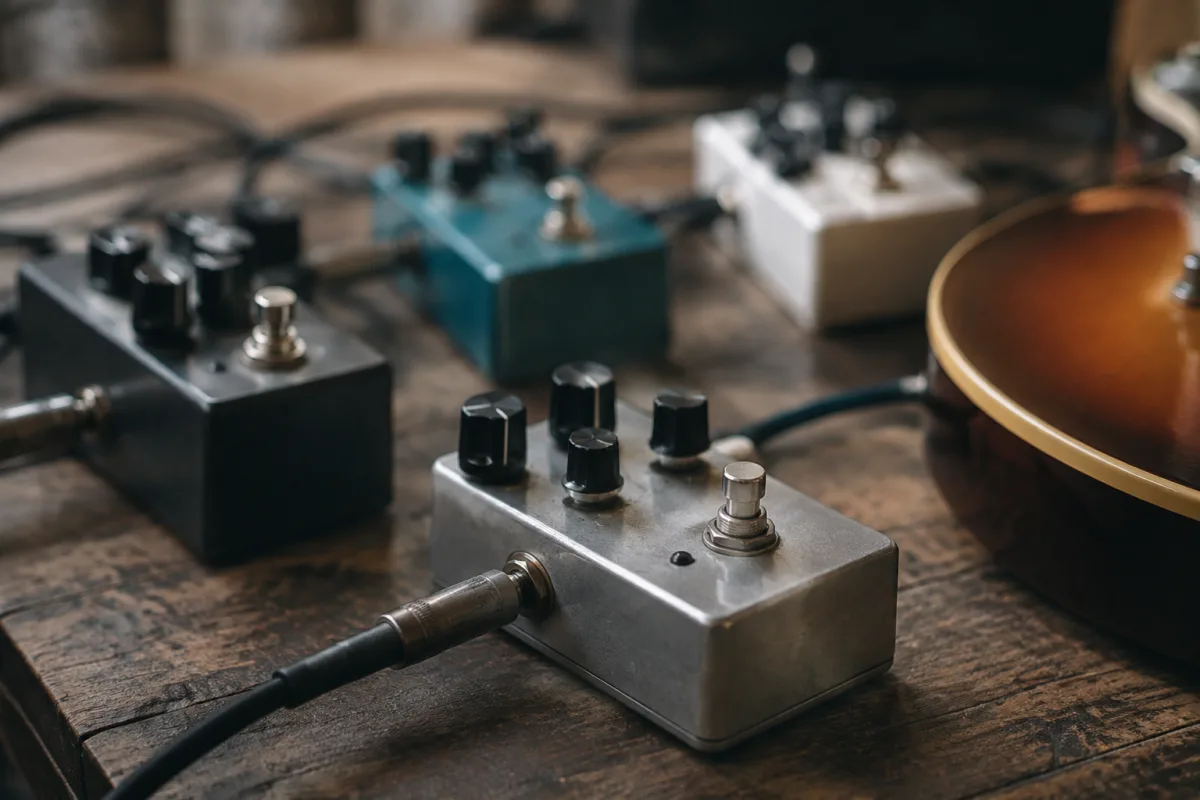
Cool guitar effects sound mysterious to beginners, yet they're far simpler than you'd think. The nerve-wracking part isn't understanding effects—it's actually using them on your guitar. This guide strips away the mystique and gets you experimenting with effects in minutes, not weeks. You'll discover that cool guitar effects aren't some advanced technique reserved for professionals; they're genuinely fun tools that transform ordinary playing into something that makes you smile.
What Guitar Effects Actually Do
A guitar effect is simply a device or software that modifies your guitar's sound before it reaches the speaker or recording device. That's genuinely all it is. Plug your guitar into an effect, the effect processes the signal, and out comes something different. Cool guitar effects work by taking your raw tone and transforming it—adding space, thickness, distortion, or movement. Understanding that one thing makes every effect less intimidating.
Some effects are hardware boxes you stand on or carry in your pedalboard. Others are software plugins on your computer or tablet. Some are built into amplifiers or digital audio workstations. The platform doesn't matter much when you're starting out—what matters is understanding the three main categories and trying them.
The Three Essential Effect Types for Beginners
Modulation effects (think delay and reverb) create space around your tone. They make your guitar sound like it's playing in a concert hall or cavernous canyon. A tiny bit of delay makes your playing feel fuller and more professional. Too much sounds like you're playing in a bathroom. These cool guitar effects teach you nuance—how to add just the right amount of processing without drowning your tone.
Distortion effects add grit, crunch, and aggression to your tone. Turn up a distortion effect and suddenly your clean, gentle guitar sound becomes snarling and powerful. Distortion is essentially controlled destruction—it deliberately clips and distorts your signal, creating entirely new harmonic content. This is where cool guitar effects start becoming genuinely fun.
Filtering effects, particularly a wah-wah pedal, let you sweep through frequencies as you play. These cool guitar effects are interactive—you physically control them, and they respond in real-time to your movement. A wah-wah pedal makes guitar sound expressive in a completely different way. Funk players and rock soloists rely on wah-wah for tone personality.
Start With Reverb: The Easiest First Step
If you're new to cool guitar effects, reverb is your entry point. Reverb is simply the tail of sound that hangs in a space after you stop playing. Every room has natural reverb; a small bedroom sounds dead, a cathedral sounds alive. A reverb effect artificially adds this natural phenomenon to your guitar tone.
Setting up reverb is ridiculously simple: enable it, turn the mix up slightly (not to full), and listen. Your guitar immediately sounds fuller and more present. Reverb is nearly impossible to misuse at low levels—it's gentle and improves nearly everything. This is why cool guitar effects like reverb are perfect for beginners. You can't get it wrong.
A quick tip: reverb sounds best when you're not trying hard. Turn it on, set it to about thirty percent, and forget about tweaking it constantly. That's when reverb becomes genuinely cool—when you stop thinking about it and just enjoy how your tone feels.
Delay: Your Second Cool Effect to Try
Delay is reverb's cousin. Instead of ambient tail, delay repeats your note or chord at a specific interval. Play a note, and after a beat, a ghost copy of that note repeats. Play another note, and the first delay repeats too. Delay creates rhythmic texture and makes your playing feel enormous.
The key parameter with delay is the delay time—how long between repeats. Set it to quarter-notes of your song's tempo, and the repeats lock into your rhythm. Set it randomly, and you get chaos. Cool guitar effects like delay teach you to think rhythmically about your tone.
Many beginners set delay too high initially. They come back saying "delay sounds terrible!" when really they've set it to fifty percent mix. Start at ten percent. Genuinely. Let your playing evolve first, then gradually increase delay. You'll develop taste and understanding as you use it.
Distortion: When Your Tone Needs Power
Distortion is where cool guitar effects start feeling genuinely thrilling. A gentle drive sound (just a little bit of distortion) adds thickness and warmth to clean tones. Crank it up and you're in rock and metal territory. Distortion is expressive—how hard you hit the strings and how much distortion you dial in work together, creating dynamics that clean tone can't match.
The secret with distortion is that it responds to your playing dynamics. This is what separates cool guitar effects like distortion from mere fuzz. Quiet, mellow playing through distortion still sounds thoughtful. Aggressive, driving playing sounds powerful. Distortion amplifies your playing intention in ways clean tone doesn't.
Start with mild distortion (overdrive, which is gentle distortion). Get comfortable with how it feels, how your tone changes, how your playing style evolves. Then experiment with heavier distortion. You'll quickly discover the sweet spot for your taste.
Common Beginner Mistakes With Cool Effects
The first mistake is stacking too many cool guitar effects at once. Beginners often enable reverb, delay, distortion, chorus, and flanger simultaneously, wondering why their tone sounds like soup. Effects combine—reverb on top of delay on top of distortion creates mud, not magic. Start with one. Master it. Add a second. This discipline teaches you what each effect does independently.
The second mistake is setting effect levels too high. Reverb at full mix is nauseating. Delay at full mix creates an unusable echo chamber. Cool guitar effects shine at moderate levels. Learn to love subtlety before embracing extremes. Many professional guitarists use cool guitar effects at barely perceptible levels—just enough to add colour without drawing attention.
The third mistake is confusing correlation with causation. You try a cool guitar effect, your tone changes, and you assume the effect caused the improvement. Usually you've just changed your playing—you're paying more attention, concentrating harder, or physically playing differently. Test effects against bare tone blind-test style to hear their actual contribution.
The fourth mistake is buying expensive effect pedals before understanding what you're doing. A £300 vintage effect pedal sounds incredible to seasoned players who know how to use it. To beginners, it sounds confusing. Start with budget effects or free software plugins. Once you understand what you're doing, invest in quality.
Where to Get Your First Cool Guitar Effects
Hardware pedals are satisfying (you physically stomp them, they make cool guitar effects in real-time), but software is cheaper and endlessly tweakable. Free options exist—many DAWs include basic reverb and delay plugins. Download free reverb plugins, load them into your DAW, record guitar through them, and experiment cost-free.
Amplifiers often include built-in effects. Plug into your amp and explore what's there before buying external gear. Many amp effects are genuinely good. You're learning about cool guitar effects whilst using equipment you already own.
Online communities share presets and settings for effects. Don't use them as gospel—they're starting points. Tweak them. Break them. Understand why settings work or don't. This experimentation teaches you far more than copying patches.
The Psychology of Cool Guitar Effects
Here's the truth about cool guitar effects: they make practice more enjoyable. Playing clean tone for hours is work. Adding subtle reverb and delay makes it sound professional and encourages longer practice sessions. Effects don't make you a better player (technique and ear training do that), but they make playing feel rewarding.
This is why cool guitar effects matter for beginners—they keep you motivated. When your dry, amateur tone suddenly sounds spacious and intentional, you feel like you've levelled up. You have, just not in technique. You've levelled up in satisfaction and motivation.
Getting Deeper Into Cool Effects
For broader context on guitar effects and advanced options, our complete guide to cool guitar effects explores the full landscape of effect types and creative applications.
Your Next Steps
Here's what to do right now: find reverb (hardware, software, or amp), enable it at moderate level, and play for an hour. Notice how your tone changes. Play the same passages you've practiced a thousand times and notice how reverb makes them sound fresher. That moment—when you realise cool guitar effects make playing feel better—that's the moment you understand why every guitarist uses them.


Comments