


Cool Bass Pedals Buying guide
Cool Bass Pedals: A Complete Buyer's Guide
Cool bass pedals unlock creative possibilities for your bass tone. But the market is overwhelming. Before you commit your budget, understand what different pedal types do and which specs deliver genuine quality.
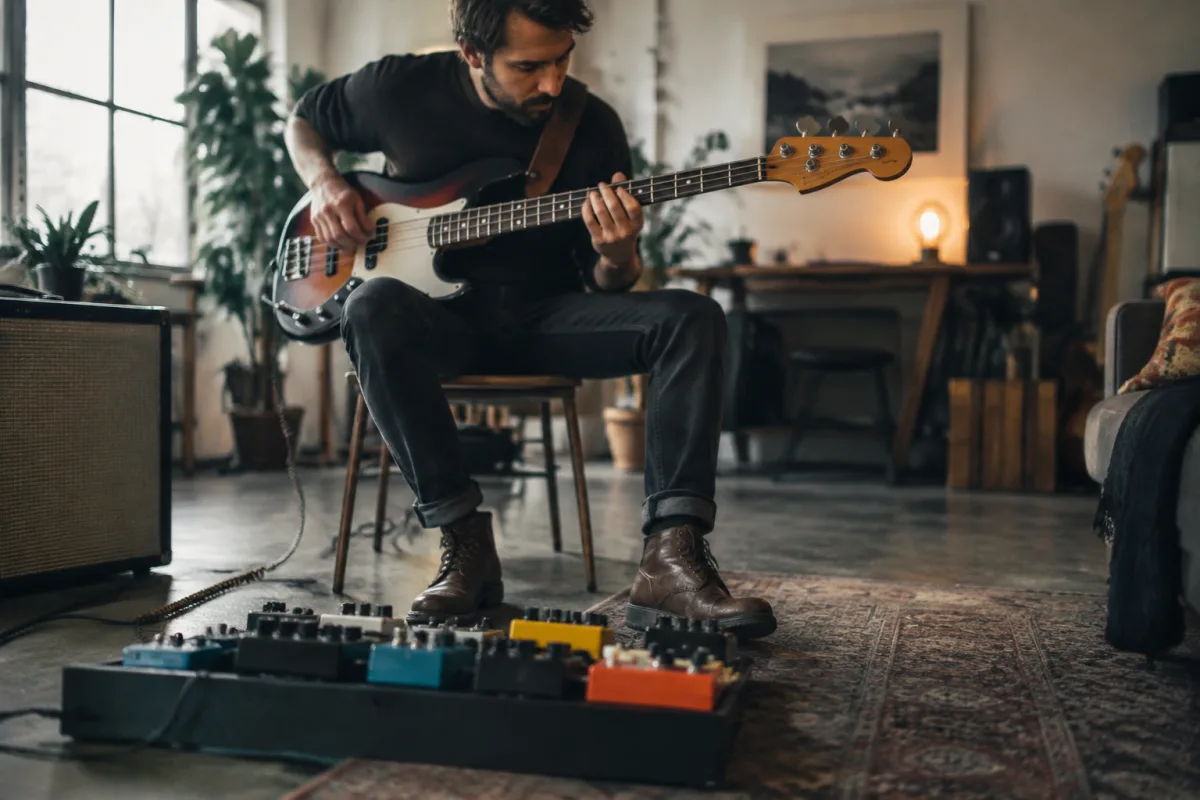
Cool bass pedals unlock creative possibilities for your bass tone. But the market is overwhelming—hundreds of pedal types, brands, and price points. Before you commit your budget, understand what different pedal types do, which specs matter, which features justify cost, and where hype overshadows genuine quality. This guide cuts through the noise and tells you exactly what to evaluate.
Understanding Bass Pedal Categories
Bass pedals fall into distinct categories, each serving different purposes. Knowing what you want shapes intelligent purchasing decisions.
Distortion and overdrive pedals add grit and aggression to your tone. Distortion is heavier; overdrive is subtler. For bass, overdrive often works better because it preserves your fundamental tone whilst adding character. Consider whether you need both or one will suffice.
Modulation pedals (chorus, flanger, phaser) create movement and texture. These are wildly creative for experimental players. Standard rock and jazz bass playing rarely uses them, but funk and progressive players love them.
Delay and reverb pedals add spatial dimension and ambience. Delay repeats your notes; reverb creates space. Both enhance tone in subtle ways. Many bass players find these essential for tone-shaping.
Compression pedals even out dynamics, controlling volume peaks. This might sound technical, but compression is foundational for professional bass tone. It deserves serious consideration.
Envelope filters and synth pedals are creative tools that transform your bass tone dramatically. These attract players seeking experimental, unusual tones.
Know which category appeals to your playing style. A gigging rock bassist and an experimental electronic bassist need entirely different pedal collections.
Impedance and Bass-Specific Features
Bass-specific pedals differ from guitar pedals. Low-impedance outputs (4-10 ohms) are optimised for the low frequencies bass produces. Guitar pedals sometimes struggle with the fundamental low-end bass generates, causing signal degradation or volume loss.
Check whether a pedal is explicitly bass-compatible. Manufacturers often specify "bass-optimised" or list impedance ratings. If a pedal doesn't mention bass compatibility, assume it's designed for guitar. Guitar pedals sometimes work acceptably on bass, but purpose-built bass pedals are far more reliable.
Footswitch durability matters significantly for bass players. Bass pedals endure heavier use than guitar pedals. Check reviews for footswitch longevity. A pedal with a weak footswitch fails when you need it most on stage.
Build Quality and Durability Standards
Bass pedals live demanding lives—being stomped, transported, stored in roadcases, and gigged frequently. Build quality directly determines lifespan and reliability. Cheap pedals fail at inopportune moments.
Evaluate construction materials. Metal chassis withstand impact better than plastic. Stitched connections are more durable than soldered ones. Check whether switches feel robust or cheap. Press the footswitch multiple times—does it feel sturdy or loose?
Professional pedals come from manufacturers with long track records in touring environments. If a brand is unknown and has no reviews, be cautious. Established brands have reputations to protect. Their durability standards reflect that.
Sound Quality and Sonic Character
A pedal that survives roadcases but sounds terrible is useless. Evaluate how different pedals colour your tone. Read professional reviews that include audio clips. Listen to how different pedals sound on bass, not guitar.
Consider whether a pedal preserves your fundamental tone (adding texture) or transforms it dramatically (creating a new sound). Both are valid; your preference depends on your music. Jazz and rock players usually prefer preservation; experimental and electronic players prefer transformation.
Try pedals before buying whenever possible. Some music shops allow testing through their amplifiers. A few minutes of firsthand experience reveals more than reading specifications. The pedal that sounded perfect on YouTube might not sit right in your ears.
Onboard Controls and User Interface
Too many knobs and buttons overwhelm live performance. Too few limit creativity. Evaluate whether the control layout matches your workflow.
Live performance demands intuitive access. Can you adjust key parameters without bending down? Do controls respond quickly and predictably? Some pedals require menu-diving through LCD screens—fine for studio experimentation, terrible for stage performance.
Consider preset capability. Can you save and recall different settings? This is invaluable for gigs where different songs demand different tones. Budget pedals sometimes lack this feature, forcing you to dial settings manually.
Power Supply and Connectivity
How your pedal powers and connects affects your entire rig. Some pedals use batteries (fine for portable use, inconvenient for gigging). Most use external power supplies (more reliable but requires board space).
Check whether your pedal accepts USB power (convenient for modern setups) or needs a dedicated wall adapter. Some pedals daisy-chain with others using standard connectors; others require proprietary connections. Understand these requirements before building a pedalboard.
Input and output impedance affect signal flow. Ask yourself: How will this pedal integrate with your existing rig? Can you run it in a chain, or does it demand dedicated placement?
Price Tiers and Quality Expectations
Bass pedals span a vast price range with clear correlations to build quality and sonic performance:
- Budget (£/€50-120): Basic functionality, acceptable for experimentation. Build quality is questionable; expect durability issues within 1-2 years of regular gigging.
- Mid-range (£/€120-300): Solid build quality, professional sound, reliable for regular gigging. This is where most working bassists find their pedals.
- Premium (£/€300-600): Flagship sound quality, exceptional durability, extensive features. For serious touring musicians and recording sessions.
- Ultra-premium (£/€600+): Bespoke construction, signature sounds, extreme durability. For professionals and collectors with dedicated budgets.
The jump from budget to mid-range brings meaningful improvements. Jumping to premium offers diminishing returns unless you gig constantly or record professionally.
Common Buying Mistakes
These errors waste money or create regret:
- Buying guitar pedals for bass: Guitar pedals sometimes work on bass, but they rarely sound optimal and can degrade your low-end. Always choose bass-specific pedals.
- Collecting pedals impulsively: Buying every cool pedal you see creates cluttered, confusing pedalboards. Start minimal and add intentionally.
- Ignoring footswitch durability: A pedal with weak footswitches fails on stage. Test switches before committing.
- Underestimating power requirements: Multiple pedals draw significant power. Ensure your power supply can handle the total amperage.
- Skipping user reviews: Professional reviews are helpful, but user reviews reveal long-term reliability. Read both before deciding.
Before You Buy: Your Checklist
Verify the pedal is bass-optimised. Test the footswitch multiple times—does it feel robust? Read professional reviews including audio clips on bass. Search user reviews specifically for durability feedback. Check build materials and construction quality. Verify power requirements and connectivity options. If possible, try the pedal on your bass through your amp before committing. Ask about warranty and return policy. Then wait 24 hours before deciding. This deliberation prevents impulse purchases.
Building Your First Pedal Collection
Don't buy randomly. Start with your priority: Do you want tone colour (compression, subtle effects) or dramatic transformation (distortion, synth)? Buy one pedal that addresses that priority. Learn it deeply. Then add a second pedal that complements it. Build gradually. A thoughtfully assembled three-pedal board outperforms a random collection of ten.
Making Your Decision
Choosing cool bass pedals means balancing sonic appeal, durability, and budget against your actual needs. Start by deciding which pedal type addresses your musical priority. Prioritise bass-specific design and build quality over brand name or hype. Verify footswitch durability. Evaluate sound quality through audio examples. Then commit and play. For comprehensive context on bass pedal types and technology, explore our complete guide to cool bass pedals.


Comments