


Chorus Bass Pedal article
Chorus Bass Pedal for Beginners: A Complete Guide
A chorus bass pedal transforms your tone into something lush and shimmering. For bass players exploring effects for the first time, chorus is excellent and forgiving.
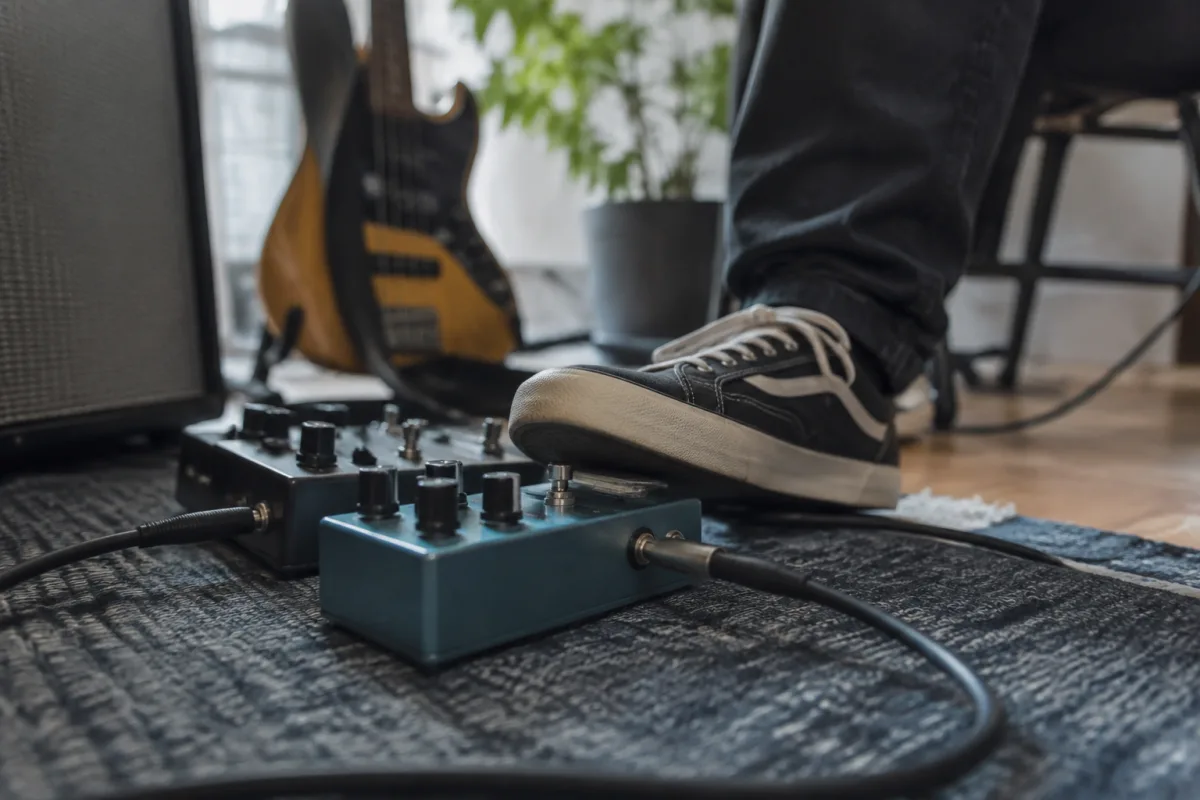
A chorus bass pedal transforms your bass tone into something lush, shimmering, and distinctly musical. If you've heard bass lines that sound like multiple players performing simultaneously, you've heard chorus. For bass players exploring effects for the first time, chorus is an excellent starting point—it's forgiving, musically rewarding, and dramatically expands your tonal possibilities. This beginner's guide walks you through understanding chorus, choosing your first pedal, and integrating it into your playing without overwhelm.
Understanding Chorus: What It Actually Does
Chorus works by creating a slightly delayed copy of your bass signal, shifting that copy's pitch subtly up and down, then blending it with your original tone. The result sounds like multiple bass guitars playing your part perfectly in unison. It's called "chorus" because it mimics how a choir sounds when many singers perform together—similar but not identical, creating richness through slight variation.
The effect is deeply musical and forgiving. It's nearly impossible to sound bad using chorus—the effect tends to make everything sound more professional and polished. This is why chorus is such a popular beginner's first effect pedal. You'll immediately hear improvement in your tone, building confidence as you explore effects.
Why Chorus Works Brilliantly for Bass
Bass frequencies are naturally thick and dark. Chorus brightens and enriches that dark tone, making your bass cut through mixes without aggressive distortion or aggressive EQ. Studio recordings use chorus on bass constantly because it sounds polished and present. When you practice using chorus, you're developing the same tonal sensibility professional engineers use.
Chorus also masks minor playing inconsistencies. If your timing wavers slightly or your pick attack is uneven, chorus smooths those imperfections, letting your playing sound more confident than it actually is. This psychological boost keeps beginners motivated—you hear yourself sounding professional even as you're learning fundamentals.
Your First Chorus Pedal: Budget Versus Professional
Quality chorus bass pedals range from budget entry models (£40–80) to professional touring pedals (£150–300). For beginners, budget models suffice perfectly. Boss CE-5, MXR Bass Chorus, and Behringer Ultra Chorus are all reliable, affordable chorus pedals that sound genuinely musical without premium pricing. Expect to pay £50–80 for a functional beginner's chorus pedal.
Entry-level pedals typically feature simple controls: wet/dry balance (how much effect blends with your original signal), rate (how fast the effect wavers), and depth (how extreme the effect becomes). These three controls unlock infinite tonal variety—don't worry about complexity; the core controls are straightforward.
Professional chorus pedals (£150+) offer deeper parameter editing, stereo processing, and more sophisticated algorithms. They're genuinely better-sounding but overkill for beginners learning the effect. Save premium models for later when you've discovered exactly what chorus character your ears prefer.
Your First Session: Dialling In the Effect
When you first use chorus, the temptation is to max out the effect—turning rate and depth fully high. Resist that temptation. Start with subtle settings: rate around 4–6 Hz (slow enough you can hear individual pitch shifts), depth around 30–50% (noticeable but not overwhelming). This conservative approach lets you hear exactly what chorus is doing.
Play a simple bass line using these gentle settings. Notice how your tone sounds thicker, richer, almost orchestral. Gradually increase depth while maintaining slow rate. Listen as the effect becomes more pronounced. Then increase rate, making the effect warble faster. Explore the control ranges methodically rather than jumping to extreme settings.
Wet/dry balance is your volume control between effect and unaffected tone. 50/50 is a safe starting point—half chorus, half original bass. Many players prefer 40/60 or 30/70 for subtle chorus that enriches without replacing their bass tone. Find your preference through experimentation.
Common Beginner Mistakes with Chorus
Over-applying depth and rate is the most frequent beginner error. Extreme settings make your bass sound warbly and amateur. Remember: subtle chorus sounds professional; excessive chorus sounds cheap. Start conservative and increase intensity gradually.
Another common mistake is using chorus on every bass line. Chorus works brilliantly for certain parts—melody lines, contemplative passages, atmospheric sections—but muddles simple, direct bass parts. Learn to toggle chorus on and off during songs, using it purposefully rather than constantly. A footswitch makes this effortless.
Improper signal chain positioning is a subtle pitfall. Place chorus after compression if you're using it; compression before chorus can confuse the effect's algorithm. Chorus generally works best early in your effects chain, though experimentation is encouraged as you develop preferences.
Signal Chain Basics for Beginners
A typical beginner bass effects chain looks like this: tuner → overdrive/distortion (if using) → compression (if using) → chorus/modulation → delay (if using) → bass amplifier. Chorus sits in the "modulation" slot of this chain. This ordering ensures effects work together musically without technical problems.
If you're only using chorus without other pedals, placement barely matters—chorus is forgiving and musical regardless. As your effects collection grows, understanding signal flow prevents frustration and unlocks better-sounding combinations.
Integrating Chorus Into Your Playing Style
Use chorus to distinguish different song sections. Verse without chorus, chorus (the song part, not the effect) with chorus (the effect), creating tonal contrast that keeps listener engagement high. This structural use of effects makes your bass lines sound more dynamic and arranged.
Experiment with rate and depth settings for different songs. Slow, subtle rates (2–4 Hz) create rich, almost vocal-like tone; faster rates (8–12 Hz+ Hz) sound more spacious and ethereal. Discover what settings suit your musical preferences.
Gear Fundamentals: Power and Connectivity
Most chorus pedals operate on standard 9-volt batteries or 9-volt power supplies. Battery life is typically 8–15 hours depending on the pedal—adequate for practice sessions but unreliable for gigging. Invest in a quality power supply (£15–30) for reliable performance. A cheap power adapter might introduce noise; quality power is worth the small investment.
Audio connectivity is straightforward: guitar cable from your bass to the pedal input, another cable from pedal output to your amplifier. Keep cables as short as practical to minimise noise. If you're building a multi-pedal setup, a power supply rated for multiple pedals (£30–50) is a worthwhile investment.
Learning to Hear What Chorus Changes
Developing your ear is essential for effects pedal mastery. Engage chorus and play a simple bass line. Notice the tone richness increase. Disengage and play the same line. The contrast is obvious—engaged chorus sounds fuller, more orchestral. This kind of A/B comparison develops your understanding of what chorus actually contributes to your tone.
Vary settings and listen carefully. Increase depth and hear the effect become more extreme. Increase rate and feel the effect warble faster. These intentional explorations build sonic intuition that serves you across all effects pedals, not just chorus.
Common Questions Beginners Ask
Will chorus make my tone unrecognizable? No. Subtle chorus enriches your tone without disguising it. You still sound like yourself; you just sound more polished. Is chorus only for funk or prog? Absolutely not. Chorus works in rock, pop, indie, folk, reggae—virtually every genre. Experiment with chorus in your own style; you'll find applications.
Do I need multiple chorus pedals? Absolutely not. One quality chorus pedal covers every need. Different pedals have slightly different algorithms, but a single pedal's flexibility (via rate and depth controls) is typically sufficient for varied musical applications.
Next Steps: Exploring Complementary Effects
After mastering chorus, consider exploring other modulation effects: flanger (similar to chorus but more extreme), phaser (subtly shifts tone rather than creating delay copies), or Leslie/rotary effects. Each offers different tonal character. Chorus is your gateway into the world of modulation effects.
Your First Month of Chorus Exploration
Week one: simply get comfortable with the pedal. Understand how each control affects tone. Week two: integrate chorus into song structures, using it purposefully for specific sections. Week three: experiment with settings for different musical moods. Week four: explore where chorus sits in your developing effects arsenal.
For deeper exploration of chorus bass pedal capabilities, advanced techniques, and creative applications, check our complete guide to chorus bass pedals. That resource covers everything from basic operation to professional-level applications.
Keep Exploring
Chorus is remarkably forgiving and musically rewarding for beginners. Start with conservative settings, explore gradually, and trust your ears. You'll quickly develop intuition about when and how to use chorus, adding significant tonal depth to your bass playing. This first effects pedal opens doors to endless creative possibilities ahead.



Comments