


Bass Overdrive Pedal article
Bass Overdrive Pedal for Beginners: A Complete Guide
A beginner's guide to bass overdrive pedals: discover why overdrive is the perfect first effect for bass players, which pedals work best, and how to integrate them into your playing.
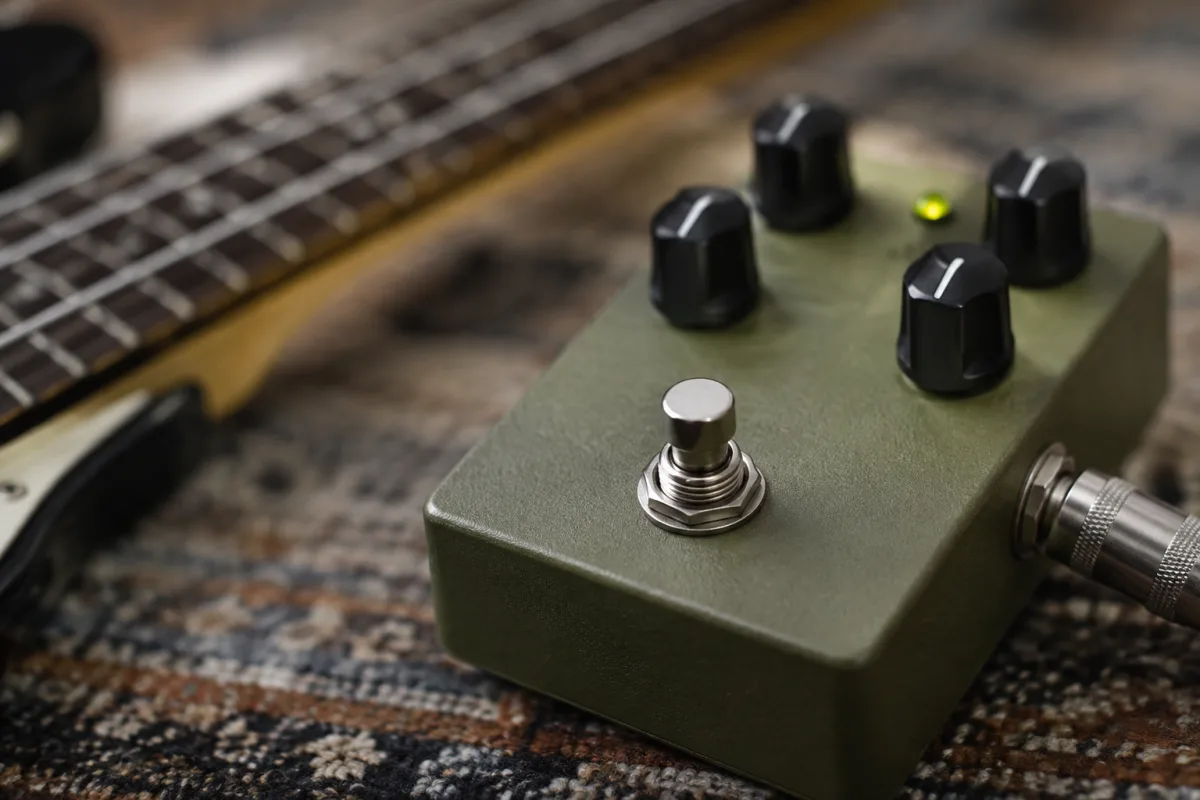
If you're a beginner bass player just discovering effects pedals, a bass overdrive pedal might seem like an unnecessary complication. After all, bass is about the fundamental groove—do you really need an effects pedal? The answer is yes, and a bass overdrive pedal is often the perfect first effect to explore. This guide demystifies bass overdrive pedals for newcomers, explaining what they do, why they matter, and how to choose one without getting overwhelmed. For a deeper dive, check out our complete guide to bass overdrive pedals once you're ready to explore further.
What Is a Bass Overdrive Pedal and Why Should Beginners Care?
A bass overdrive pedal is an effects unit that adds harmonic distortion and warmth to your bass tone. Unlike heavy distortion or fuzz, overdrive is subtle—it enhances your bass signal rather than completely transforming it. For beginners, this is the ideal starting point because overdrive teaches you about tone shaping without overwhelming your natural bass sound. The overdrive effect became popular through bass legends like John Entwistle (The Who) and has since become a staple in rock, funk, alternative, and experimental music. Many beginner bass players hesitate to explore overdrive because they think bass must always be clean. That's a misconception. A little overdrive adds character and punch that makes your bass more engaging.
How Does a Bass Overdrive Pedal Actually Work?
Understanding the mechanics isn't essential, but it helps you choose wisely. A bass overdrive pedal uses circuitry to slightly compress and distort your signal, adding sustain and harmonic content. The key differences between bass overdrive and guitar overdrive are important:
- Low-end preservation: Bass overdrive pedals are specifically designed to keep your deep bass frequencies intact. Guitar overdrive pedals often lose low-end clarity, which is why using a guitar pedal on bass sounds thin and weak.
- Sensitivity to dynamics: Bass overdrive pedals are more responsive to how hard you pluck or strike your strings. Playing softly gives you less overdrive; playing harder gives you more. This dynamic control is crucial for bass.
- Volume interaction: Overdrive works differently depending on your amplifier's volume. Lower amp volumes produce gentler overdrive; higher volumes create more aggressive tones.
- Frequency response: Quality bass overdrive pedals preserve the full frequency range of your bass guitar, from the lowest rumbling fundamentals to the upper midrange where articulation happens.
What's the Difference Between Overdrive, Distortion, and Fuzz?
Beginners often confuse these three effects. Here's the distinction:
Overdrive: Mild, warm, natural-sounding saturation. It adds grit and character while maintaining your bass's recognisable voice. Perfect for beginners.
Distortion: More aggressive than overdrive. Distortion pushes harder and creates a heavier, more defined crunch. Better for players comfortable with heavier tones.
Fuzz: The most extreme. Fuzz creates a thick, woolly, almost synthesizer-like tone. It's more experimental and typically used in specialist genres. Not ideal for most beginners.
Start with overdrive. You can always explore distortion or fuzz later, but overdrive is the most musical and approachable entry point.
Common Beginner Mistakes With Bass Overdrive Pedals
As you explore overdrive, avoid these pitfalls:
Using a guitar overdrive pedal on bass: This is the most common mistake. Guitar overdrive pedals lose bass frequency content and sound thin when used on bass. Always buy a pedal designed specifically for bass or a multi-purpose pedal that works on both instruments.
Cranking the gain control to maximum: Beginners often think more overdrive is better. In reality, subtle overdrive is more musical and professional-sounding. Start with the gain at 20-30% and gradually increase only if needed.
Forgetting about the volume control: Most overdrive pedals have both a gain control (amount of overdrive) and a level/volume control (overall output). Beginners often ignore the volume control, resulting in a pedal that's too quiet or too loud compared to their dry bass signal.
Not adjusting tone/EQ controls: Quality overdrive pedals include tone shaping options (treble, bass, or middle controls). Beginners skip these, missing the opportunity to tailor the tone to their bass and preferences.
Playing exclusively with overdrive engaged: Overdrive is a tool, not a permanent state. The best bass players switch between clean and overdriven tones within songs. Practice using your overdrive pedal as an accent, not your default sound.
Ignoring the importance of your amplifier: How your bass amp responds to overdrive matters enormously. A clean, transparent amp responds differently than a naturally crunchy amp. Beginners often blame the pedal when the issue is amp interaction.
Beginner-Friendly Bass Overdrive Pedal Recommendations
Here are pedals that suit beginners learning overdrive:
Boss ODB-3: The classic entry-level bass overdrive. It's affordable (around 70-100 pounds), reliable, and designed specifically for bass. The controls are straightforward: gain, tone, and level. Thousands of bass players have learned on this pedal.
MXR Bass Overdrive: Another affordable option around 80-120 pounds. It's slightly warmer than the Boss and includes more tonal flexibility. Great if you want a little extra character.
Darkglass Electronics Vintage Microtubes: More expensive (200-300 pounds) but worth considering if you have the budget. It offers professional-quality tone and multiple controls. It's an upgrade path pedal—you'll grow into it.
Tech 21 Sansamp Bass Driver DI: Premium option at 250-350 pounds. This is technically an amplifier simulator with overdrive, but it's incredibly versatile and doubles as a recording tool. Professionals use this pedal, but beginners can learn a lot from it.
How to Start Using Your Bass Overdrive Pedal
Once you've chosen a pedal, here's how to integrate it into your playing:
Set it up correctly: Place the pedal between your bass and amplifier. Connect your bass to the input, and run the output to your amp's input.
Find your baseline settings: Start with gain at 0-10%, level matched to your clean bass volume, and tone in the middle. This gives you barely perceptible overdrive.
Play familiar lines: Use songs and basslines you know well. This lets you hear exactly how overdrive changes the tone without worrying about learning new material.
Experiment slowly: Gradually increase the gain by 5-10% and listen. Notice how the tone changes. When it sounds musical to you, stop increasing.
Switch on and off: Practice engaging and disengaging the pedal while playing. This trains you to hear the difference and teaches you when to use it musically.
Combine with other pedals later: Once comfortable with overdrive, you might add compression, EQ, or delay. But mastering overdrive first makes everything else easier.
Conclusion: Your Bass Overdrive Journey Begins Here
A bass overdrive pedal isn't a luxury; it's a practical tool that opens new sonic possibilities and teaches you about effects in general. Start with an affordable, bass-specific pedal like the Boss ODB-3, set it to subtle levels, and experiment within songs you already know. Don't overthink it. The beauty of overdrive is that a little goes a long way. Within weeks, you'll develop an intuition for when and how much to use. Welcome to the world of bass effects—you're about to make your bass sound more interesting.



Comments