


Explorer Bass Guitar article
Explorer Bass Guitar for Beginners: A Complete Guide
Starting bass with an Explorer bass guitar needn't be intimidating. This beginner's guide covers setup, budget instruments, practice routines, and avoiding mistakes that discourage new players.
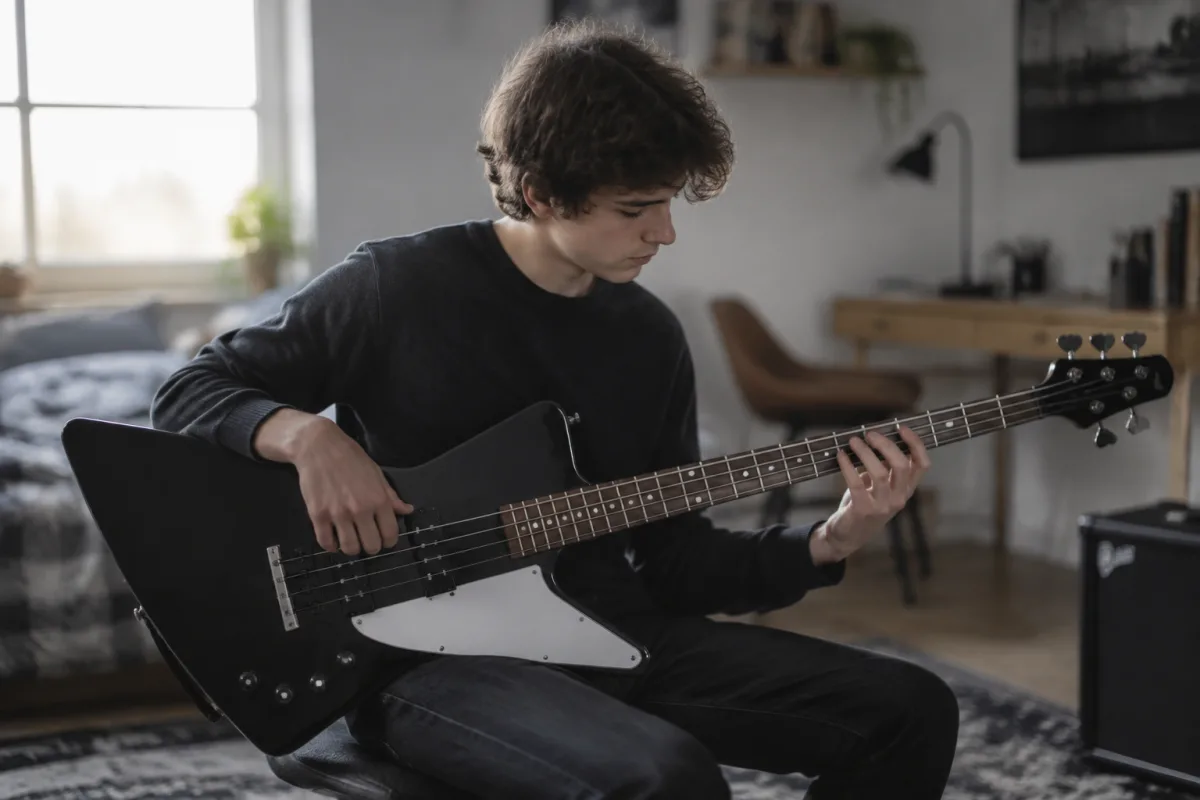
Starting bass guitar is thrilling and intimidating in equal measure. You're drawn to a particular style, maybe you've seen a famous bassist wielding an Explorer's distinctive angular shape, and now you're wondering if one is right for you as your first bass. The good news: an Explorer bass can absolutely work as a beginner instrument if you understand what you're getting into. This guide is written specifically for nervous first-timers, walking you through exactly what matters when picking up an Explorer bass guitar and avoiding the mistakes that discourage new players.
Why the Explorer's Unusual Shape Shouldn't Intimidate You
The Explorer's angular, aggressive design looks intimidating at first glance. Compared to the rounded curves of a Precision or Jazz bass, it looks like it belongs on a rock stage, not in a beginner's hands. But here's the honest truth: shape is almost entirely cosmetic to how you'll learn bass. The Explorer plays like any other bass—four strings, same finger positions, identical fundamentals. Yes, its distinctive looks will make you feel like a proper bassist from day one, which is psychologically encouraging. You'll enjoy practising more when you adore how your instrument looks. That boost matters for motivation as you build your early skills. The shape changes nothing about learning difficulty; it changes how you *feel* learning it.
Weight and Comfort for Extended Practice Sessions
Here's a practical consideration many beginners overlook: bass guitars are heavy, and heavy instruments tire your body during those crucial first weeks of building hand strength and stamina. The Explorer, depending on the model and wood type, can weigh 8 to 10 pounds—genuinely noticeable during two-hour practice marathons. For your first month, this weight is your adversary. Your shoulder, neck, and left arm will fatigue long before your fingers do. This fatigue doesn't mean failure; it means your body hasn't yet adapted to bass playing's physical demands. But it also means choosing a lighter Explorer model or taking frequent practice breaks actually affects your learning speed and comfort. Don't dismiss weight as trivial. If possible, pick one up before buying; shoulders don't lie about burden. Learning bass demands enough from your body without fighting instrument weight simultaneously.
Budget-Friendly Explorer Basses for Beginners
Gibson Explorers are professional-grade instruments with premium pricing that doesn't suit beginner budgets. Fortunately, numerous manufacturers produce Explorer-styled basses at beginner-appropriate prices. Epiphone (Gibson's affordable subsidiary) offers Explorer basses that deliver 85% of Gibson's performance at 50% the cost. Squier, Squire, Ibanez, and others produce Explorer-inspired basses under 300 British pounds, appropriate for beginners testing whether bass playing actually sticks as a hobby. These budget alternatives won't embarrass you as you progress—plenty of working bassists maintain budget basses for practise and travel. Spending your entire learning budget on a single premium instrument leaves nothing for the amplifier, cable, and tuner you actually need to make sound. Start with a budget Explorer, prove the commitment, then upgrade when you've developed ears that appreciate premium instrument nuances.
The Starter Pack Trap and What You Actually Need
Music retailers love selling "starter packs"—bass plus amplifier plus cable plus strap bundled at a discount. On the surface, these seem economical. In practice, the amplifier included in starter packs is typically dreadful—tinny, underpowered, frustrating to hear your playing through. A terrible amplifier discourages practice because your perfectly-played notes sound awful through it. Simultaneously, you're locked into this amplifier for months. Instead, buy your bass and a separate modest amplifier (20 watts is genuinely sufficient for practice and small venue playing). This flexibility lets you upgrade the amp when you're ready without replacing the entire package. Additionally, starter packs often include low-quality cables and straps; don't let cheap accessories dictate your purchases. Invest in one quality cable and strap that actually work; you'll keep them for years of playing.
Understanding the Explorer's Pickup Configuration
Without nerding out too hard: your bass has magnetic pickups that capture vibrating string energy and send it to your amplifier. The Explorer typically comes in two flavour versions: single-pickup designs (simpler, tighter sound) and dual-pickup designs (more tonal variety). As a beginner, this distinction matters less than you might think. Both work perfectly for learning. Single-pickup designs are generally cheaper and simpler to understand; dual-pickup designs offer more sonic flexibility later as you develop preferences. For your first bass, don't overthink pickup configuration. Play whichever model feels right in your hands, sounds good through its amplifier at the shop, and fits your budget. The beginner mistake is drowning in specs instead of playing the actual instrument.
Getting a Proper Setup Before You Start
This is crucial: before your first practice session, have a professional bass technician set up your Explorer. This means checking action (string height), truss rod tension, intonation, and bridge adjustment. A fresh-out-of-the-box bass often needs setup work. Strings that sit too high hurt your fingers as you press them down; strings too low buzz against frets, ruining tone. A technician spends 30 minutes adjusting these, and your entire learning experience improves dramatically. Budget 40 to 60 pounds for this setup. It's not an optional luxury; it's the difference between "learning bass is painful and frustrating" and "learning bass is challenging but rewarding." Most beginners quit not because bass is hard, but because their unset-up instrument made everything unnecessarily painful. Spend the money, get the setup, then thank yourself when practice sessions don't leave your fingers throbbing.
Common Beginner Mistakes to Avoid
Your first weeks matter disproportionately for building good habits. Watch out for these common pitfalls. First, many beginners hold the bass too high or too low, creating awkward finger angles that slow development. Position the bass so your fretting hand forearm stays roughly straight. Second, lots of new players press strings way too hard, fatiguing hands unnecessarily. Let your finger strength develop gradually; pressing lightly enough to sound clean improves faster than white-knuckling the neck. Third, inconsistent practice discourages more beginners than difficulty does. Ten minutes daily teaches your hands more than sporadic three-hour marathons. Fourth, ignore the temptation to learn songs immediately; focus on finger exercises and basic rhythms first. Your hands need foundational strength before they'll execute actual songs competently. Finally, mute your rig or play through headphones when practising at home. Your family members appreciate this considerably.
Finding Your Learning Path
You have multiple roads forward: hire a private tutor for one-on-one guidance, follow YouTube tutorials from respected bass educators, use apps like Simply Piano adapted for bass, or work through instructional books. Each approach works for different learners. Some people thrive with structured lessons; others find tutors expensive and restrictive; still others love YouTube's flexibility and free tutorials. Don't overthink this decision. Start with YouTube tutorials from established educators like Scott's Bass Lessons—they're free, they're good, and you can pivot to tutoring if you decide personal instruction helps. Most beginners benefit from some formal instruction for the first month; it accelerates your learning considerably. Our complete guide to Explorer bass guitars provides deeper exploration of models, woods, and sonic characteristics across brands and price points.
Maintenance and String Replacement
Your Explorer will need occasional maintenance as you learn. Strings wear out—new strings sound noticeably brighter and feel better under your fingers. Budget for fresh strings every three to four months of regular playing. Learn to change them yourself; it takes five minutes and requires only a string winder (10 pounds) and new strings (15 to 25 pounds per set). Your bass fingerboard accumulates dirt; wipe it occasionally with a soft cloth. Keep your bass in a stable room temperature; drastic temperature swings stress the wood and can cause damage. These aren't complicated concerns, but beginning players often ignore maintenance, then wonder why their bass sounds dull and plays poorly. Simple upkeep keeps your Explorer sounding fresh and playing nicely throughout your learning journey.
Your First Month Milestones
Set realistic expectations as you begin. After one week, you'll play simple single-note exercises and understand bass finger positioning. After two weeks, your fingers hurt less and finger strength improves noticeably. After three weeks, you can play simple bass lines in standard finger patterns. After four weeks, you understand basic rhythm and can play along with backing tracks at modest tempos. These are genuine achievements that will feel enormous at the time. You won't be gigging or playing complex music, but you'll have unambiguously progressed from complete beginner to someone who can *actually play*. This momentum matters psychologically for sustaining practice motivation. Celebrate these small wins.
Beginner's Checklist
| Item | Why It Matters | Budget |
|---|---|---|
| Explorer Bass (Budget Model) | Your instrument; buy quality enough that it plays pleasantly without premium pricing | 200-300 pounds |
| Practice Amplifier (20W) | Hear your playing; modest wattage is adequate for home practice | 80-150 pounds |
| Professional Setup | Make your bass playable; saves hours of frustration learning | 40-60 pounds |
| Quality Cable | Connect bass to amp reliably; cheap cables cause intermittent problems | 10-20 pounds |
| Bass Tuner | Keep strings in tune; essential for learning ear development | 15-40 pounds |
| Instructional Resource (Tutor or Course) | Structure your learning; accelerates early progress dramatically | 0-100 pounds (varies) |
Your Explorer bass journey begins with choosing an instrument you love looking at, getting it properly set up, committing to consistent practice, and being patient with your body's adaptation to bass playing's physical demands. The shape that seemed intimidating becomes your confidence as you progress. Welcome to bass playing.


Comments