


Bass Guitar Preamps Buying guide
Bass Guitar Preamps: A Complete Buyer's Guide
A quality bass guitar preamp transforms your tone and gives you control that combo amp EQ knobs can't match. This guide explains what to look for so you choose the right preamp.
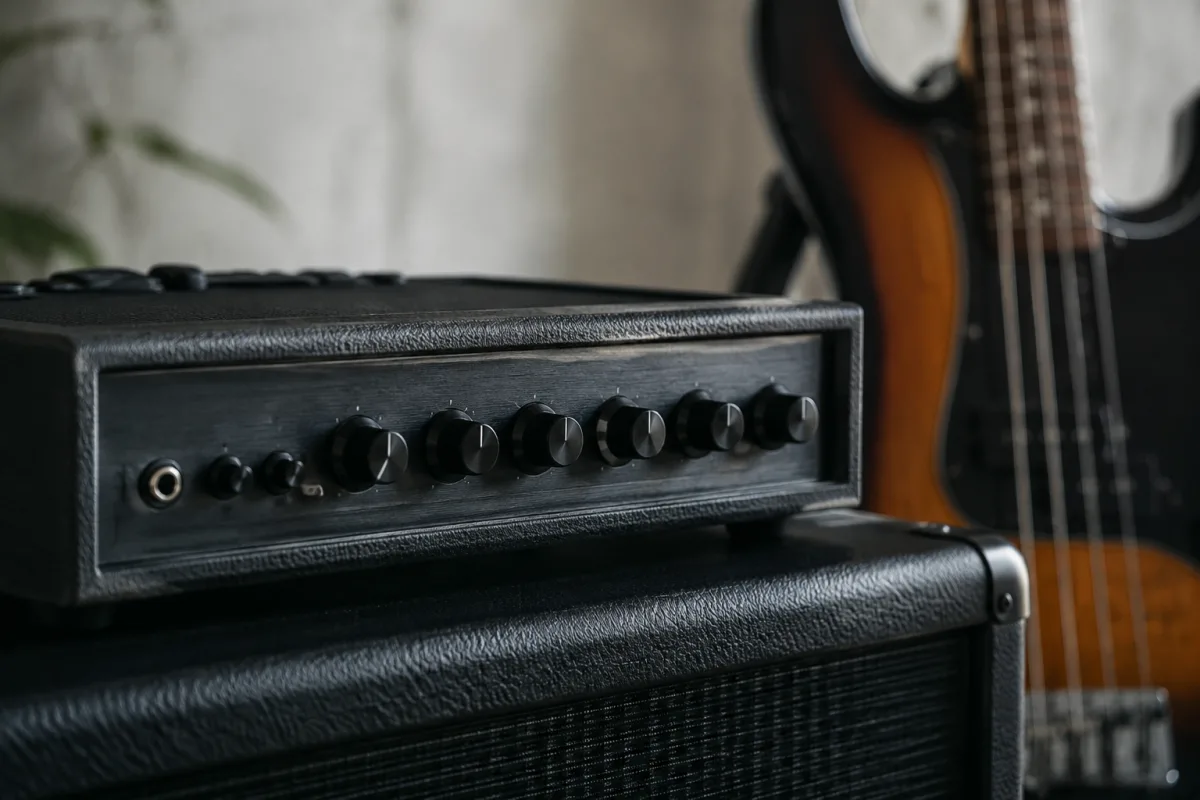
Adding a quality preamp to your bass rig transforms your tone and gives you control that a bass amp's basic EQ knobs simply can't match. Whether you're upgrading from a combo amp to separate head and cabinet or adding a dedicated channel to your pedalboard, buying bass guitar preamps requires understanding a few key considerations. This guide walks you through what matters.
What Does a Bass Guitar Preamp Do?
A preamp is the gateway between your bass and your amplifier. It colours and shapes your tone before the signal hits the power amp. Think of it as your personal tone-shaping workstation. A good bass guitar preamp gives you precise control over EQ, compression, and saturation—plus the character and warmth (or brightness) that defines your signature sound.
Types of Bass Guitar Preamps
Rack-mounted preamps: Fit into a standard 19-inch rack with a power amp and are the traditional choice for touring musicians and studio work. They're powerful and feature-rich but require a rack case and separate power amp, making them expensive and complex to set up.
Pedal format preamps: A single pedal that functions as a preamp, often with expression pedal integration for real-time control. Compact and pedalboard-friendly, perfect for contemporary players building a signal chain. More affordable and convenient than rack units.
Combo amp with onboard preamp: The preamp is built into the amplifier itself. Simple and all-in-one, but you get what the manufacturer chose rather than choosing your own tone shaping. Limited customisation compared to standalone preamps.
Tube vs. solid-state preamps: Tube preamps colour your tone with warmth and natural compression at higher volumes. Solid-state preamps are clean, transparent, and more affordable. Some preamps blend both—a tube front end for character and solid-state handling of EQ for precision.
Specs and Features That Matter
EQ controls: At minimum, a bass guitar preamp should have high-pass filter, bass, midrange, and treble. Some models add parametric EQ (adjustable midrange frequency), which gives surgical precision. More controls isn't always better; find the balance between simplicity and flexibility that suits your style.
Compression: Many bass guitar preamps include onboard compression, which is extremely useful for tight, controlled tone. Look for controls over ratio and threshold, so you can dial in the amount of compression you want. Some preamps offer optical vs. FET compression—different characters worth testing.
Saturation or overdrive: Some preamps include built-in saturation or light overdrive to add grit and sustain. This is useful if you want ballsy, aggressive tone. Some players love it; others prefer a clean preamp into a separate overdrive pedal for more control.
Output level control: Critical for managing signal levels into your power amp or direct to FOH at a venue. A preamp without proper output level control is inflexible and frustrating.
Direct XLR output: If you play amplified gigs or record, an XLR output lets you send a preamp-shaped tone directly to the sound system without relying on a mic'd amp. This is enormously useful and increasingly standard.
New vs. Used: What to Consider
New bass guitar preamps: Full warranty, current design, no unknowns. Prices start around £200–300 for solid entry-level units and climb to £1,000+ for premium models.
Used bass guitar preamps: Often 30–50% cheaper than new. Condition varies. Check that:
- All the knobs respond smoothly without crackling.
- The display or lights (if any) work properly.
- Audio paths are clean—no unwanted noise, hum, or dropouts.
- Inputs and outputs are secure and properly shielded.
- If it's a rack unit, the case doesn't have obvious damage.
- If it's a pedal, the footswitch actuates crisply.
Price Tiers and What You Get
- Under £200: Entry-level preamps with basic EQ and limited features. Usable but with compromises in tone character and control. Fine for learning; you'll outgrow fast if you demand precise tone shaping.
- £200–500: Mid-range preamps with solid EQ, often compression, and better build quality. Most touring and session musicians work in this range. Excellent value for serious players.
- £500–1,000: Professional-grade preamps with extensive EQ, high-quality components, and often tube stages. Refined tone and surgical control. Worth the investment if you rely on your tone professionally.
- £1,000+: High-end and boutique preamps with master-built construction, rare components, and signature character. Diminishing returns; you're paying for prestige and craftsmanship.
Integration: How the Preamp Fits Into Your Rig
Bass → Preamp → Power Amp → Speaker: The traditional chain. The preamp colours your tone; the power amp provides volume without additional colouration.
Bass → Preamp → Combo Amp Input: You can run a preamp into the input of a combo amp, though this is less common because most combos have their own preamp built in. Technically it works, but you're stacking two preamps, which muddies things.
Bass → Preamp → Pedalboard → Power Amp: Modern approach. A pedal-format preamp sits on your pedalboard alongside overdrive, chorus, delay, etc., giving you integrated tone shaping and effects.
Bass → Preamp → XLR to FOH (direct input): At venues with proper sound reinforcement, many players run the preamp's XLR out directly to the mixing console, eliminating the need for a power amp on stage entirely.
Common Buying Mistakes
- Buying a complex preamp when you want simple tone shaping. More controls and features aren't always better. A preamp with bass, mid, treble, and compression is often more useful than one with 20 esoteric parameters you'll never tweak.
- Ignoring compatibility with your current rig. Before buying, verify that the preamp's output impedance matches your power amp's input impedance. Mismatches cause tone loss or noise.
- Assuming a preamp will fix bad technique or poor fundamentals. It won't. Great tone comes from good playing, a quality bass, and proper technique. A preamp enhances that; it doesn't create it.
- Buying used without testing inputs and outputs. Corroded or loose connectors can cause intermittent problems. Always test every input and output with an instrument and headphones before buying.
- Not budgeting for cables and a power supply (if applicable). A quality XLR cable costs £20–50; a rack unit's power supply is often proprietary and expensive. Account for these.
Making Your Choice
A quality preamp is an investment in tone and control. Take time to listen to clips, read reviews, and if possible, try one before buying. A good bass guitar preamp can define your sound for years and serve you across multiple rigs. The key is understanding your needs—do you want clean transparency, tube warmth, or precise EQ control?—and matching that to a preamp that delivers.
For a comprehensive guide to bass guitar preamp design, signal chain integration, and tone shaping techniques, see the complete guide to bass guitar preamps.


Comments