


Bass Guitar Pedalboard Buying guide
Bass Guitar Pedalboard: A Complete Buyer's Guide
A bass guitar pedalboard serves as the centralised platform for your effects and power management, directly influencing your performance capability and onstage mobility.
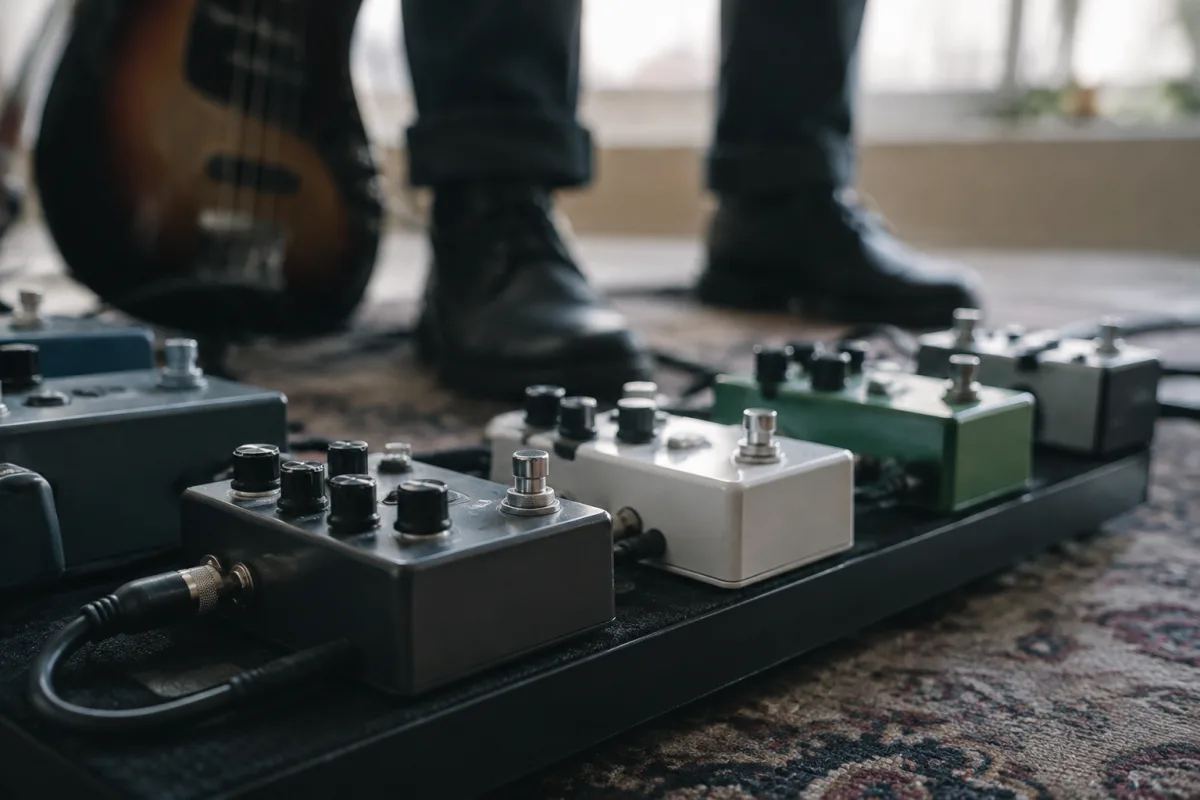
A bass guitar pedalboard serves as the centralised platform for your effects, expression pedals, and power management, directly influencing your performance capability and onstage mobility. Whether you're upgrading from a single effects pedal to a comprehensive board or building your first pedalboard, understanding pedalboard specifications, construction quality, and organisational features ensures you invest in a platform that grows with your musical needs. This guide breaks down everything you should evaluate before purchasing a bass guitar pedalboard.
Understanding Bass Pedalboard Types and Sizes
Bass guitar pedalboards range from compact units accommodating four to six pedals, to medium boards supporting twelve to twenty pedals, to large professional platforms handling complex configurations. Compact pedalboards (£60–£150) suit players using minimal effects or performing in spaces with limited floor room; they're lightweight and travel-friendly but offer restricted expansion capability. Medium pedalboards (£150–£400) represent the sweet spot for most gigging bass players, accommodating substantial effect collections whilst remaining portable. Large professional pedalboards (£400–£1,000+) serve session musicians and touring professionals needing extensive effect variety and complex signal routing. Assess your actual and projected effect count—buying too large wastes money and creates transport headaches, whilst too small necessitates eventual replacement. Most bass players underestimate their future needs; slightly oversizing provides growth flexibility without excessive expense.
Evaluating Board Construction and Durability
Bass guitar pedalboard construction directly impacts longevity and real-world reliability. Quality materials matter enormously; reinforced wood or aluminum decking withstands repeated transport and setup abuse better than flimsy materials. Examine the board's edge construction—rolled edges or protective frames prevent splitting and splintering that compromises structural integrity. Test the mounting system; quality boards use reliable fastening mechanisms (typically Velcro or pedalboard-specific mounting plates) that hold pedals securely without shifting mid-performance. Check corner bracing and internal support structures; well-engineered boards resist warping and flex even when fully loaded. Lift the board and examine the bottom; reinforced construction often features cross-bracing or additional support visible from underneath. Professional builders include cable management provisions—routing channels, cable ties, or integrated cable systems—that prevent tangled messes and facilitate quick setup.
Assessing Power Management Solutions
A bass guitar pedalboard's power infrastructure is as important as the pedals themselves; inadequate power creates unstable operation, unwanted noise, and performance anxiety. Integrated power supplies built into quality pedalboards distribute proper current to multiple pedals simultaneously; this eliminates the need for separate power units and floor space consumption. Evaluate the power supply's total current output (typically measured in amps or milliamps)—it must exceed your pedals' combined current draw. A power supply rated for 2 amps supports more pedals than one rated for 1 amp. Check the number and type of power outlets; isolated power supplies (separate outputs for each pedal) prevent ground loop hum that shared circuits can create. Pedalboards lacking integrated power require external power supplies, adding cost and complicating setup. Test the power supply's noise floor—quality supplies are virtually silent, whilst cheap supplies introduce audible hum into your signal chain.
Considering Size and Portability
Physical dimensions dramatically affect real-world usability. Measure your actual performance spaces—does the board fit comfortably on stage with enough room to move and access controls? Lightweight boards (under 10 kg) are substantially easier to transport than heavier units. Consider whether you'll carry the board yourself or load it into vehicles; compact boards fit easily into cars, whilst large professional boards require dedicated cases and vehicle space. Pedalboards designed for travel typically include protective flights cases or padded bags; these add cost but provide essential protection. Test board stability—does it sit flat and level on various stage surfaces, or does it wobble? A stable board prevents unintended pedal activation and keeps your tone consistent regardless of floor conditions.
Common Bass Pedalboard Purchasing Mistakes
Avoid these frequent errors when investing in a bass guitar pedalboard:
- Buying based on aesthetics alone: A beautiful pedalboard that's structurally compromised or acoustically inadequate wastes money. Form follows function; prioritise construction quality and practical features over appearance.
- Underestimating future effect expansion needs: Most bass players gradually add pedals over years. Buying the minimum size necessitates premature replacement. Slightly oversizing provides valuable flexibility.
- Overlooking power supply adequacy: Insufficient power causes crackling, instability, and performance headaches mid-gig. Verify total current capacity exceeds your pedals' combined draw.
- Neglecting cable management infrastructure: Unorganised cables tangle, create unwanted noise coupling, and complicate troubleshooting. Boards with integrated cable routing save hours of frustration.
- Ignoring ground loop prevention: Shared power supplies can introduce hum into your signal chain. Isolated power supplies cost more but eliminate this problem entirely.
- Purchasing without considering your specific stage environment: A board that fits in your practice space might be unwieldy on your typical venue's stage. Evaluate real-world usage contexts before committing.
Understanding Pedalboard Materials and Construction Methods
Bass guitar pedalboards are typically constructed from wood (plywood or solid wood) or aluminum. Wood pedalboards offer warmth, traditional aesthetics, and sufficient durability for most players. Quality wood boards use reinforced plywood or quality solid wood with protective finishes. Aluminum pedalboards provide superior durability and lighter weight, appealing to touring musicians. Aluminum resists warping and damage better than wood, though it costs substantially more. Hybrid boards combine wood decking with aluminum framing for balanced characteristics. Examine joinery and construction techniques; quality boards feature properly joined seams, reinforced corners, and protective edge treatment. Cheap boards feature poor joinery, exposed fasteners, and unfinished edges that deteriorate under road use.
Integrating Effects Layout and Signal Flow Planning
Before purchasing a specific pedalboard, sketch your desired effects layout and signal flow. Typical bass signal chains flow: instrument input → tuner (usually first) → compression → gain/overdrive/distortion → modulation (chorus, flanger) → delay → reverb → output. Your pedalboard must accommodate this logical routing with adequate space between pedals for cables and accessibility. Compact pedalboards might force creative arrangements that complicate quick tweaks during performances. Ensure express pedals (volume, wah) have adequate space around them for foot movement. Plan cable runs—long cables between distant pedals introduce noise and clutter. A thoughtfully-sized pedalboard accommodates your specific effects and signal flow naturally, rather than forcing compromises.
Budget Considerations Across Price Tiers
Entry-level bass guitar pedalboards (£60–£150) provide functional platforms suitable for beginners or players with minimal effects. These often lack integrated power supplies or sophisticated cable management. Mid-range boards (£150–£400) represent best value for most gigging musicians, offering integrated power supplies, reasonable durability, and accommodating space. They balance cost with practical functionality. Professional-grade pedalboards (£400–£1,000+) feature premium materials, extensive power capacity, sophisticated cable management, and professional-grade durability. They suit touring musicians and session players who need maximum reliability and expandability. Vintage pedalboards or custom builds can exceed £1,000 for luthier-crafted solutions. Match your budget to actual needs; a weekend-warrior bassist typically finds mid-range boards adequate, whilst touring professionals justify premium investment.
Evaluating Mounting and Securing Systems
How securely your pedalboard holds pedals matters enormously during live performances. Most pedalboards use Velcro (hook-and-loop fastener) systems; verify the Velcro quality—premium adhesive-backed Velcro holds reliably longer than cheap alternatives that deteriorate through repeated use. Pedalboards offering alternative mounting systems like pedalboard-specific brackets or integrated clips provide even more security. Test the holding strength by attempting to shift pedals installed on the board; they should be immovable without deliberate removal effort. Verify that mounting systems don't damage pedal bottoms—some adhesive-backed systems can mark or damage expensive pedals over time. Quality systems secure pedals entirely whilst remaining removable without permanent damage.
Making Your Purchasing Decision
Selecting the right bass guitar pedalboard balances your current effects collection, projected growth, portability requirements, and budget. Clearly assess how many pedals you currently own or plan to acquire. Evaluate your transportation requirements—do you need extreme portability or will the board live primarily on your stage? Test pedalboards in person if possible, verifying dimensions, weight, and build quality before committing. Review second-hand markets for cost savings; used pedalboards often represent exceptional value if construction is sound. Our complete guide to bass guitar pedalboards offers additional context on specific models and advanced setup techniques. Invest in a pedalboard matching your needs and building quality; your bass tone and performance capability will benefit for years.


Comments