


Bass Guitar Overdrive Pedals article
The Complete Guide to Bass Guitar Overdrive Pedals
Bass guitar overdrive pedals add saturation and harmonic colour whilst preserving clarity and low-end definition. Discover how to use them creatively in your playing.
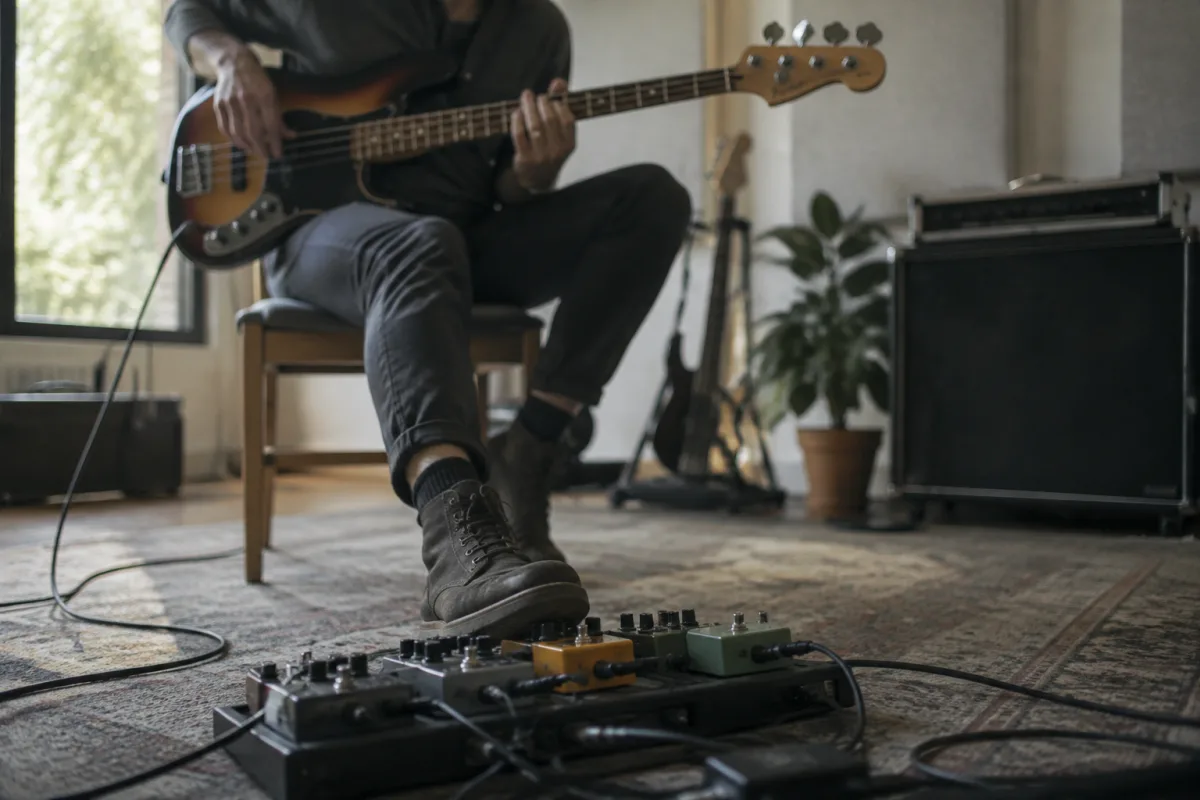
Bass guitar overdrive pedals are transforming how modern bass players approach tone and dynamics. Whether you're a session musician seeking subtle harmonic enrichment or a gig-bound player wanting extra punch and presence, these pedals offer a creative avenue that extends far beyond the traditional bass tone.
Understanding the Basics
These pedals are designed to add controlled saturation and harmonic distortion to your bass signal. Unlike distortion pedals, which can obliterate low-end definition, bass guitar overdrive pedals preserve the fundamental pitch and note clarity whilst adding grit, sustain, and presence. They operate by gently pushing the amplifier's input stage or adding soft-clipping circuitry that thickens the tone without eliminating the punch that makes bass fundamental to a mix.
The key difference between overdrive and distortion lies in how they compress and saturate your signal. These units typically employ asymmetrical clipping, which creates a more natural, musical breakup that complements the low frequencies rather than drowning them.
Why Players Use Overdrive
Several musical contexts make them invaluable:
- Genre blending — Rock, punk, funk, and alternative styles often require such pedals to cut through dense arrangements with attitude.
- Solo sections — When a bass needs to step into the spotlight for a moment, they add expression and presence.
- Dynamic control — Overdrive adds responsive compression, allowing notes to bloom with controlled sustain.
- Harmonic colour — These introduce overtones that make the instrument sit better in a mix.
- Worn amplifier simulation — Captures the natural break-up of pushed tube amps when cranking amplifiers isn't practical.
Types Available
Several distinct flavours exist within this category:
- Classic overdrive — Emulates the warm breakup of driven tube amps; ideal for rock and blues.
- Blues-oriented options — Mid-range heavy, designed to enhance the grit of the fundamental note.
- Vintage-style units — Often feature tone-shaping circuits inspired by classic compressors and preamps.
- Modern high-gain options — For players seeking more aggressive saturation without losing clarity.
- Blendable versions — Allow mixing the original signal with the saturated version, preserving headroom.
Key Features to Look For
When selecting these pedals, these features matter most:
- Low-frequency preservation — Quality units must keep lows intact, not filter them away.
- Tone control — A variable EQ section shapes which frequencies get pushed hardest.
- Level control — Essential for balancing the effect's output with your clean signal.
- Blend knob — Some include a mix control, letting you parallel the wet and dry signals.
- Attack/responsiveness — How quickly the unit reacts to playing dynamics affects feel and musicality.
- Headroom — Quality options should handle hot input levels without surprising distortion.
Playing Techniques
These pedals reward expressive playing. When you engage overdrive, your dynamics become more pronounced—a light touch stays relatively clean, whilst aggressive playing punches through with grit. This responsiveness makes them ideal for:
- Dynamic ghost notes that bloom into presence
- Slap playing with added snap and sustain
- Pick playing that cuts through band mixes
- Harmonic textures in ambient or experimental contexts
Combining with Other Effects
Most bass players use them as part of a wider pedalboard ecosystem. Placing compression before overdrive tightens the effect; placing it after adds control and dynamics. Overdrive before distortion creates layered, complex saturation. These work particularly well with envelope filters, synth pedals, and modulation effects that benefit from the added harmonic colour.
Versus Distortion
The line between overdrive and distortion is musical preference rather than technical absolutes. Bass guitar overdrive pedals maintain fidelity and definition; distortion sacrifices some of that in pursuit of maximum attitude. For most bass players, these offer the right balance—enough colour to inspire creative playing without sacrificing the low-end fundamental that keeps a band grounded.
Conclusion
Bass guitar overdrive pedals have become increasingly central to contemporary bass tone-shaping, particularly as players seek ways to add personality and presence without abandoning clarity. Whether you're exploring subtle harmonic sweetening or bold saturation, quality options open sonic possibilities. Start with a single, versatile choice, learn its responsiveness to your playing dynamics, and you may find these pedals inspire a whole new dimension of expression.
Frequently Asked Questions
Q: Will overdrive destroy my low-end bass frequencies?
A: Quality units are specifically designed to preserve bass frequencies whilst adding colour. Poor-quality options might thin out the tone—that's why choosing pedals designed for low-frequency instruments matters.
Q: Can I use a regular guitar overdrive pedal on bass?
A: Technically, but it's suboptimal. Guitar pedals filter low frequencies and can sound thin on bass. Bass-specific options are voiced for deeper registers and preserve that crucial fundamental.
Q: How much overdrive do I need?
A: Start subtle and turn up slowly. Many bass players use just enough to add a hint of grit and sustain, not full saturation. The responsiveness to your touch is more important than raw gain.
Q: Should overdrive go before or after compression?
A: Both work, creating different feels. Compression before overdrive evens out dynamics, making the effect more consistent. Overdrive before compression emphasizes playing dynamics and sounds more organic.
Q: Do these work well with amplified signal?
A: Yes. In fact, they work brilliantly with hot amplified signals. They're often used after a preamp or direct box, adding colour to already-shaped tones.
Q: What's the difference between overdrive and a compressor?
A: Overdrive adds saturation and harmonic colour; compression controls dynamics and sustain. Many bass players use both—compression for control and overdrive for tone. They complement each other beautifully.
Q: Can I use these live?
A: Absolutely. Modern units are robust and reliable pedalboard staples. Many professional touring bassists use them to add character to both rehearsal and performance tones.
Q: What genres work best with these pedals?
A: Rock, punk, funk, metal, and alternative styles benefit most, but creative players in jazz, soul, and experimental genres also find them useful for specific textures.



Comments