


Bass Guitar Overdrive Pedals article
Bass Guitar Overdrive Pedals for Beginners: A Complete Guide
Starting with bass guitar overdrive pedals doesn't require expensive gear or complex knowledge. This beginner guide covers everything you need to add grit and character to your tone.
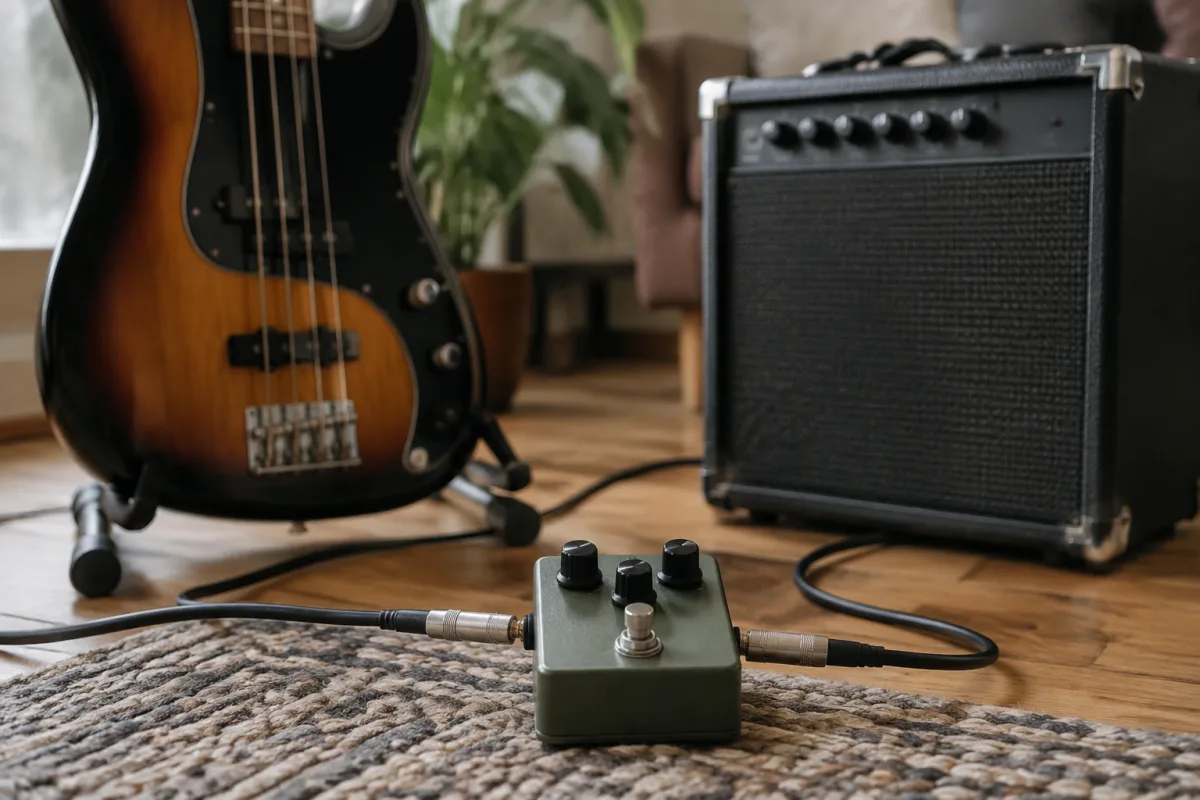
If you're just starting to explore bass guitar tone and you've heard other players talk about overdrive, you might feel a bit intimidated. Don't worry—using a bass guitar overdrive pedal is easier than it seems, and it can genuinely transform how your bass sounds without requiring expensive gear or complicated settings. This guide is designed for beginners who want to add some grit and character to their tone, but don't yet understand what an overdrive does, where to start, or whether you're making common beginner mistakes. We'll keep it simple, reassuring, and focused on getting you playing with confidence.
What Does an Overdrive Pedal Actually Do?
Before you worry about specifications or price, here's the truth: an overdrive pedal simply makes your bass sound more aggressive and textured. Imagine turning your amp's volume up a bit too much—the sound gets punchier and slightly distorted. That's what overdrive does, except it happens in the pedal itself, so you can control exactly how much "dirt" or distortion you want. Think of it as adding sandpaper to your tone. You can use just a little, or you can go wild. Beginners often think this is complicated, but it's really just two knobs: Volume and Drive (how much effect you add). That's it for basic use.
Why Bass Players Love Overdrive (And Why You Might Too)
Bass players use overdrive pedals for several reasons. Rock and metal bass players use it to add aggression and cut through the mix during heavy sections. Funk and soul bass players use subtle overdrive to warm up their tone and add thickness. Jazz bass players sometimes add gentle overdrive for complexity. The point is: you don't have to be a metal or rock player to benefit from exploring overdrive. A little bit of drive can make your bass feel more present, more colourful, and honestly, more fun to play.
Your First Pedal: Beginner-Friendly Options
As a beginner, you don't need expensive gear. You need something with straightforward controls, reliable tone, and a price tag that won't hurt if you decide overdrive isn't for you. Here's what works:
- Boss OD-3 (around £80–£120): Simple, tough, and affordable. Two knobs (Level and Drive), no confusing options. Boss pedals are nearly indestructible, and they hold their resale value if you change your mind later.
- MXR M104 Distortion+ (around £100–£150): Classic, warm overdrive. Slightly more character than the Boss, still beginner-friendly. Professional bass players use this, so you'll grow into it.
- Electro-Harmonix Bass Big Muff Pi (around £120–£180): If you want a fuzzier, dirtier sound. This leans more toward distortion than gentle overdrive, but it's brilliant for learning how much dirt you can handle.
- TC Electronic Plethora or Behringer FCB1010: Skip multi-effects until you understand what you want. Start with a single, dedicated overdrive pedal.
Budget Reality: Spend Smart, Not Expensive
You can absolutely find usable overdrive pedals for £50–£100 new. Spend in this range while you're learning. If you hate overdrive after three months of exploration, you've only lost £60, not £300. As you develop your taste, you can upgrade to premium pedals like Lehle, Darkglass, or Xotic models (£200–£400 range). But right now, being a beginner means experimenting cheaply and building confidence. Used pedals on eBay or Reverb are another brilliant option—save 30–40% and still get quality gear.
Getting Started: Your First Practical Steps
Step 1: Connect it properly. Your pedal goes between your bass and your amplifier. Plug your bass into the pedal's input, then the pedal's output into your amp's input. That's all. Turn on the pedal (usually a footswitch).
Step 2: Start with everything at zero. Turn the Drive knob all the way down (or off). Turn the Level knob to roughly halfway. This baseline lets you compare with and without overdrive clearly.
Step 3: Slowly increase the Drive. Play a simple bass line you know well. Very slowly turn up the Drive knob. Listen to your tone get grittier. Stop before it sounds unrecognizable to you. That's your sweet spot for now.
Step 4: Adjust Level to match your volume. With overdrive on, your bass might sound quieter. Turn up the Level knob until your overdriven tone is roughly as loud as your clean tone. This prevents you from losing volume when you engage the pedal.
Step 5: Practise using it dynamically. Don't just toggle it on and off. Play parts with it on, parts with it off. Use the footswitch during a song to switch between clean and overdriven sections. This is where overdrive gets fun—it's not an always-on effect; it's a tool you turn on when the music calls for it.
Common First-Timer Mistakes (And How to Avoid Them)
Mistake 1: Overdoing the Drive amount. Beginners often turn Drive up to maximum, and their bass becomes a wall of noise. You want colour, not mush. Start low and increase gradually. Less is almost always better when learning.
Mistake 2: Forgetting to adjust Level for compensation. Overdrive naturally changes your volume and tone character. If you don't adjust the Level knob, you'll lose clarity and feel like something's wrong. A quick Level twist fixes it instantly.
Mistake 3: Using cheap cables. Cheap instrument cables introduce noise and tone loss. You don't need expensive cables, but decent ones (£8–£15) make an enormous difference in how clean your tone stays, especially with overdrive engaged.
Mistake 4: Assuming overdrive is permanent. You don't have to use it every day, every song, or even every month. Try it, explore it, and if it's not your thing after genuine experimentation, that's perfectly fine. Your bass doesn't require overdrive to sound good.
Mistake 5: Chasing gear instead of developing tone. Expensive pedals don't fix poor technique or bad amp settings. Get your clean tone right first. Overdrive works best when your baseline tone is solid.
Building Confidence With Overdrive
The truth is: using a bass guitar overdrive pedal is not difficult or mysterious. It takes maybe five minutes to understand the basics, and then it's just about exploring what sounds good to you. There's no "correct" way to use it. If you like subtle warmth, use it subtly. If you like aggressive crunch, turn it up. Your ears are the guide, not anyone else's opinion.
Start with one pedal, one bass line, and one amp. Don't overthink it. Most professional bass players started exactly where you are now—confused, curious, and eager to add something new to their sound. The fact that you're reading this means you're already on the right path.
Next Steps: Growing Your Sound
Once you've spent a few weeks exploring your overdrive pedal, you'll naturally understand whether you want to keep it, upgrade it, or move on to other effects. You might discover you love compression next, or you might find that overdrive is your thing and you want a pedal with more control and warmth. That's exactly how bass tone development works—exploration, discovery, refinement.
For a deeper dive into bass guitar overdrive pedals and more advanced techniques, read our complete guide to bass guitar overdrive pedals. But right now, your job is simple: plug in your first pedal, play some bass, and enjoy how your tone transforms. That's all you need to do to get started.


Comments