


Bass Guitar Headless Buying guide
Bass Guitar Headless: A Complete Buyer's Guide
Shopping for a headless bass? This guide covers price tiers, critical specs like tuning systems and bridge quality, and what to inspect before purchasing.
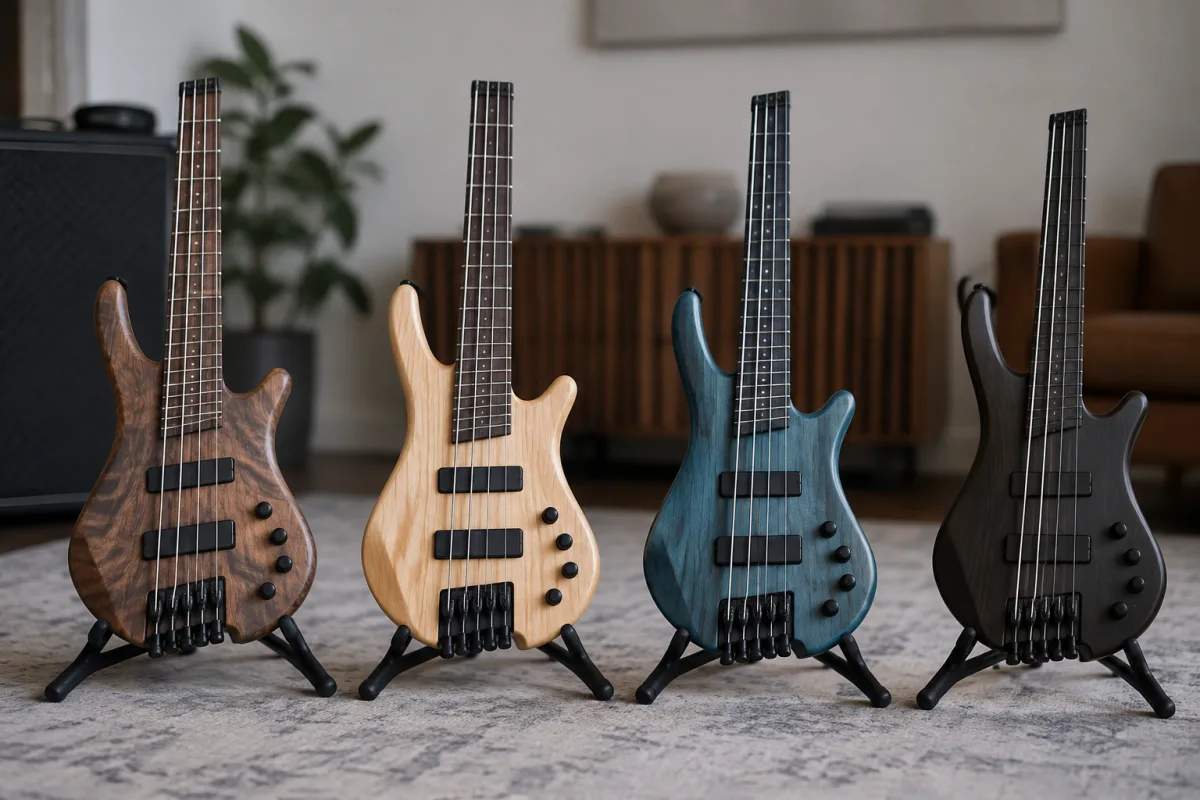
Headless bass guitars are gaining popularity for their compact design, lighter weight, and modern aesthetics. But stepping into the headless market requires understanding some key differences from traditional basses. This buying guide walks you through what specs actually matter, what to inspect before purchase, price tiers across the headless market, and common pitfalls to avoid so you choose a headless bass that plays as well as it looks.
Understanding Headless Bass Guitar Price Tiers
Budget (£300–£600)
Budget headless basses use laminated or thin solid wood bodies with simpler hardware. The tuning system (usually on the bridge) may be basic. These work for beginners and casual players, but electronics and bridge quality can vary. Sound is often thin without the mass of a traditional bass head.
Mid-Range (£600–£1200)
Mid-range headless basses offer better wood quality, refined bridge tuning systems, and decent electronics. Many use solid wood bodies and higher-quality tuning systems like Steinberger or proprietary designs. Tone deepens significantly compared to budget models, and playability feels more refined.
Premium (£1200+)
Premium headless basses feature quality solid wood, precision-engineered bridges, pro-grade electronics, and meticulous craftsmanship. Brands like Ibanez, Status, and Fender (with their modern headless offerings) dominate this tier. Tone, sustain, and playability rival traditional high-end basses.
Essential Specs to Compare
Body Wood and Construction
Solid wood bodies sound fuller and resonate better than laminated bodies. Compare woods: alder and basswood are warm and traditional; ash is brighter and punchier. If comparing two models at similar prices, solid wood always wins. Weight also matters—a headless bass should feel lighter than a traditional bass, but if it feels flimsy, the wood is likely thin or low-quality.
Tuning System
This is the single biggest difference between headless models. Steinberger tuning (all tuning at the bridge) is reliable and time-tested. Proprietary systems vary—some are excellent, others fiddly. When shopping, research user reviews of each brand's tuning system. You'll spend considerable time tuning, so it must be intuitive and stable. Test the tuning stability after purchase by playing for 10 minutes and checking if strings stay in pitch.
Bridge Quality
The bridge holds enormous string tension. A cheap bridge with poor materials will slip or break. Check that the bridge is solid brass or steel (not stamped plastic), and that tuning screws turn smoothly without grittiness. Run your finger across the bridge saddle—it should be smooth and precisely shaped, not roughly finished.
Electronics
Passive electronics (no battery) are simpler and more reliable. Active electronics (with battery) offer more tonal shaping but add complexity and potential points of failure. For beginners, passive is less fussy. If a model includes active electronics, check that the battery compartment is easily accessible and that controls are intuitive.
Neck and Frets
Headless basses can suffer from neck-through (single piece from headstock to body) or bolt-on construction, the latter being lighter. Check frets are level by sighting down the neck. Headless basses sometimes have slightly flatter radius fretboards than traditional basses—this is fine, just different. Play up and down the neck and listen for buzzing or dead spots.
Output Jack Placement
Unlike traditional basses where the jack is on the body side, headless basses often have the jack on the back of the body or bridge area. This can cause cable management issues if you play with the bass on your body. When testing, plug in and move around to see if the cable snags or puts stress on the jack.
What to Inspect Before Buying
Check the Tuning System Thoroughly
Tune the bass up, then down, then up again. Watch the tuning knobs to ensure they turn smoothly with no grinding sounds. Test each string individually. The tuning should be stable and precise. If you feel resistance or hear grinding, the tuning mechanism has wear or defects.
Verify Bridge Stability
Gently try to wiggle the bridge side-to-side. There should be zero movement. If the bridge shifts when you apply side pressure, the mounting is compromised. This is a red flag—a loose bridge will cause intonation problems throughout the fretboard.
Examine the Frets and Neck
Sight down the neck from both the bridge and headstock end. Frets should be level and even. Any significant dips or high spots indicate playability issues. Play open strings and harmonic notes at the 12th fret to check intonation—they should match.
Test Intonation Across the Neck
Play a note at the 1st, 5th, 7th, and 12th frets on each string. Each should be in tune. Headless basses can have intonation quirks because the tuning system is non-traditional. If intonation is significantly off (more than a quarter-tone out), the bass needs professional setup or has a defect.
Check the Electronics (If Present)
Plug into an amplifier and test each pickup and control. Tone knobs should turn smoothly. Switches should engage crisply without crackling. Battery should be easy to access and the compartment dry and corrosion-free.
Inspect for Physical Damage
Look for cracks in the finish, dents, or rough spots. Headless basses don't have a headstock for visual balance, so damage shows more obviously. Also check for signs of shipping trauma: impact marks on the body or corners.
Common Pitfalls to Avoid
Assuming Headless Is Always Lighter
Headless basses are lighter than traditional basses, but not always by much. Some solid wood headless models weigh nearly as much as traditional basses because they compensate for lost headstock mass with thicker bodies. If weight savings is your goal, verify the actual weight before buying. Online specs sometimes lie.
Ignoring Tuning System Complexity
Some headless designs have tuning systems that look interesting but require frequent maintenance or adjustment. Before purchasing, watch YouTube videos of other users tuning the model. If the process looks fiddly or frustrating, move on.
Buying Purely for Aesthetics
Headless basses look modern and sleek, but if the playability and tone don't measure up, you won't enjoy playing it. Prioritise feel and sound over appearance. A headless bass must play as well as it looks.
Overlooking Bridge Accessibility
Some headless designs mount the bridge in awkward positions, making it difficult to change strings or adjust intonation. Before committing, check whether you can comfortably access the bridge with a screwdriver or wrench. Difficult access becomes frustrating during maintenance.
Forgetting About Cable Management
Traditional basses have the output jack positioned for natural cable routing. Headless basses sometimes don't. Test cable routing by plugging in and moving the bass around. If the cable pulls or puts stress on the jack, you risk damaged cables and intermittent connections during performances.
Headless Bass Buying Checklist
- Body is solid wood (not laminated)
- Tuning system operates smoothly with no grinding or resistance
- Bridge is solid metal and doesn't shift when tested
- Frets are level with no buzzing or dead spots
- Intonation is accurate across the full neck
- Output jack placement allows comfortable cable routing
- Electronics (if present) work crisply with no crackling
- No visible cracks, dents, or physical damage
- Weight meets your expectations
- Bridge is accessible for future maintenance
Conclusion: Finding Your Headless Bass
Headless bass guitars offer genuine advantages—lighter weight, compact design, modern appeal—when you buy a quality instrument. Focus on understanding the tuning system, verify build quality by checking wood and hardware, and ensure playability matches or exceeds traditional basses at the same price point. Don't buy for looks alone. For detailed technical information about headless bass construction and design, read the complete guide to headless bass guitars. With these guidelines, you'll find a headless bass that feels as good as it looks.


Comments