


Bass Guitar Fuzz Pedal article
Bass Guitar Fuzz Pedal for Beginners: A Complete Guide
A practical guide for bass players new to fuzz pedals—learn what to look for, what to avoid, and how to get started with your first fuzz effect.
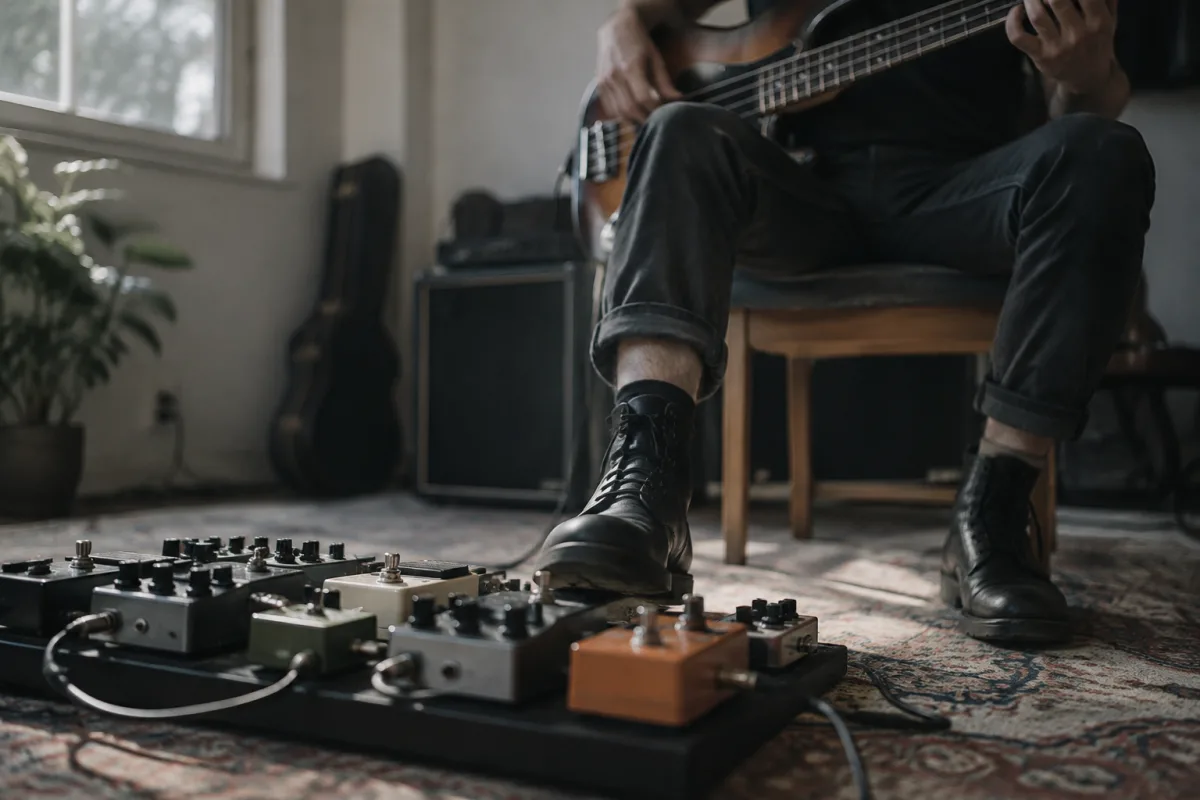
If you're picking up a bass guitar and wondering whether a fuzz pedal belongs on your pedalboard, you're not alone. The thought of adding effects can feel overwhelming when you're just learning to find your groove, but a bass guitar fuzz pedal is actually one of the friendliest effects to start with. This guide walks you through everything a beginner needs to know about getting your first bass guitar fuzz pedal—no confusion, no jargon overload, just the essentials to get you fuzzing confidently.
What a Bass Guitar Fuzz Pedal Actually Does (Without the Hype)
A bass guitar fuzz pedal takes your clean bass tone and deliberately distorts it, adding a thick, aggressive grit that ranges from subtle warmth to full-on wall-of-sound saturation. Unlike distortion or overdrive, which add texture and crunch, fuzz creates a roaring, almost synth-like quality that works brilliantly on bass. The beauty for beginners? You don't need to understand the electronics—you just need to know that turning it on gives you an instant personality shift.
Think of it as a tonal seasoning. Your bass is the dish; the fuzz pedal is the spice. Start subtle, experiment, and find what feels right for your playing.
Do You Actually Need One Right Now?
Honest answer: not immediately. If you've been playing bass for less than a month, focus on your finger technique and getting comfortable with your instrument first. However, if you're playing in a band, recording, or just eager to explore your bass's sonic possibilities, a bass guitar fuzz pedal can be incredibly inspiring—and that inspiration often leads to better practise and faster improvement.
Many beginners find that adding effects too early distracts from learning fundamentals, but others find effects motivating. Whichever camp you fall into, there's no shame in waiting six months or diving in immediately. This guide is here for whenever you're ready.
The Four Things That Actually Matter When Choosing Your First Fuzz Pedal
Rather than drowning you in specifications, here are the genuinely important features for a beginner:
| Feature | Why It Matters for Beginners |
|---|---|
| Fuzz Amount (Tone/Sustain Control) | Lets you dial in anything from subtle grit to full saturation. Look for pedals with a clear tone knob—it's your safety valve. |
| Volume Control | Fuzz pedals can be loud. A dedicated volume knob means you won't disappear in the mix or accidentally shock your bandmates. |
| Bypass (True or Buffer) | When you turn the pedal off, does it pass your signal cleanly? True bypass is preferred, but most beginner pedals are fine either way. |
| Power Source | Batteries are fine for occasional use; USB/AC adaptors are more reliable for regular playing. Pick what fits your lifestyle. |
Common First-Timer Mistakes (and How to Avoid Them)
Learning from others' stumbles saves you time and money. Here are the pitfalls beginners most often mention:
- Buying the cheapest option and expecting it to sound great: A £30 fuzz pedal will sound like a £30 pedal. Expect to spend at least £60–80 for something that genuinely inspires you.
- Cranking the fuzz all the way up and wondering why it sounds terrible: Start at 30% and dial it in slowly. More fuzz isn't always better.
- Forgetting about volume: Fuzz can dramatically boost your signal. Play with volume off first, then introduce it carefully.
- Ignoring the pedal's manual: Most fuzz pedals have simple controls, but spending two minutes reading the guide prevents frustration later.
- Assuming fuzz kills your bass's definition: A well-adjusted fuzz pedal adds character; it doesn't erase your playing. The problem is usually too much fuzz dialled in.
Price Tiers Explained: What You Get at Each Level
Understanding price brackets helps you make a decision that won't leave you regretting your purchase:
Budget (£40–70): Basic single-knob or two-knob fuzz pedals that work perfectly fine. Think of them as proof-of-concept purchases. Great for trying fuzz without investment risk. Examples give you solid functionality and durability.
Mid-Range (£70–150): Where most beginners end up. These pedals offer multiple controls (fuzz, tone, volume), better build quality, and sounds that genuinely excite you. This is the sweet spot—you're getting character and reliability without collector-level pricing.
Premium (£150+): Vintage reissues, boutique designs, and pedals with exceptional tone-shaping. For beginners, this tier is overkill unless you know exactly what sound you're after. Save this money for later when your taste is refined.
Getting Started: Your First Steps
Once you've chosen your pedal, the path forward is straightforward:
- Unbox and inspect: Check that everything's intact and the pedal feels solid. No rattle or loose bits.
- Read the manual: Even if you're tempted to skip it, give it a quick skim. Learn what each knob does.
- Power it up and play: Plug in your bass, turn on the pedal, and explore each control. There's no wrong way at this stage.
- Start with subtle settings: Dial fuzz to 25–40%, keep tone balanced, and set volume to match your clean tone.
- Play your favourite riff: Hear how fuzz transforms it. This is the fun part.
- Experiment over days, not minutes: Let your ear adjust. What sounds wild today will feel natural by tomorrow.
Matching Fuzz to Your Genre and Playing Style
Fuzz works across nearly every bass genre, but knowing how to dial it in for your style helps you get there faster:
Rock and punk: Full, unforgiving fuzz on the verse, off during verses where the bass holds the line. Simple toggle approach.
Funk and soul: Subtle fuzz with a responsive tone control lets you blend fuzzy character with pocket. Use fuzz sparingly—a spice, not the main course.
Metal and heavier styles: Fuzz can live on your pedalboard permanently here. Dial in enough saturation to thicken your attack without losing definition.
Experimental and indie: Go wild. Fuzz here is a creative tool—there's no "right" amount.
Troubleshooting: When Something Feels Off
If your fuzz pedal isn't sounding right, work through these checks before assuming you bought a dud:
- Is the volume too high? Lower it first.
- Is the fuzz dialled to maximum? Back it off to 50% and reassess.
- Are your bass's pick-ups clean and working? Fuzz amplifies any issues in your signal chain.
- Is your lead cable in good shape? A dodgy cable can kill tone before it reaches the pedal.
- Have you tried fresh batteries or a reliable power supply?
Building Confidence With Your New Pedal
The best part about starting with a fuzz pedal is how quickly you'll gain confidence. Within a week of regular playing, fuzzy tones will feel natural rather than alien. You'll start noticing which songs in your setlist benefit most from fuzz, and which work better clean. That intuition—learned through playing, not reading—is what transforms an effect from a gimmick into a genuine part of your voice as a bassist.
If you want a comprehensive comparison of styles and deeper context, the complete guide to bass guitar fuzz pedals covers the full landscape. But for now, pick a pedal in the mid-range bracket, start subtle, and let your ears guide you.
Your Next Move
The threshold to buying your first bass guitar fuzz pedal isn't high. What matters is choosing something you can afford to experiment with, setting reasonable expectations (it won't fix your technique, but it will inspire you), and diving in without overthinking it. Fuzz pedals are forgiving teachers—they reward experimentation and quickly show you what does and doesn't work for your sound.
Start playing, adjust the knobs, and enjoy discovering a whole new dimension of your bass.



Comments