


Amp Mixer article
The Complete Guide to Amp Mixer
An amp mixer lets you blend multiple instruments and sources into a single amplifier without constant cable swapping. Discover how an amp mixer enhances your rig's flexibility.
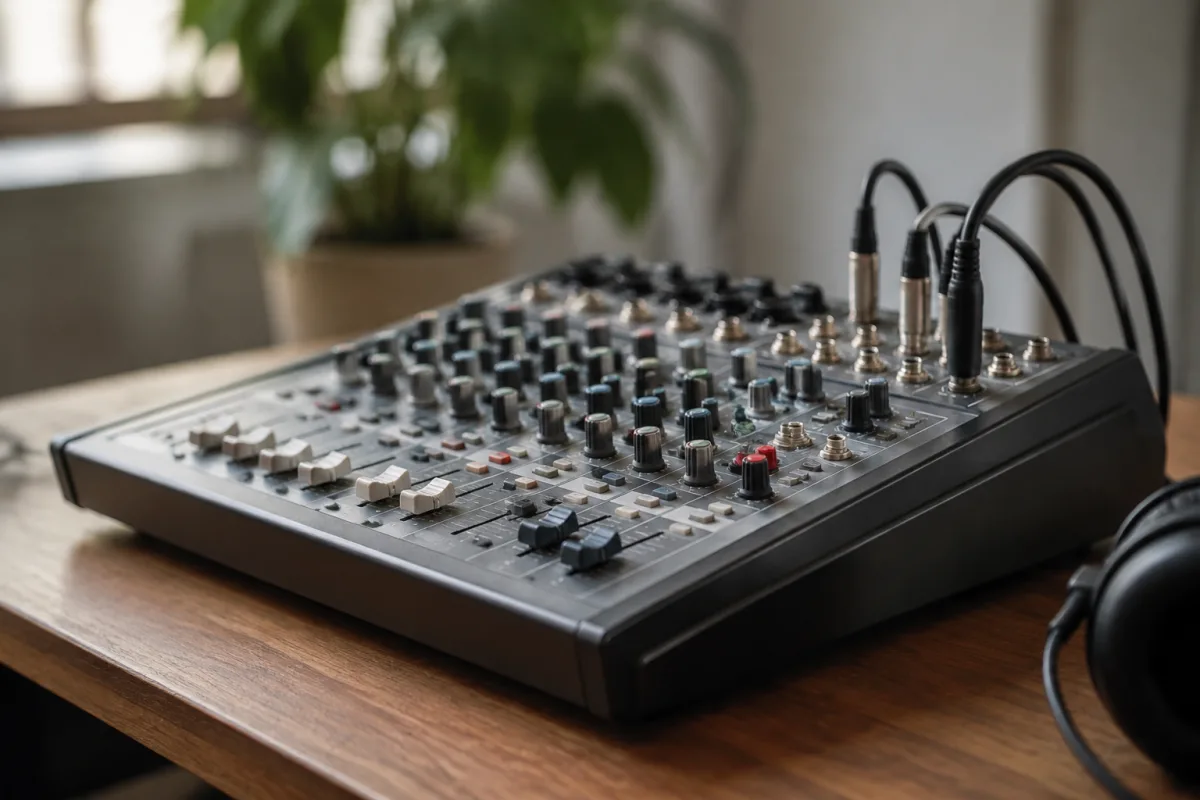
An amp mixer sits between your musical instruments and your amplifier, serving as a selector and tone-shaping intermediary that many musicians overlook until they experience the benefits. An amp mixer lets you run multiple instruments through one amplifier without constant cable swapping, whilst providing individual level control and tone shaping for each source. Whether you're a guitarist switching between several instruments, a keyboardist adding bass pedals to your setup, or a bassist wanting to blend multiple sound sources, an amp mixer transforms your rig's flexibility.
What Does an Amp Mixer Actually Do?
An amp mixer is a simple device—typically a small passive or powered mixing unit—that combines multiple audio inputs and sends them to a single output connected to your amplifier. Think of an amp mixer as a selector on steroids: instead of unplugging your guitar to plug in a keyboard, an amp mixer lets you blend both signals simultaneously. Each channel on an amp mixer has its own level control, so you can balance the volume of different sources in real-time, either before your amplifier or through aux sends that feed back to individual amp inputs.
The amp mixer eliminates the traditional problem of limited amplifier inputs. Most guitar amplifiers offer only one or two input channels. Add a keyboard, a microphone, or a second guitar, and you're out of options. An amp mixer solves this by accepting multiple inputs and mixing them into a single feed your amplifier understands.
Passive vs Active Amp Mixer Designs
A passive amp mixer uses no external power—it's pure analog mixing, relying on transformers or resistive networks to combine signals. Passive amp mixer designs are simple, affordable, and transparent, adding minimal coloration to your tone. However, a passive amp mixer can introduce signal loss, especially when combining many sources. If you're running multiple channels into a passive amp mixer, signal level might drop noticeably.
An active amp mixer includes a built-in preamp, providing gain amplification alongside mixing. An active amp mixer maintains signal level even with multiple inputs and often adds EQ controls and effects loops. The trade-off is complexity and cost—an active amp mixer requires power (batteries or AC) and typically costs more than passive variants. For serious musicians needing professional control, an active amp mixer justifies the investment.
Channel Count: Choosing the Right Amp Mixer
An amp mixer ranges from simple two-channel models (perfect for guitarists who want to switch between two instruments without rewiring) to more elaborate four- or six-channel units. Consider your actual needs honestly. A bassist running fretless and fretted basses might need only two channels. A keyboardist blending multiple synthesizers might demand six. An amp mixer with more channels than you need adds unnecessary complexity; one with too few channels proves frustrating.
Remember that an amp mixer's channel count includes all input types—microphones, line-level signals from keyboards, instrument-level inputs from guitars and basses. Some amp mixer designs specialise in specific applications; others are general-purpose. Matching the amp mixer's architecture to your actual setup prevents both overspending and undersupply.
Tone Shaping Capabilities of an Amp Mixer
Basic amp mixer models offer only volume controls per channel. More sophisticated amp mixer designs add three-band EQ (bass, mid, treble) per channel, letting you shape the tone of each source independently before they combine. Premium amp mixer units might include parametric EQ, allowing precise frequency targeting. The more tone-shaping capability your amp mixer offers, the more flexibility you have in crafting your sound.
Some amp mixer designs include onboard effects—reverb, delay, or distortion. These aren't professional-grade effects, but for rehearsals and smaller gigs, an amp mixer with basic effects can eliminate the need for separate processors. Understanding what tone-shaping features matter to your sound helps you choose an amp mixer that serves your actual needs.
Amp Mixer for Multiple Instruments
The most common use case for an amp mixer is blending multiple instruments. A guitarist with two electric guitars—one for clean tones, one set up for overdrive—can split their signal through an amp mixer, adjusting the blend between them in real-time. A keyboardist running two synthesizers can mix them through an amp mixer, balancing their levels on stage. An amp mixer makes instrument switching seamless and opens creative possibilities that fixed routing can't match.
Some amp mixer designs include instrument-level and line-level inputs, accommodating both guitars and keyboards in the same unit. These flexible amp mixer models suit diverse setups but might offer fewer channels than single-instrument-type variants.
Amp Mixer for Microphone Blending
An amp mixer can also combine microphones—a vocalist using both a handheld microphone and a headset wireless mic, or a drummer miking multiple kit pieces and blending them through an amp mixer. However, microphone-specific amp mixer designs are less common than instrument-focused units. If microphone mixing is your primary need, consider whether a small mixing console might better serve your purpose than a traditional amp mixer.
Integration With Effects and Signal Chains
An amp mixer sits at a crucial junction in your signal chain. Do you place it before your effects pedals, combining unaffected instrument signals, then send the mixed result to your effects chain? Or after your effects, mixing already-processed signals? Each approach has merit. Before effects, an amp mixer provides a clean, dry baseline for your effect processors to work with. After effects, an amp mixer combines already-shaped tones, potentially reducing interference between effects chains.
Premium amp mixer designs include aux send/return loops, letting you insert external effects on specific channels while bypassing them on others. This flexibility approaches mixing console capability within the amp mixer format.
Amp Mixer Reliability and Build Quality
An amp mixer seems deceptively simple—why should build quality matter? Experience teaches otherwise. Cheap amp mixer units often feature scratchy faders, intermittent channel inputs, and hum issues. Quality amp mixer designs use reliable components, shielded cabling, and sturdy construction that survives years of gigging. For an amp mixer you'll trust in live performance, invest in a model with proven durability.
Reading user reviews and asking experienced musicians about their amp mixer experiences prevents disappointment. A well-made amp mixer becomes an invisible part of your rig—it just works. A poorly made amp mixer introduces noise, signal dropout, and frustration that undermines your entire setup.
When You Might Not Need an Amp Mixer
If your amplifier offers multiple high-impedance inputs and you rarely switch between sources, an amp mixer might be unnecessary complexity. If you're committed to single-instrument playing, an amp mixer adds no value. However, for most musicians running multiple sources into a single amplifier, an amp mixer eliminates the cable-swapping dance and opens creative blending possibilities that justify the investment.
Choose an amp mixer that matches your actual needs, favoring quality construction and the specific tone-shaping features you'll genuinely use. A good amp mixer becomes part of your professional rig—simple, reliable, and indispensable once you've experienced its benefits.


Comments