


Baritone Gretsch article
Baritone Gretsch for Beginners: A Complete Guide
Start your baritone Gretsch journey with confidence. Understand how it feels different, avoid common beginner mistakes, and develop your technique with encouragement.
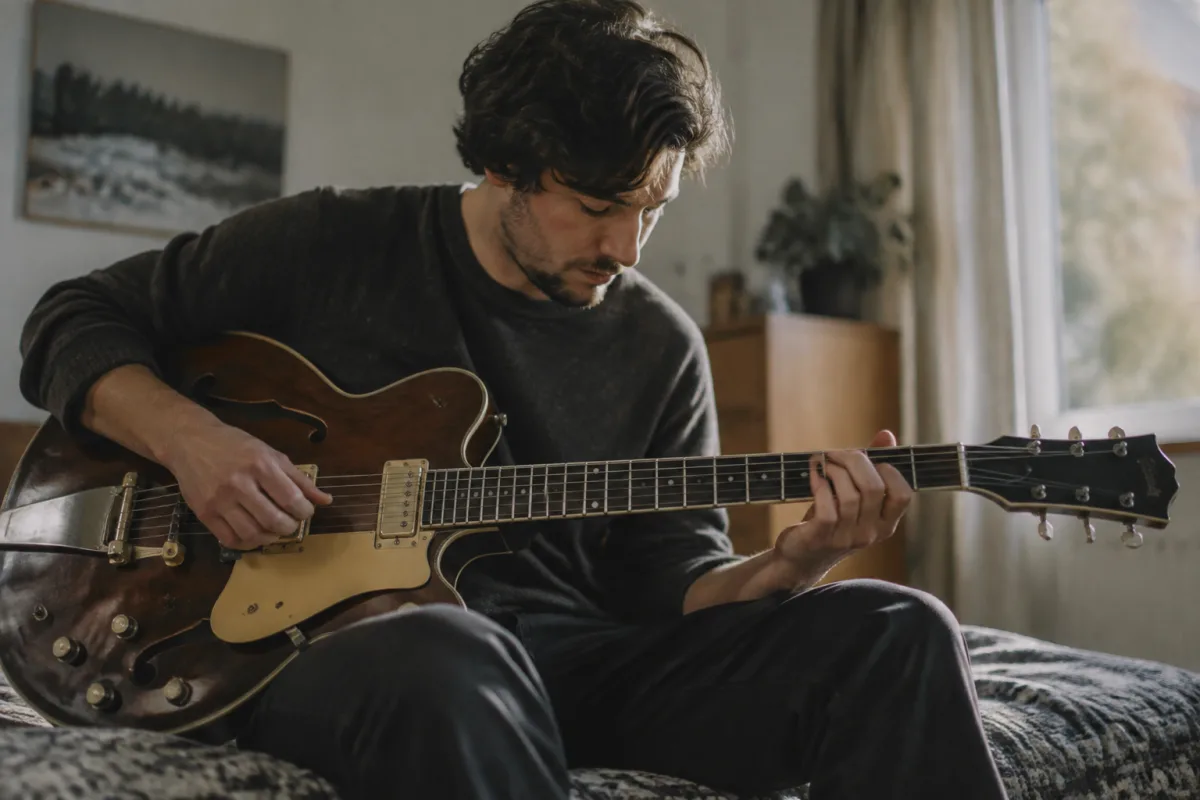
A baritone Gretsch guitar sits in an exciting middle ground—deeper toned than standard guitars, but more accessible than full-scale basses. If you're a beginner drawn to that rich, low-end character without committing to an entirely different instrument, a baritone Gretsch could be your perfect starting point. The challenge is that baritone guitars feel different, play differently, and demand different expectations than standard six-strings. This guide walks nervous first-timers through the fundamentals, encouraging you toward the unique voice a baritone Gretsch offers, and helping you avoid the most common stumbles along the way.
What You're Actually Getting With a Baritone Gretsch
A baritone Gretsch guitar is a Gretsch guitar—same legendary build quality, warm articulate tone, semi-hollow body comfort—but tuned lower than standard. Where a regular guitar's thickest string (low E) sits at 82 Hz, a baritone's low note is usually around 54 Hz (B), or sometimes lower depending on the tuning. That translates to a physically longer neck, thicker strings, and a sound description that's best experienced rather than read. Warm. Deep. Vocalistic. Rich.
For beginners, this means you're not buying a lesser guitar; you're buying a specialised instrument with different possibilities. It's not a compromise. It's a choice.
The First Hurdle: Baritone Tuning (And Why It Matters)
Most baritones arrive set to B-E-A-D-G-B (one step lower than standard E-A-D-G-B-E tuning). Some come in other tunings. This might seem confusing, but it matters only to your fingers—your ears will find it natural within days of playing. Don't overthink tuning; just accept what's preset and play. Your brain adapts quickly.
One advantage: baritone strings are thicker, which means you can rest your fingers harder without hearing fret buzz. For beginners still developing touch, this forgiveness is genuinely helpful.
Expectations: How a Baritone Feels Different (And How That's Actually Great)
| Aspect | Standard Guitar | Baritone Gretsch | Why It Matters to Beginners |
|---|---|---|---|
| Neck length | ≈24–25 inches | ≈27–30 inches | Your fretting hand reaches slightly further, but Gretsch necks are comfortable. Most beginners adapt in one week. |
| String gauge | 0.009–0.046 inch | 0.013–0.062 inch | Thicker strings resist buzzing and require slightly more finger pressure, which can actually build technique faster. |
| Tuning | E-A-D-G-B-E | B-E-A-D-G-B (or lower) | Lower pitches sound deeper and richer. Your vocal inspiration music might live here naturally. |
| Body mass | Moderate | Slightly heavier | Gretsch builds hollow and semi-hollow bodies, so weight is minimal. Comfort is unaffected for most players. |
Common First-Timer Mistakes With Baritone Gretsch Guitars
- Treating it like a standard guitar and feeling frustrated: A baritone won't feel like a Strat or Les Paul. Accept the differences rather than fighting them. Within one week, these differences become strengths.
- Buying a baritone before learning standard guitar fundamentals: If you've never held a guitar, start with a standard guitar first. Learn basic chords and rhythm on familiar shapes, then move to baritone. The transition is smoother that way.
- Assuming finger pain means the instrument is wrong: New strings, thicker gauges, and slightly longer reach cause some discomfort initially. This is normal. Practise in short sessions (15–20 minutes) for the first week; discomfort fades as finger strength builds. If pain is sharp rather than dull, stop and reassess hand position.
- Expecting baritone chords to sound like standard chords: Your favourite songs don't exist in B tuning by default. Learn the chords in baritone tuning; they'll sound lush and different, not "wrong." Embrace the uniqueness rather than chasing standard-guitar familiarity.
- Neglecting setup expectations: Baritone Gretsch guitars arrive from the factory ready to play, but action, intonation, and truss-rod settings sometimes need tweaking as strings settle. A quick visit to a tech after one month of playing prevents frustration.
- Underestimating the learning curve: You're not relearning guitar entirely; you're adjusting. Most experienced guitar players adapt to baritone within days. For complete beginners, expect one to two weeks of "this feels weird" before it becomes second nature.
Your First Week: What to Expect and How to Approach It
Day 1–2: The neck feels long. Strings feel thick and stiff. Your fingers hurt more than they would on a standard guitar. This is normal. Play for 15 minutes, then stop. Repetition over multiple short sessions beats one long session.
Day 3–4: Muscle memory is kicking in. Your hand position feels more natural. Strings still feel stiff, but buzzing decreases as your touch improves. Play for 20–30 minutes now; your fingers can handle it.
Day 5–7: The baritone starts feeling like your instrument. The deep tone becomes addictive. You might find yourself reaching for it preferentially over a standard guitar. This is the turning point. Celebrate it.
Choosing the Right Baritone Gretsch Model for Your Needs
Gretsch makes baritone versions of several popular models—Streamliner, Electromatic, and Professional ranges all include baritone options. A beginner baritone player should prioritise comfort and tone over brand prestige. The Streamliner and Electromatic baritone options (£400–700) offer authentic Gretsch character without the professional-level price tag. Focus on finding one that sounds inspiring to you; the specific model matters less than your connection to the tone.
Building Your Technique: Tips for Baritone-Specific Success
- Anchor your thumb behind the neck: The longer reach tempts you to angle your hand awkwardly. Keep your thumb behind the neck, roughly opposite your middle finger. This position gives you reach without strain.
- Start with open position chords: Major and minor chords in the open position (1st–3rd frets) feel natural on baritone and sound beautiful. Master these before moving up the neck.
- Don't rush bar chords: Bar chords are harder on baritone because of string thickness. Give yourself two to three weeks before attempting them seriously. Your hand strength will develop.
- Embrace the tuning, don't fight it: Learn songs in the baritone's native tuning rather than trying to transpose standard-tuning songs. Your ears will adapt; your playing will improve faster.
- Play with other musicians to understand your role: A baritone covers space between standard guitar and bass. When playing with others, you'll naturally discover where your tone sits best. Solo practice teaches technique; ensemble play teaches musicality.
Overcoming "This Sounds Wrong"—The Confidence Moment
Most beginners hit a mental wall around day 3 or 4: their playing sounds odd to their ears. The deep tone feels unfamiliar. Chords don't match their mental expectation. This is normal and temporary. Your ear is adjusting to a new frequency range. By day 7, the same tone will sound natural and beautiful. Push through this moment; don't abandon the baritone when this happens. The voice you're hearing is the baritone's genuine character, not a sign the instrument is wrong.
Motivation and Direction
Playing a baritone Gretsch immediately signals creativity and taste. You've chosen an instrument with genuine personality. Lean into that. Seek out songs and artists who play baritone or tune down—think Queens of the Stone Age, stoner rock, alternative music using full-range guitars, even jazz artists exploring extended range. Your baritone isn't a limitation; it's an invitation to explore music you might not have considered otherwise.
For deeper technical and musical context around baritone Gretsch guitars, their role in music history, and advanced playing techniques, consult our complete guide to baritone Gretsch guitars. This beginner guide focuses on confidence, comfort, and overcoming the initial hurdles. That complete guide covers everything else.
Your Journey Starts Now
A baritone Gretsch guitar is not a compromise or a step sideways—it's stepping into a richer, deeper sonic landscape. Your first week will feel unusual. By week two, it'll feel natural. By week four, you'll understand why players fall in love with baritone. Be patient with yourself, be consistent with practise, and embrace the unique voice your Gretsch baritone offers.


Comments