


Whats a Synth article
Whats A Synth for Beginners: A Complete Guide
Synths are less mysterious than they look. A synthesizer generates sound electronically, giving you creative control and instant gratification. Here's the beginner's truth about why synths matter and how to start.
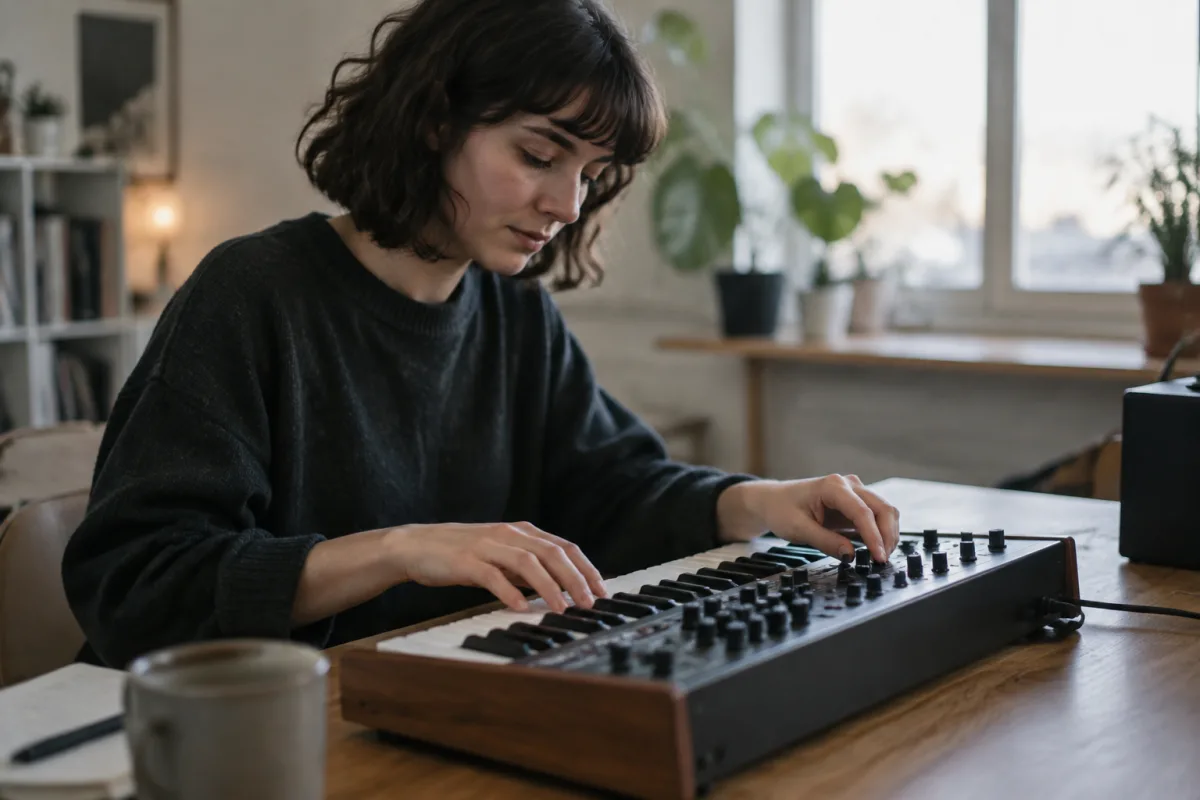
If you're new to music production or considering expanding beyond traditional instruments, the word "synth" probably stirs a mix of curiosity and intimidation. What's a synth, really? Is it a keyboard? Why do they look like something from a 1970s spaceship? Will you actually use it, or will it sit unused after the novelty fades?
The honest answer: a synth is far less mysterious than it looks. It's a tool for creating sounds—any sounds you can imagine. As a beginner, you don't need to understand oscillators or frequency modulation to start making music that sounds great. You just need to know why synths matter and which one might suit your journey. Here's the beginner's truth about synthesizers.
What's a Synth: The Simple Version
A synthesizer generates sound electronically. Unlike a guitar or piano, which relies on strings or hammers hitting strings, a synth builds sound from electrical signals. You twist knobs, push buttons, or play keys, and the synth responds by creating tones—from warm, bass-heavy pads to piercing, glitchy stabs.
That's the core idea. Everything else is just variation on how the synth builds and controls that sound. A synth lets you sculpt audio in real time, which is why they're brilliant for beginners: you get instant feedback. Twist a knob, hear the difference. Press a key, hear a new sound. It's playful and intuitive.
Why Beginners Should Care About Synths
If you already play guitar or piano, you might ask: why add a synth? Here are the genuine reasons:
- Sound creation freedom – You're not limited to acoustic tones. You can design anything, from lush pads to punchy basses to otherworldly textures.
- Instant gratification – Unlike guitar, which requires months to sound decent, a synth lets you make interesting sounds on day one.
- Low physical barrier – No finger strength required, no technique to build. Beginners with zero musical background can make satisfying music immediately.
- Expandability – Most synths work well with other gear. Start simple, add more complexity as you grow confident.
- Production capability – Modern synths integrate with computers and DAWs (digital audio workstations), opening into production and recording.
These aren't reasons to rush out and buy one, but they explain why synths appeal to beginners who might be intimidated by traditional instruments.
Types of Synths: Don't Overthink It
Synths come in several varieties. As a beginner, knowing these categories helps you understand what's available without getting lost in specifications:
Monophonic Synths
These play one note at a time. They're simple, focused, and perfect for learning. They force you to think about melody and phrasing. If simplicity appeals to you, start here.
Polyphonic Synths
These play multiple notes simultaneously—like a piano. More flexible for chords and complex music. They're also more expensive and complex to learn. Don't rush into polyphonic unless you know you need it.
Hardware Synths vs. Software Synths
Hardware is a physical device you control with knobs and buttons. Software (plugins) runs on your computer. Beginners often find hardware more tactile and engaging, but software is cheaper and integrates seamlessly with recording.
Modular Synths
These are highly customisable, infinitely flexible, and completely overwhelming for beginners. Ignore modular for now. Treat them as an advanced avenue you might explore years down the line.
Your First Synth: How to Choose Without Overthinking
The synth market is vast, and choice paralysis is real. Here's how to think about it simply:
- Monophonic, affordable, hands-on – Something like an Arturia MicroFreak or Korg Volca. These are £100–£300, teach you the fundamentals, and sound brilliant. Start here if you want a physical device.
- Software alternative – A free or cheap plugin on your computer (Serum, Vital, Synth1) gives you polyphonic power for almost nothing. Great if you're already comfortable with computers.
- Hybrid approach – A simple hardware synth paired with a computer DAW. You get the tactile joy of hardware and the flexibility of software.
Budget £200–£400 for your first setup (hardware or software included). Anything less and you might find the synth is too limited to explore; anything more and you're spending money on features you don't yet understand.
What You Can Do with Your First Synth (Day One)
This is the part that makes synths special for beginners. You don't need to spend months learning before making music:
- Play melodies – If it's a keyboard synth, just press keys and play. You'll sound interesting immediately.
- Create ambient pads – Hold down a note and let it evolve. Synths excel at atmospheric, lush sounds that require no technical skill.
- Twist knobs and explore – Most synths have presets built in. Load them, tweak them, and discover how sound works through play.
- Build basslines – Monophonic synths are brilliant for bass. Beginners often create satisfying grooves on day one.
- Add to existing music – Record a synth line and layer it under a guitar or vocal recording. It transforms the whole vibe.
That's all genuinely possible with zero experience. Try that with any acoustic instrument.
Common Beginner Misconceptions About Synths
These fears hold back many beginners unnecessarily:
- "I need to understand synthesis theory to use a synth" – False. Press buttons, hear results. Learn theory later if you want. Most brilliant beginner synth music comes from pure experimentation.
- "All synths are complex and overwhelming" – Some are, but many beginner-friendly models streamline everything down to essentials. You're in control of complexity.
- "I need a synth keyboard to make synth music" – Not true. Many synths are compact, some are software-only, some are modulation-focused boxes. Flexibility abounds.
- "Synths are only for electronic music producers" – Synths enhance rock, pop, folk, jazz—anything. Your favourite bands probably use synths even if they don't sound "synthy."
- "Synths cost thousands of pounds" – Entry-level synths start around £100–£300. That's cheaper than a decent guitar.
Don't let these myths prevent you from exploring.
Making Synths Part of Your Musical Life
Start with curiosity, not commitment. If you're intrigued by synths, find a friend's synth or visit a music shop and play with one for fifteen minutes. Notice how immediate the feedback is. Notice how quickly you make sounds that feel musical. That's the real appeal.
If that resonates with you, then invest modestly in an entry-level synth. Give yourself permission to explore without pressure to create masterpieces. Some of the best synth music comes from happy accidents and playful experimentation—territory where beginners thrive.
For a deeper dive into synthesis, synth history, and specific models and techniques, our complete guide to what's a synth covers all the terrain in detail. But if you're starting from scratch, the permission and clarity you've found here is genuinely all you need to take the first step.
Synthesizers aren't as intimidating as they appear. They're actually some of the most beginner-friendly instruments out there—far more forgiving than guitar, far more creative than most synth marketing suggests. Your first synth is waiting, and you're ready for it.


Comments