


Whats a Synth Buying guide
Whats A Synth: A Complete Buyer's Guide
A practical guide to buying your first synthesizer, covering synth types, essential specifications, price tiers, common mistakes, and what to test before purchasing.
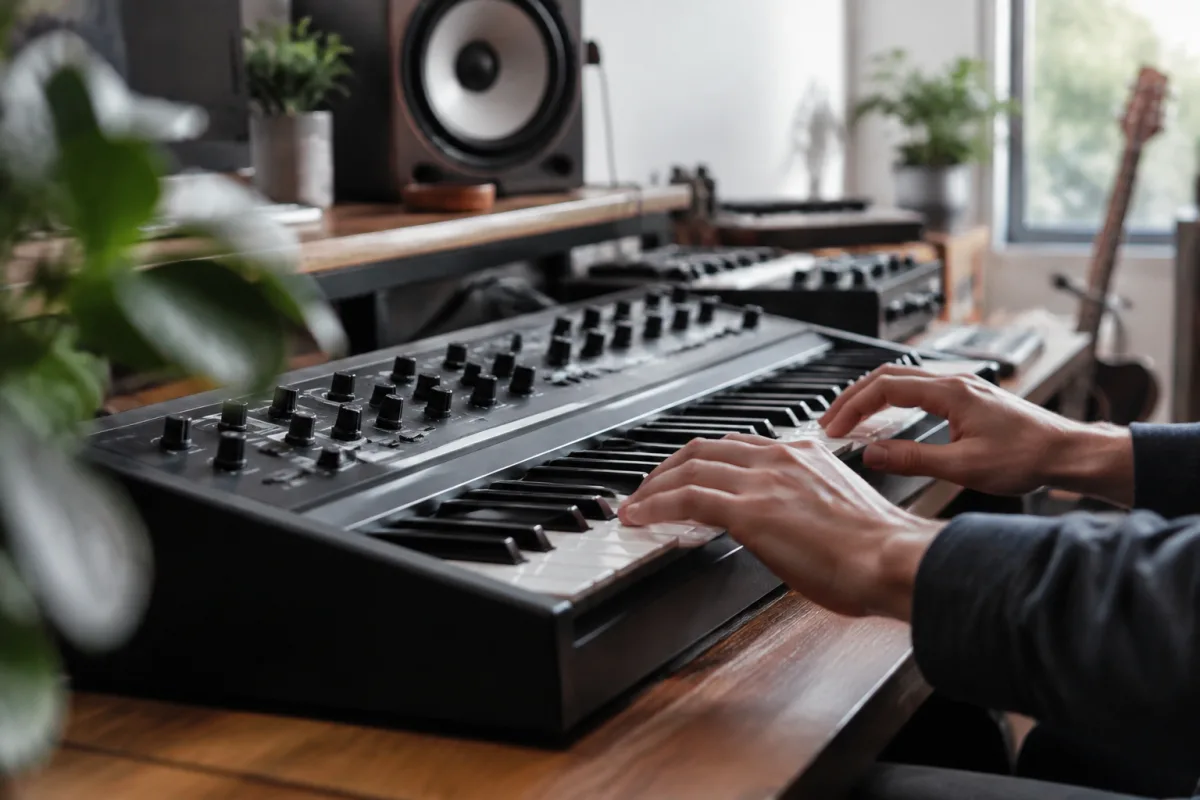
Buying a synth is deceptively intimidating. The terminology sounds alien, the options seem endless, and prices range from affordable to astronomical. Strip away the complexity, and a straightforward question emerges: what kind of music do you want to make, and what instrument suits that goal without exceeding your budget? This buying guide focuses on practical purchasing decisions rather than theoretical capability. We'll explain what matters when choosing a synth, what doesn't, which price ranges suit different needs, common mistakes that cost money and frustration, and how to avoid settling for something that discourages daily play. For in-depth background on synthesizer history and how synthesis actually works, see our complete guide to what a synth is.
Do You Actually Need a Synth?
Starting with the uncomfortable question prevents expensive regret later.
Buy a synth if: you compose electronic music, you want hands-on control over sound creation rather than using presets, you're drawn to synthesis as a musical discipline, or you want to expand your arrangements beyond what acoustic instruments provide. A synth in these contexts isn't luxury; it's a necessary tool.
Reconsider buying a synth if: you're hoping it solves creative blocks or music theory gaps (it won't), you haven't learned to play keyboard basics (you'll struggle more), you want to "try synths" without commitment (rent or borrow instead), or you're chasing gear acquisition as a substitute for actual playing. Many bedroom musicians accumulate expensive equipment that remains largely unused. A synth frequently falls into this category.
Buy a synth if you already know you'll use it. Vague enthusiasm rarely translates to daily playing, especially with instruments requiring skill investment.
Understanding Synth Types: Analogue, Digital, and Hybrids
The synth market divides into broad categories. Each suits different goals and budgets.
Analogue synthesizers: Use circuits to generate and shape sound. They're warm, characterful, and rewarding to explore, but historically expensive. Recently, affordable analogue synths (Moog Subsequent 25, Korg Monotron, Behringer Model D) offer genuine analogue synthesis at beginner-friendly prices. They're physically limited (usually monophonic—one note at a time, though some modern analogue synths play multiple notes) and require careful maintenance. For electronic musicians drawn to vintage aesthetics and hands-on sound design, analogue shines.
Digital synthesizers: Use computer processing to generate sound. They're affordable, powerful, capable of unlimited simultaneous notes (polyphonic), and programmable. Quality varies widely—budget digital synths can sound cheap, whilst premium workstations rival expensive analogue gear. For most beginners, digital offers better value. Software synthesizers (plug-ins within your computer DAW) provide unlimited capability at software pricing (often £20–£100), though they lack physical controls.
Hybrid synthesizers: Combine analogue and digital elements. This category has exploded in recent years. Behringer's range, for example, mixes analogue circuitry with digital controls, delivering analogue warmth at digital-level pricing. Hybrids often represent sweet spots for budget-conscious musicians.
Key Specifications That Actually Matter
Synth specification sheets overwhelm with numbers. Focus on these practical considerations.
Polyphony (how many notes simultaneously): Budget monophonic synths play one note at a time—perfectly valid for certain styles but limiting for chord progressions. Affordable polyphonic synths (Korg Volca Keys, Nord Lead A1) play multiple simultaneous notes. Choose based on your intended music. Monophonic suits electronic, bass, or single-line work; polyphonic suits chords and arrangements.
Keyboard size: Small synths (25 or 32 keys) are portable and affordable but limit what you can comfortably play. Larger keyboards (49, 61, or 88 keys) cost more and take space but feel more like traditional pianos. Begin with smaller keyboards unless you have the budget and space for something larger.
Sound engine type: Subtractive synthesis (filter-based, most common) is intuitive and sounds musical. Wavetable, granular, and FM synthesis offer different characteristics and learning curves. For beginners, subtractive synthesis most intuitive.
Built-in effects: Reverb, delay, and filter modulation enrich synth sound. Built-in effects reduce the need for external gear. Quality varies; test them before purchasing.
Audio connectivity: Stereo outputs matter if using multiple equipment pieces. USB audio connectivity lets you record directly to your computer. MIDI input/output enables controlling other synths or being controlled externally. Verify your intended setup's connectivity requirements.
Price Tiers and What You Get
Synth pricing spans wildly. Understanding tiers prevents overspending on features you won't use.
Budget range (£100–£300): Small, often monophonic synths from brands like Korg, Behringer, and Moog. Limited preset customisation, basic controls, smaller keyboards. Perfect for beginners exploring synthesis or anyone buying a second synth for specific sonic purposes. Don't expect pro-level features; do expect genuine playability and sound quality.
Mid-range (£300–£1000): Polyphonic synthesizers, larger keyboards, deeper sound editing. Brands like Nord, Elektron, Moog, and premium Korg models sit here. This tier offers serious capabilities without excessive cost. Upgrade to this range once you understand synthesis basics and want deeper exploration.
Professional (£1000+): Flagship workstations, specialist hardware, or complete studio systems. These suit professionals or musicians with established budgets and existing skills. Beginners rarely need this tier.
Common Mistakes When Buying a Synth
Experienced musicians avoid these pitfalls; first-time buyers rarely do.
Buying based on specifications rather than sound: A synth with impressive technical specs might sound uninspiring. Conversely, modest-spec synths sometimes sound exceptional. Listen before buying. Specification bragging doesn't translate to musical enjoyment.
Choosing polyphony over musical character: A polyphonic synth that sounds average disappoints more than a limited monophonic synth that sounds exceptional. Instrument character matters more than feature count. Play test synths using music you actually write or play.
Ignoring keyboard feel: Synthesizer keyboards vary wildly. Some are weighted and responsive; others are thin plastic that discourage playing. Spend time on any synth's keyboard before purchasing. Poor keyboard feel will discourage daily play more than any specification.
Buying a synth assuming you'll learn synthesis automatically: Synthesis is a skill requiring intentional learning. Cheap or powerful synths don't teach themselves. Budget time alongside any synth purchase for learning synthesis basics. Without this investment, you'll use presets and never explore the instrument's actual capabilities.
Overspending on synthesis power you won't use: A synth capable of complex modulation and sound design overwhelms beginners. Choose an instrument matching your current skill, not theoretical ambitions two years hence. You can upgrade when you've genuinely outgrown something.
Software Synthesizers as Alternatives
Before buying hardware, consider whether software synthesis suits your workflow.
Advantages: Affordable (often £0–£100), unlimited options, no physical space required, integrate seamlessly with computer-based recording. Professional musicians often use software synths as primary tools.
Disadvantages: No physical controls (you adjust parameters via mouse or keyboard, less tactile), require a stable computer and plugins setup, less portable. Many musicians find physical synths more inspiring despite software's technical superiority.
Hybrid approach: Start with software synthesis to learn basics and explore whether synthesis genuinely interests you. After six months, if you're actively using synths, invest in hardware that adds physicality and enjoyment to your workflow.
What to Test Before Purchasing
Whether buying online or in-person, these tests reveal whether a synth suits you.
Play your music on it: Load or recreate patches you've written elsewhere. Does the synth inspire the sounds you want? Can you control parameters intuitively? If you hate playing it during testing, you'll hate it at home.
Test keyboard responsiveness: Play fast passages and chords. Is the keyboard responsive? Does it feel cheap? Does velocity sensitivity work (playing harder produces louder, more dynamic sounds)? Keyboard feel is deeply personal but non-negotiable once recognised.
Explore preset sound quality: Play factory presets. Do they sound professional or cheap? Preset quality indicates designer skill and manufacturing standards. Poor-sounding presets predict poor performance when you create custom sounds.
Test connectivity: If MIDI or audio USB output matters, verify it works as intended with your specific equipment.
New Versus Used: Cost Considerations
Quality synths hold value well. Used purchases often represent excellent value.
New: Full warranty, guaranteed pristine condition, latest firmware. Premium costs 20–30% above used prices.
Used: Significantly lower cost (often 40–50% below new), limited or no warranty, potential undisclosed damage. Buy used from reputable dealers offering returns or inspection guarantees. Private sales carry risk.
For expensive synths (over £500), new provides peace of mind. For budget synths (under £300), used represents excellent value if cosmetically acceptable.
Making Your Final Decision
Buying a synth is committing to learning synthesis alongside purchasing hardware. Choose an instrument that: fits your budget realistically, matches your current musical needs exactly (not theoretical future needs), sounds exceptional when you play it, and invites daily exploration. A "perfect on paper" synth that feels cold or uninspiring sits unused; a modest instrument that sounds great and feels responsive becomes central to your music-making.
Start modest. Upgrade as your skills and needs grow. A synth is a tool for expressing musical ideas, not a collection piece. Purchase accordingly.


Comments