


Tube Amp Buying guide
Tube Amp: A Complete Buyer's Guide
Choosing a tube amp means understanding what wattage actually means, how breakup works, and what maintenance to expect. This guide cuts through jargon and explains what truly matters.
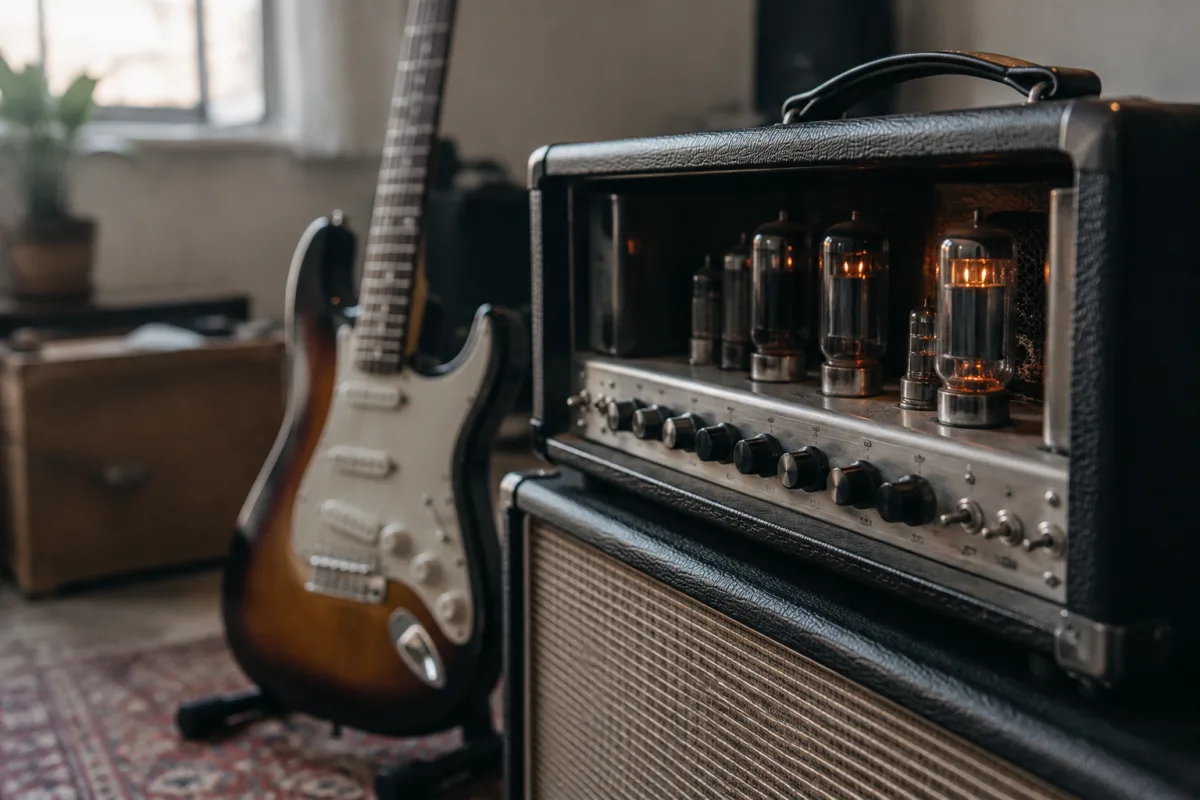
Choosing a tube amp can feel like stepping into a parallel universe where watts don't mean volume, size doesn't guarantee power, and the words "headroom" and "breakup" get used in ways that confuse everyone. But here's the thing: these instruments aren't complicated once you understand what actually matters for your playing. This guide cuts through the jargon and tells you exactly what to listen for, what specs matter, and how to avoid expensive mistakes.
Understanding Tube Amplification and Sound Character
A tube amp uses vacuum tubes to amplify your signal—that's the simple part. The interesting part is what happens when you push it hard. A solid-state amp (transistor-based) can stay clean at any volume. A tube amp, by contrast, breaks up—the tubes compress the signal, adding harmonic distortion that feels musical and organic. This is why tube amps sound expensive even at low wattages. You're not buying clean amplification; you're buying natural, musical overdrive.
This breakup character defines everything about choosing. Understanding it means understanding why a 15-watt tube amp can sound bigger and more interesting than a 100-watt solid-state. Specifications alone tell you nothing about what you'll actually hear.
Wattage and How It Relates to Volume
A tube amp's wattage rating tells you its maximum clean output before significant distortion occurs. Here's where it gets counterintuitive: wattage doesn't equal volume in any straightforward way. A 15-watt instrument often sounds louder and more saturated than a 50-watt solid-state, because the breakup character is subjectively more impressive than raw headroom.
For home playing or small venues, 15–30 watts is plenty. Anything over 50 watts is overkill unless you're gigging in large rooms without amplified support. Most working musicians use 40–100 watt models for live work and prefer smaller versions at home. Don't buy based on wattage alone.
Tubes and Maintenance: Know What You're Getting Into
Tubes wear out. That's not a flaw; it's the nature of these instruments. Your preamp tubes (where the tone lives) might last 2–5 years depending on how hard you push. Power amp tubes (the ones making raw volume) last longer but still eventually need replacement. Maintenance typically costs £30–100 for tubes, and replacement takes minutes.
Budget for tube replacement if you're buying. Quality replacement tubes cost £20–40 per tube. An instrument with four preamp tubes and six power amp tubes needs occasional attention. Some players see this as character; others find it annoying. Know which you are before committing.
Channels, Reverb, and Built-In Features
Single-channel models are simpler, more reliable, and often sound better because there's less circuitry between your guitar and the speakers. Two-channel designs add flexibility—one clean channel, one gain channel. This matters if you play styles requiring both sounds without stepping on a pedal.
Built-in reverb uses the same tube-driven spring reverb found in vintage Fenders. It sounds gorgeous and adds character that digital reverb can't match. However, models with reverb cost more and require extra maintenance (the reverb tank needs occasional attention). Decide if this matters to your sound before committing.
Size and Portability Considerations
A 1×12 combo (all-in-one, roughly the size of a suitcase) represents the practical sweet spot for most players. It's portable enough to carry, loud enough for rehearsals and small venues, and offers genuinely inspiring tone. Larger configurations (2×12 combos or head-and-cabinet setups) offer more volume and sometimes slightly different tone, but require transport.
Don't underestimate portability. An instrument you'll actually carry to rehearsals beats a "better" model that lives in your studio because it's too heavy to move. Practical matters as much as specs.
Price Tiers and Value
Budget options (£300–600) from reputable makers like Fender, Marshall, and Vox offer genuine tone. They're not compromises; they're entry points into tube amplification. Mid-range models (£600–1,200) add refinement, better transformers, and more intuitive controls. Premium instruments (£1,200–3,000+) deliver exceptional tone and reliability, but the jump in sound isn't always proportional to price.
Most players find their best value between £500–1,000 for an instrument that delivers professional tone without excess. Higher prices increasingly buy build quality, reliability, and collecting appeal rather than dramatic improvements.
Brands to Consider and Reputation
Fender, Marshall, Vox, Mesa/Boogie, and Orange represent well-established makers with proven track records. Each has a distinct sonic character—Fenders are warm and natural, Marshalls are punchy, Vox are articulate, Mesa models are flexible, Orange instruments are powerful. Newer builders like Blackstar and Friedman also make excellent options. Research tone samples before committing—the voice is personal, and YouTube listening will save you from mistakes.
Playing Before Purchase
Play your guitar through any option before committing money. Bring your guitar, cable, and ideally your pedals. Spend 20 minutes with the instrument. Push it to where breakup starts. Listen to how it responds to picking dynamics—great models sound different depending on how hard you pick. Feel the volume response. These experiences matter more than spec sheets.
Standby Switch and Startup Basics
Every amplifier has a standby switch (usually labelled "standby" and "power"). Turn standby on, wait 60 seconds, then switch to standby-off to start using it. This preheats the tubes and protects them. At session end, switch back to standby before powering off. This simple habit extends lifespan dramatically and costs nothing.
New versus Vintage Options
Vintage models—1960s through 1980s designs—are genuinely excellent but require inspection. Check that the instrument was properly maintained, that the transformers aren't damaged, and that the tubes have life left. Vintage offers character and proven reliability. New models offer warranty coverage and transparent history.
A well-maintained vintage instrument is often cheaper than new and sounds equally good. A neglected one is an expensive repair waiting. Buy from reputable dealers who inspect their stock carefully.
Making Your Final Decision
Start by determining your actual need: home practice, rehearsal, or gigging? Budget accordingly—your tube amp priorities differ based on use. Choose based on tone samples you've actually heard and playing sessions you've experienced with different models. Understand that tube amp maintenance is part of ownership, not a flaw. Prioritise portability if you move frequently. Budget £500–1,000 for a tube amp that will serve you well for years. Trust your ears over specifications, and you'll make a choice you'll genuinely enjoy for decades.


Comments