


Source Audio Pedal Buying guide
Source Audio Pedal: A Complete Buyer's Guide
Source Audio pedals offer professional-grade effects processing with deep customisation, but they're expensive and demand engagement. This guide explains their technology, product lines, and exactly who should invest in them.
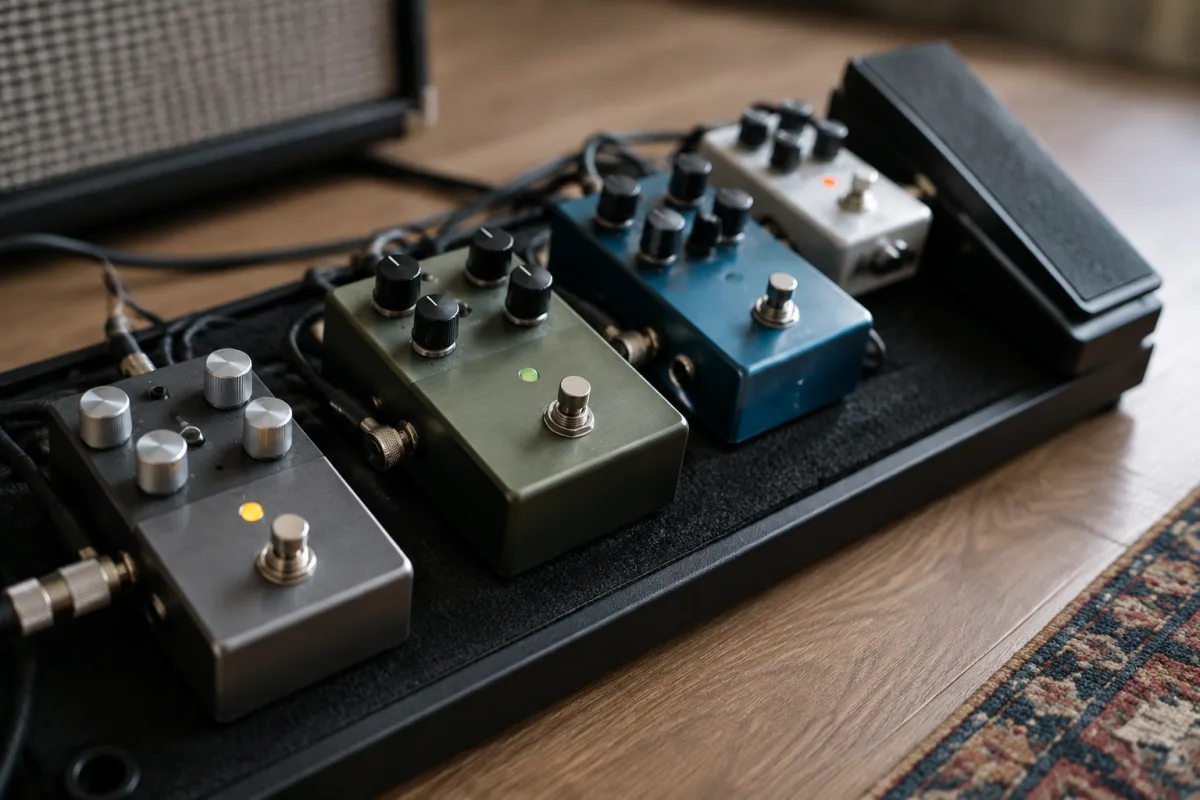
A Source Audio pedal represents something different from budget effects units: they're professional-grade, algorithmic processing systems that prioritise tone-sculpting depth over simplicity. Walk into a professional guitarist's pedalboard and you'll likely find at least one Source Audio pedal handling ambient effects, textural reverbs, or sophisticated delay. But Source Audio pedals aren't for everyone. They're expensive (often £200–400 per pedal), they demand engagement and patience to dial in genuinely, and they produce tones that some players find transformatively beautiful and others find overthought. Understanding when investing in a Source Audio pedal actually makes sense, what their different product lines do, and how to avoid buying expensive power you'll never use requires honest assessment of your playing and your priorities. Here's the complete guide.
Understanding Source Audio's Philosophy
Source Audio pedals are built around sophisticated digital signal processing. Rather than a few simple knobs, a Source Audio pedal typically has 1–2 footswitches and a small display screen, with dozens of parameters accessible through menu navigation. This approach prioritises sound quality and customisation depth at the cost of immediacy. You can't tweak 5 things simultaneously—you drill into menus. But once you've spent time dialling in a sound, you can save it, recall it instantly, and have a sound that's genuinely yours in ways a simpler pedal can't match.
This requires a certain mindset. If you want to plug in, play, and move on, a Source Audio pedal is frustrating. If you love tone-sculpting, experimenting endlessly, and having distinctive sounds that define your playing voice, a Source Audio pedal is genuinely empowering. The tension between power and accessibility is where Source Audio lives, and understanding which side you fall on matters enormously.
Source Audio Pedal Categories and What They're For
Source Audio specialises in specific effect categories rather than offering every effect. Their flagship reverb and delay pedals are genuinely world-class. Their ambient and textural effects (called things like Collider and Gemini) are designed for creating vast soundscapes. Their dirt and distortion pedals (like the Pushbutton) deliver high-end gain processing. They don't make a basic overdrive (other brands do that better). They make processors for players who want to explore effects seriously.
The Source Audio Neuro app is crucial to understanding their approach. Many Source Audio pedals work with a companion smartphone app that gives you visual parameter editing. You can tweak things faster through the app than through on-pedal menu diving. This is genuinely useful—swapping between the app and physical knobs works well—but it also means a Source Audio pedal has a learning curve steeper than pointing at a knob and turning it.
Different Source Audio pedal models serve different purposes. The Neuro Series (pedals like the Neuro Reverb or Neuro Delay) represent their professional flagship—maximum sound quality and customisation at premium pricing (£300–400+). The Collider and Gemini are designed for ambient and atmospheric effects specifically. The CompVR and other compression-focused pedals offer sophisticated dynamics processing. You don't buy a Source Audio pedal and hope it's useful—you buy a specific Source Audio pedal because you know exactly what it does.
Premium Sound Quality: What You're Actually Paying For
Source Audio pedal algorithms are genuinely sophisticated. Their reverbs model actual spaces rather than just layering basic reverb tails. Their delays offer modulation and feedback characteristics that rival expensive outboard gear. Their compression responds musically rather than just squashing everything uniformly. Are these differences audible? Yes, absolutely. They're particularly noticeable when you compare a Source Audio pedal to a cheap consumer unit side by side.
The practical question: does the improved sound quality justify £300+ per Source Audio pedal? For professional recording or for players who record regularly, absolutely yes. For bedroom practitioners who play only for themselves, the answer becomes more personal. Some players find a £60 reverb pedal perfectly adequate and can't justify Source Audio pricing. Others find that investing in a Source Audio pedal transforms their playing because the sound quality actually inspires them to play more musically. Both perspectives are valid.
Menu Customisation: The Power and the Cost
A Source Audio pedal gives you access to dozens of parameters per effect. Your reverb pedal might have 8+ parameters: room size, damping, delay, tone, diffusion, mix, and more. That depth means you can dial in genuinely specific reverb tones. Traditional reverb pedals with one knob can't match that customisation. But accessing those parameters requires menu diving unless you use the Neuro app.
The Source Audio Neuro app makes customisation faster and more visual. You can drag parameters, see waveforms in real-time, and save multiple presets. This transforms a Source Audio pedal from "menu hell" to "genuinely fun to customise." But you need a smartphone, you need to pair via Bluetooth, and some players find that workflow awkward during performance. This is worth understanding before buying—the Neuro app is genuinely good but not mandatory, and different Source Audio pedal categories support it differently.
Integration and Ecosystem Considerations
Source Audio pedals work with their Hot Hand expression controller and various wireless systems. If you already use expression pedals on your pedalboard, a Source Audio pedal integrates well. If you don't, adding expression control adds cost (£100–150 for controllers). This ecosystem thinking means Source Audio pedals work brilliantly if you're deep into pedalboard customisation, but might feel expensive if you're casually building your first few pedals.
Source Audio pedals can also work as part of larger tone-shaping chains because of their customisation. You can make a Source Audio Collider sound almost like a traditional reverb if that's what your song needs, or you can make it sound utterly alien if a song demands that. That flexibility is powerful for session musicians or players who work in diverse genres.
Price Tiers and Realistic Investment
Budget alternative effects pedals (£30–80) are simple, one-thing-each-does-it-okay units. A Source Audio pedal at £300+ is an entirely different category. You're not comparing price-to-price; you're deciding whether premium-level sound quality and customisation justifies the additional cost for your use case.
Entry-level Source Audio pedals (£200–250) like some earlier-generation models offer genuine value relative to current-generation flagship pricing. They'll deliver professional-quality processing even if they lack the absolute newest algorithms. Used Source Audio pedals from reputable dealers are genuinely good value—the algorithms don't obsolete quickly.
Flagship Source Audio pedals (£350–450) represent the pinnacle of their product lines. You're paying for latest algorithms, newest customisation options, and maximum sound quality. For professionals and serious enthusiasts, these are genuinely worth the investment. For hobbyists, you might find earlier-generation models more sensible.
Specific Source Audio Pedal Types and Their Use Cases
Neuro Reverb is genuinely world-class reverb processing. If you record or perform reverb-dependent music, it's legitimately worth the cost. The algorithms model actual spaces, and customisation depth means your reverb is genuinely yours. Budget alternative: a simpler reverb pedal costs £50–100 and works fine if you don't need sophistication.
Neuro Delay offers modulation, feedback, and tone-shaping that rivals expensive studio outboard units. For ambient players or recording artists, it's genuinely powerful. Budget alternative: simpler delay pedals exist, though they lack the sophisticated modulation.
Collider and Gemini are ambient-specialist pedals. These aren't for traditional rock and blues—they're designed for textural, atmospheric playing. If that's your style, they're genuinely valuable. If you play straightforward music, they're overkill.
Compression and dynamics pedals from Source Audio are highly musical—they respond to playing dynamics rather than just squashing everything. Worth considering if you record bass or use compression as a tone-shaping tool rather than just a volume evener.
Questions to Ask Before Buying a Source Audio Pedal
- Do you actually need the customisation depth? – If you'd be happy with simpler controls, spend less. If you love tone-sculpting endlessly, Source Audio makes sense
- Will you use the Neuro app? – If yes, Source Audio pedals get significantly easier to work with. If no, menu diving is annoying and you might prefer simpler alternatives
- Does the specific pedal match your actual tone needs? – Buy a Source Audio pedal because you specifically want that reverb or delay characteristic, not hoping it's useful
- Are you recording or performing? – Professional recording/performance justifies the investment. Bedroom playing might find simpler pedals adequate
- Will this pedal sit unused because you never dial it in? – Expensive gear you avoid is wasted money. Source Audio works best for players willing to invest time learning it
Testing Before Committing
Play with a Source Audio pedal at a shop before buying. Navigate the menu. Use the Neuro app if it matters to your decision. Listen to the sound and decide if the quality difference from cheaper alternatives actually justifies the cost for you. This is personal—some players hear night-and-day difference, others hear incremental improvement. Your own ears determine the answer.
New vs Used Source Audio Pedals
Source Audio pedals hold value decently (typically 60–75% of original price used) because the algorithms stay valuable even if hardware is older. Buying a used Source Audio pedal saves 25–40% and is genuinely low-risk because the sound quality doesn't degrade. Verify it powers up, all footswitches respond, and the display works. A used Source Audio pedal from a reputable dealer is a smart buy.
Making Your Final Decision
Invest in a Source Audio pedal if you record, if you perform professionally, if you genuinely love tone customisation, or if you use effects as a core part of your musical voice. Budget £250–350 for a flagship Neuro series pedal. Budget less for earlier-generation or used units. If you play casually and simply need reverb or delay without extensive customisation, simpler pedals at £40–80 probably satisfy you completely. Source Audio isn't the "best" brand—it's the right brand for players who want premium processing and don't mind the learning curve and cost that accompanies that premium quality.



Comments