


Roland Jupiter 8 article
Roland Jupiter 8 for Beginners: A Complete Guide
New to the Roland Jupiter-8? This beginner guide demystifies the complex interface, helps you make beautiful sounds immediately, and encourages confident exploration of this legendary synthesiser.
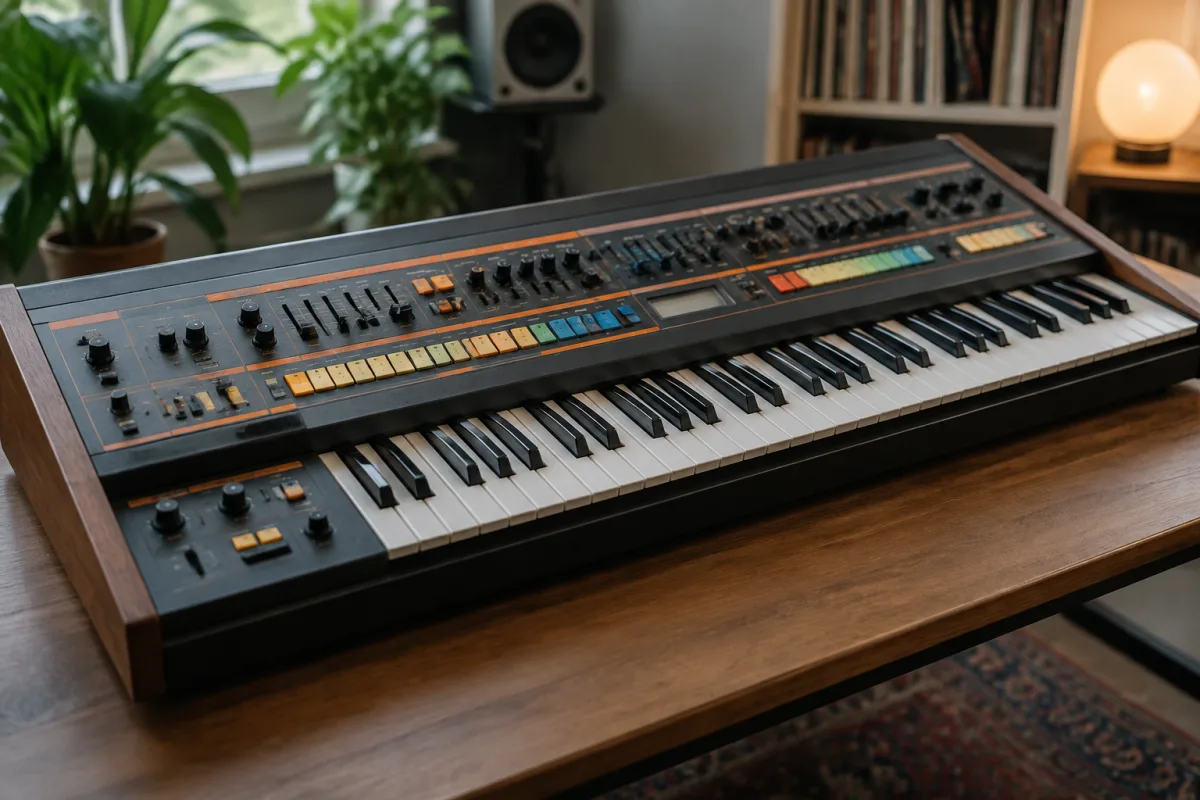
The Roland Jupiter-8 stands as one of the most iconic synthesisers ever created—a legendary polyphonic instrument with an overwhelming number of knobs, sliders, and buttons that can intimidate first-time users. If you've just acquired a Jupiter-8 (whether new or used) and you're nervous about that wall of controls, this guide is written for you. We'll walk through your first sessions, help you understand which controls actually matter for immediate playability, celebrate the sonic character that makes this instrument worth owning, and guide you around common beginner mistakes that trap new Jupiter-8 users in frustration.
Your First Session: Breathe, Then Explore
The Jupiter-8 looks overwhelming because it genuinely has numerous control parameters. However, you do not need to understand every control to make beautiful sounds immediately. Your first goal isn't mastery; it's familiarity and basic function. Turn the machine on, load a preset, play some notes. Listen to how gorgeous the instrument sounds. That moment—hearing why musicians prize the Jupiter-8 for such decades-long period—matters more than understanding synthesis theory right now.
Spend your first week simply playing existing patches without editing them. Explore the preset bank. Notice how certain patches excel for lush pads, others for bright leads. Play along with music you love. This context-free exploration builds emotional connection and intuition about the instrument's sonic personality. You're training your ear to understand Jupiter-8 character before attempting patch editing.
Resist the urge to "fix" everything or start twisting random knobs. Many beginner Jupiter-8 owners assume they need to instantly understand every parameter. The opposite approach works better: enjoy presets, develop comfort with basic operations (preset selection, volume control, basic performance controls), then gradually deepen your knowledge.
The Easiest Path: Master These Controls First
The Jupiter-8 control surface can be simplified into manageable groups. First, master basic playback: power, preset selection, master volume, and the performance controls (modulation wheel, pitch bend). These let you play music immediately without editing complexity. Spend at least two weeks becoming fluent with these functions.
Second, understand patch selection and basic controls: the 32-patch bank system, preset increment/decrement switches, and how to access the memory backup system. Knowing how to find and save patches protects your work and prevents accidental erasure. This practical knowledge matters more than synthesis understanding initially.
Third, identify the primary sound-shaping controls: VCO (Voltage Controlled Oscillator) waveform selection, filter cutoff frequency, and envelope controls. These three categories shape the character of virtually any patch. Experiment with adjusting just one of these whilst a preset plays, developing intuitive understanding of how each parameter affects sound. One parameter at a time is your learning strategy.
Everything else (cross-modulation, LFO routing, effects sends) can wait. You do not need these to make the Jupiter-8 sound incredible. They're genuinely advanced features that enhance already-beautiful sounds rather than create foundational playability.
Common Beginner Mistakes You Can Skip Right Now
Mistake one: assuming you must instantly understand what every knob does. You don't. Professional Jupiter-8 users develop this knowledge over months and years. Your job right now is basic operation and enjoyment. Deep knowledge arrives through patient exploration, not forced comprehension.
Mistake two: attempting to create original patches before understanding presets thoroughly. Start by learning one existing patch completely. Understand what each active parameter does. Only then begin creating your own. Skipping this step leads to frustrating experimentation without real learning.
Mistake three: neglecting the manual. The Jupiter-8 documentation is genuinely helpful, not intimidating. Download or order the PDF. Use it to understand parameter groups and signal flow. Reference it when curious about specific controls. The manual transforms from "scary" to "genuinely useful resource" within the first week.
Mistake four: ignoring tape echo and reverb integration. These effects are built-in and gorgeous. Experiment with effect sends on various patches. Understanding how effects shape the final sound improves musical results immediately without requiring synthesis knowledge.
Mistake five: treating the Jupiter-8 like a modern digital synth. It's an analogue instrument with real-time instability—pitch drift, parameter variation over time, and subtle randomness that no digital recreation perfectly captures. This "imperfection" is why musicians love it. Stop fighting it; embrace it.
Building Confidence Through Incremental Learning
Set an embarrassingly easy first goal: play one complete song using only the Jupiter-8's presets. No editing, no parameter tweaking, just playing existing sounds. Achieving this—probably within a week or two—proves the instrument does what you want and trains your fingers on the keyboard layout and basic performance controls.
Your second goal: modify one existing patch by adjusting the filter cutoff during a performance. Hear how this single parameter shapes the sound. Congratulations; you're now editing the Jupiter-8. This single achievement removes the mystique around patch editing and proves the workflow is learnable.
Third goal: create one completely new patch from scratch, starting with a basic waveform and adding complexity step by step. This confirms synthesis fundamentals and builds genuine understanding. Most beginners achieve this within three to four months of casual use.
Resources for Deeper Learning
YouTube contains excellent Jupiter-8 tutorials from experienced users. Watch videos of performers using the instrument in live contexts; this shows real-world playability and performance techniques. Join online communities dedicated to classic synthesisers; Jupiter-8 enthusiasts are typically generous with guidance and encouragement.
Understanding analogue synthesis fundamentals accelerates Jupiter-8 mastery, but this knowledge should follow practical experience, not precede it. Use the instrument first; understand theory later. This experiential-first approach builds intuition that theoretical study alone cannot provide.
Embracing Your Jupiter-8 Journey
You've inherited or purchased one of the most musically significant synthesisers ever created. Yes, it looks intimidating. Yes, it has numerous parameters. But it also sounds absolutely gorgeous and rewards curiosity with incredible musical results. Your nervousness is normal and temporary.
Play existing patches. Enjoy the sounds. Gradually deepen your editing knowledge. Within weeks, you'll wonder why the interface seemed overwhelming initially. The Jupiter-8 transforms from intimidating gear into familiar musical friend.
For comprehensive technical information about Roland Jupiter-8 synthesis, signal flow, and advanced patch creation, explore our complete guide to the Roland Jupiter-8 once you're comfortable with basic operation. Right now, what matters is getting comfortable making music with this legendary instrument.
Start playing today. The Jupiter-8 is ready; you're ready too.


Comments