


Roland 808s article
Roland 808S for Beginners: A Complete Guide
The Roland 808S looks complex but making music on it is surprisingly simple. Learn how to make your first beats, master basic patterns, and understand controls through hands-on beginner steps.
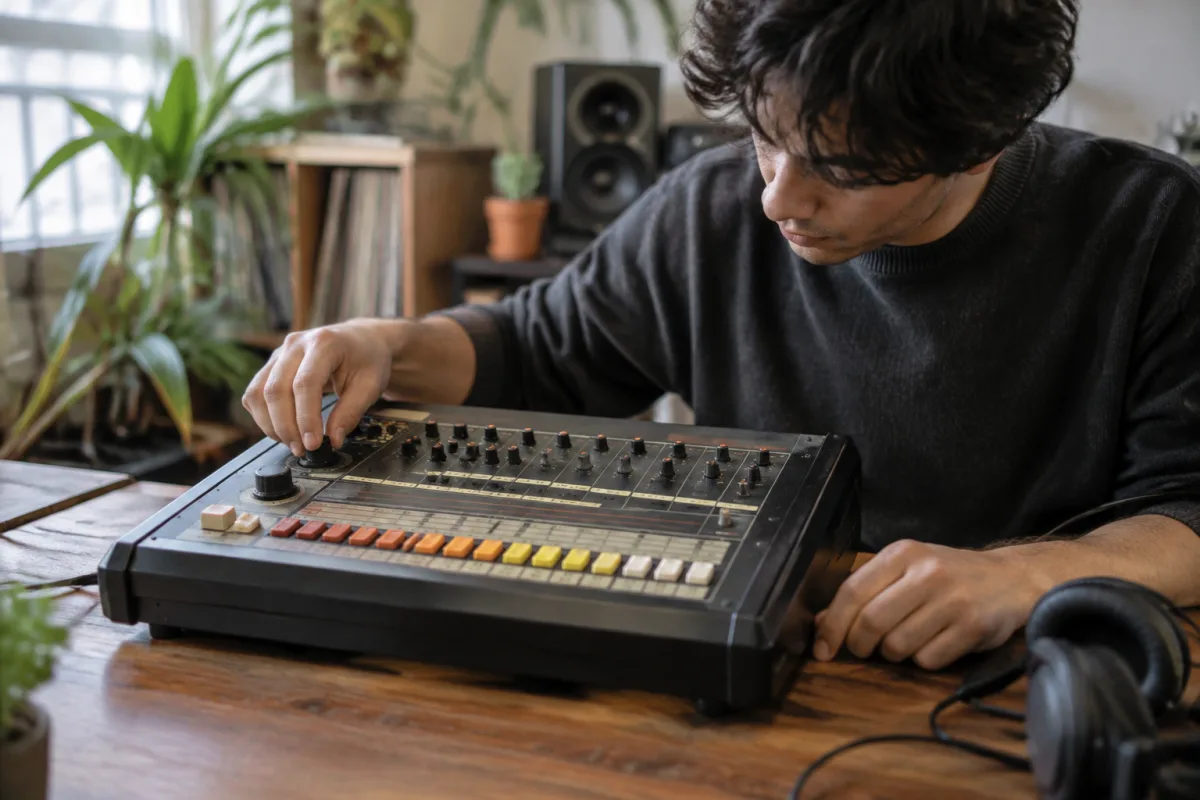
The Roland 808S is an iconic drum machine and synthesizer that might intimidate beginners with its retro interface and countless knobs. However, making sounds on the Roland 808S is surprisingly straightforward once you understand its core logic. This beginner's guide strips away the mystique and gets you making interesting rhythms and sounds within minutes, building your confidence to explore deeper features later.
Understanding the Roland 808S Layout
Your Roland 808S features three main sections: drum sounds across the top, synthesis controls in the middle, and timing/performance controls at the bottom. The drum buttons are your entry point—kick, snare, hi-hat, and percussion sounds are ready to trigger immediately. Don't worry about the synthesis knobs yet; they're advanced tools you'll use later. The most common beginner mistake is trying to understand every control before making a single sound. Instead, focus on the drum pads first. They're colour-coded and clearly labelled, making it immediately obvious which buttons produce which sounds. Press any drum button, and you'll hear an authentic Roland 808 sound instantly.
Making Your First Beat
Start by pressing the drum buttons in a simple sequence: kick, kick, snare, kick, kick, snare. You've just created a basic beat pattern using the Roland 808S's most iconic sounds. The beauty of this drum machine is that even random button presses sound musical because the sounds are carefully designed. After pressing buttons manually, experiment with the tempo dial to speed up or slow down your rhythm. Watching the indicator light pulse with your tempo helps you internalize timing. You're now actively making music on a device used by professional producers worldwide. This confidence boost is essential before exploring more complex features.
The Kick Drum: Your Foundation Sound
The Roland 808S kick drum is legendary and relatively simple to understand as a beginner. Press the kick button to hear a punchy, deep sound. You'll notice that holding the button longer produces a slightly different sound than quick taps. This dynamic response is one of the 808S's charms—the same button creates variation based on how you interact with it. The kick is thick enough to anchor any rhythm, warm enough to sound musical, and powerful enough to drive a full production. Many beginners make the mistake of layering complex sounds before mastering the kick drum's potential. Spend time with just the kick button: vary your timing, vary your press duration, and listen to how it naturally sits in a rhythm.
Building Patterns with the Drum Buttons
Once you're comfortable with the kick, add the snare or clap by pressing its button in strategic moments within your rhythm. Electronic music often uses simple patterns: kick on beats one and three, snare on two and four, creating a danceable groove. The hi-hat button adds texture on off-beats or steady eighth-note patterns. Layer these elements gradually rather than trying to recreate complex rhythms immediately. A common beginner mistake is using every drum sound simultaneously, creating muddy, overwhelming rhythms. Instead, start with kick alone, add snare, then enhance with hi-hats. This layering approach teaches you how each element contributes to the overall groove.
Understanding Tempo and Timing
The Roland 808S includes a tempo control that sets the speed of your patterns. For beginners, try tempos between 90 and 120 BPM initially—this range feels natural for most music genres. Watch the tempo LED pulse; counting along with it helps you internalize timing. Once you're comfortable at one tempo, try faster or slower speeds to hear how the same pattern feels different at various speeds. Understanding that rhythm is relative to tempo is a foundational concept that applies far beyond the Roland 808S. Beginning producers often overlook this, but spending time experimenting with tempo builds intuitive timing skills that improve all your music production.
The Accent Feature for Dynamic Rhythms
Your Roland 808S has an accent button that emphasizes certain drum hits, making them louder and more pronounced. Press accent, then immediately press a drum button to create emphasis. Accenting strategic hits in your rhythm creates movement and interest in otherwise repetitive patterns. A common beginner approach is using random accents; instead, try accenting just the snare hits or the first kick of a four-bar pattern. This intentional emphasis makes your rhythms feel more deliberate and musical rather than arbitrary. The accent feature is less intimidating than synthesis controls but offers immediate, satisfying results.
Avoiding Common Beginner Mistakes
Beyond using all sounds at once, beginners commonly over-complicate their first patterns. Simplicity in rhythm is power; professional producers often use remarkably basic patterns that sound compelling due to their clarity. Don't try to emulate complex productions immediately. Another mistake is ignoring the power switch or leaving the machine on continuously, which wastes power and can affect the sound over time. Practice turning the machine on, creating a simple groove, then powering down properly. Finally, avoid maxing out the volume immediately. The 808S sounds better at moderate levels; pushing volume gains nothing and risks equipment damage.
Introduction to the Synthesis Section
Once you're comfortable making drum patterns, the synthesis section becomes less intimidating. The decay slider controls how long drum sounds last—shorter decay creates punchy, tight sounds, whilst longer decay creates washy, ambient effects. Try adjusting decay for just the kick drum to hear its dramatic effect. The filter knobs control the timbre (colour) of sounds. Rotating them subtly changes the character without feeling random. These controls aren't as mysterious as they appear; they're simply tools for shaping how the sounds behave. Begin with minimal adjustments—moving one control at a time rather than multiple controls simultaneously—to understand cause and effect clearly.
Using the Step Sequencer for Programmed Rhythms
If your Roland 808S includes a step sequencer, this feature programs repeating patterns automatically. Begin with the simplest possible pattern: kick on every beat for eight steps. This basic pattern repeats automatically, freeing you to explore other sounds or adjustments. Step sequencer programming is more precise than manual button pressing and allows longer, more complex patterns. Many beginners skip the sequencer initially, preferring manual groove-making, which is completely valid. Explore the sequencer when you're ready; it's not essential for enjoying the Roland 808S.
Growing Beyond Basics
As you spend weeks with your Roland 808S, you'll naturally become curious about advanced features. The synthesis controls, MIDI connectivity, and recording functions open deeper creative possibilities. But none of these advanced features will serve you well if you haven't mastered basic groove-making first. The confidence and intuitive understanding you develop through simple pattern-making forms the foundation for everything else. Your Roland 808S won't become obsolete as you learn more; instead, you'll discover new dimensions of the same basic tool that impressed you on day one.
For comprehensive information about Roland 808S specifications and advanced features, explore the complete guide to Roland 808S, which covers technical details and expert techniques.


Comments