


Roland 2000 article
Roland 2000 for Beginners: A Complete Guide
Opening a Roland 2000 for the first time can be intimidating. This guide shows you exactly how to get your equipment working, master the basics, and build confidence gradually.
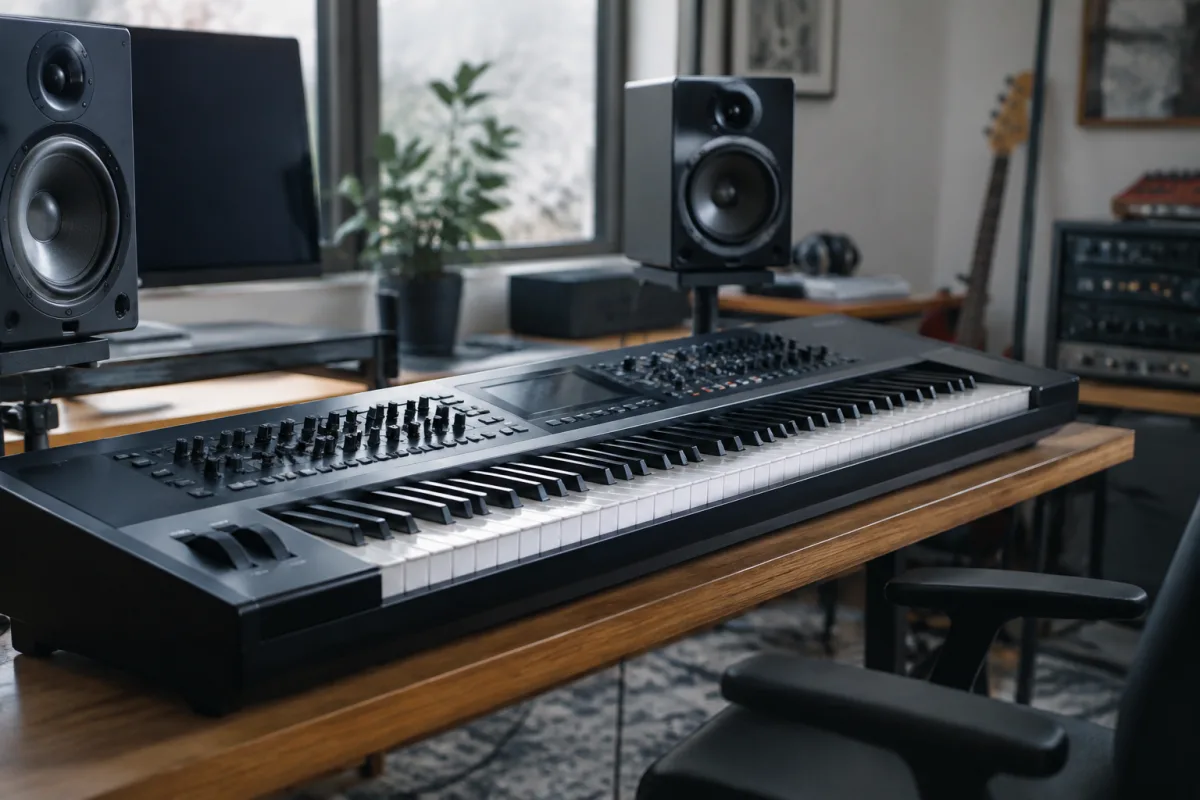
Opening a Roland 2000 for the first time can be intimidating. The controls seem endless, the manual is dense with technical terms, and you just want to plug in and make music. This beginner's guide shows you exactly how to get your Roland 2000 working without feeling overwhelmed. You'll learn setup, basic operation, the most important features, common beginner mistakes to avoid, and how to build confidence with your equipment gradually rather than trying to master everything at once.
Understanding Your Roland 2000: What You're Actually Looking At
A Roland 2000 is a professional-grade piece of equipment, which means it has capabilities that beginners don't need initially. Don't let that intimidate you. Your Roland 2000 is designed to grow with your skills. On day one, you'll use 5% of its features. That's fine. Master that 5%, and after a month, 20% will feel accessible. The learning curve is gradual, not steep.
Setup: Getting Your Roland 2000 Ready
Before you can use your Roland 2000, it needs connections. The setup is straightforward, though the cable types might look confusing. Your Roland 2000 requires power (standard mains cable), audio inputs, and audio outputs. Most beginners connect a guitar, microphone, or synthesizer to the Roland 2000's inputs, then connect the outputs to a mixing console, amplifier, or recording interface.
Start simple with your Roland 2000. Connect one instrument to one input. Verify that your Roland 2000 power supply is the correct voltage for your region. Plug in your audio interface or amplifier to the output. Check the levels—your Roland 2000 should have input and output meters showing signal. If the meters move when you play, the connection is working.
The First Week: Learn These Three Things with Your Roland 2000
Your Roland 2000 has hundreds of features, but you don't need to learn them all this week. Focus on three essentials that make your Roland 2000 actually usable:
1. Input Levels
Every successful session with a Roland 2000 starts with proper input levels. Too quiet, and your Roland 2000 has to boost weak signals, introducing noise. Too loud, and your Roland 2000 clips (distorts). Set your input levels so they peak around -12 to -6dB on your Roland 2000's meter. This leaves headroom for dynamic changes and prevents distortion. Practice adjusting input levels until this feels automatic with your Roland 2000.
2. Output Volume
Your Roland 2000 has a master output volume. Start with it at unity (marked as 0dB). From there, adjust based on your monitoring setup. If you're feeding your Roland 2000 into a mixing console, match the levels. If you're going straight to speakers or headphones, adjust so the volume is comfortable. Never assume your Roland 2000 is broken if it's quiet—check the output volume first.
3. Signal Flow
Understand how audio moves through your Roland 2000. Input signal enters from your instrument or microphone. Your Roland 2000 processes it using whatever effects or settings you've chosen. The processed signal exits through the outputs. This simple path is all you need to know to make your Roland 2000 work. Everything else is optional enhancement.
Common Beginner Mistakes with a Roland 2000
Learning on a Roland 2000 is smooth if you avoid these traps:
- Ignoring the manual: Your Roland 2000 manual looks intimidating, but it's indexed. When something doesn't work on your Roland 2000, search the index first—you'll usually find the answer in 30 seconds.
- Setting input levels with the master fader: Your Roland 2000 has separate input level controls and a master output fader. Use input levels to control incoming signal strength, not the master. The master is for monitoring volume only.
- Assuming silence means error: Your Roland 2000 might be in bypass mode or muted. Check the power light, check input levels, verify cables are seated. Most "broken" Roland 2000 units just have a control set incorrectly.
- Diving into advanced editing without learning basics: Your Roland 2000 has powerful customisation, but you don't need it yet. Spend two weeks with factory presets. Then explore editing.
- Not saving your settings: If your Roland 2000 has memory slots for custom presets, use them. Creating something you like and then losing it because you didn't save is frustrating. Save frequently.
- Skipping the latency check: If your Roland 2000 is connected to a computer via USB or Dante, check latency. For real-time use (playing an instrument), low latency is essential. Your Roland 2000's latency settings might need adjustment.
Your First Month with a Roland 2000: The Learning Path
Structure your learning with your Roland 2000 progressively:
| Week | Focus on Your Roland 2000 | Goal |
|---|---|---|
| 1 | Setup, input/output levels, signal flow basics | Confidently connect an instrument and hear it through your Roland 2000 |
| 2 | Navigating menus, switching presets, basic operation | Feel comfortable moving around your Roland 2000's interface |
| 3 | Tweaking one feature (e.g., reverb amount, EQ) | Make a small change and hear the difference in your Roland 2000 output |
| 4 | Creating and saving a simple custom preset on your Roland 2000 | Modify a factory preset and successfully save it as your own |
Essential Features to Understand on Your Roland 2000
Your Roland 2000 probably has features you'll use constantly once you understand them. Don't try to learn all of them this month. Identify the three features you use most with your Roland 2000 and master those first. Common important features include reverb (adds space/ambience), delay (echoes audio), EQ (shapes tone), and compression (controls dynamic range). Most Roland 2000 users gravitate toward one or two of these and never touch the others. That's perfectly fine.
Troubleshooting: When Your Roland 2000 Isn't Working
Most Roland 2000 problems have simple solutions:
No signal: Check power light first. Then verify input cables are connected and seated firmly. Check input levels on your Roland 2000—they might be at minimum. Finally, verify output cables are connected.
Distorted signal: Your Roland 2000's input levels are too high. Turn them down until the distortion clears. Or, your input source (microphone or instrument) is too loud—reduce the source volume instead.
Latency (delay between playing and hearing sound): If your Roland 2000 is connected via USB, latency is normal but can be reduced in settings. Check your Roland 2000's connection mode—USB is higher latency than direct audio cables.
Lost custom settings: Your Roland 2000 has battery-backed memory. If it's been off for weeks, the settings might be lost. Consult your manual for memory backup procedures.
Moving Forward with Your Roland 2000
After one month with your Roland 2000, you'll know how to get audio in, process it, and get audio out. That foundation is everything. Advanced features—MIDI control, deep editing, network connectivity—all build on this basic understanding. Take it slowly, and your Roland 2000 becomes indispensable rather than overwhelming.
For detailed information on advanced techniques and the full range of features, refer to the complete guide to Roland 2000.
You've Got This
Every expert with a Roland 2000 started exactly where you are—confused, slightly worried, holding equipment they don't fully understand yet. Your Roland 2000 is patient. It won't judge. With consistent, gentle learning over a few weeks, it becomes second nature. Trust the process.


Comments