


Pitch Shifter Effect Pedal article
Pitch Shifter Effect Pedal for Beginners: A Complete Guide
A pitch shifter effect pedal might seem intimidating, but it opens creative possibilities. This guide demystifies pitch shifters and shows beginners how to use them without getting overwhelmed.
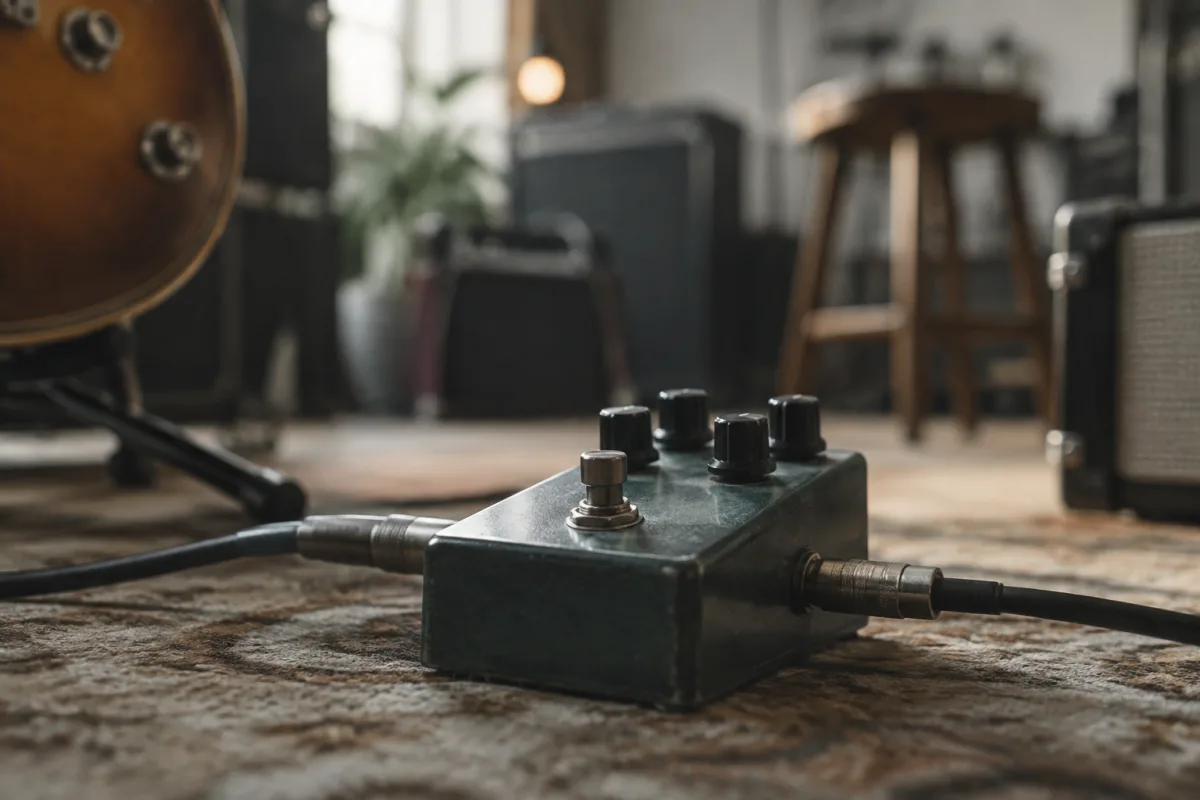
A pitch shifter effect pedal might seem intimidating when you first encounter one, especially if you're unfamiliar with effects in general. But understanding how a pitch shifter works and what it can do opens up creative possibilities that straight playing simply can't match. This guide demystifies pitch shifter effect pedals for beginners and shows you how to get started without getting overwhelmed.
What Does a Pitch Shifter Effect Pedal Do?
In the simplest terms, a pitch shifter effect pedal changes the pitch of your guitar or bass without changing the tempo. Press a note at pitch A, and the pedal can shift it up an octave, down a fifth, or to any other interval you program. It's like having a harmonizer that follows your playing in real time. Some pitch shifter effect pedals even let you create chord textures by layering shifted versions of your note.
This is fundamentally different from turning the tuning machine on your guitar. A pitch shifter effect pedal preserves your playing dynamics and articulation while transforming the pitch. It's a creative tool, not a correction tool.
How to Get Started with a Pitch Shifter Effect Pedal
When you first plug into a pitch shifter effect pedal, here's what to do:
- Start with a single shifted voice. Most pitch shifter effect pedals can layer multiple shifted voices (a harmony effect). For beginners, start with just one—shift down an octave, or up a perfect fifth. Get used to that single effect first.
- Play a single note and listen to the shifted version. Notice how clean or glitchy the shift sounds. Some pitch shifters are smooth; others have a subtle artefact or latency. This is the pedal's character, not a sign you're using it wrong.
- Try a scale or riff. Play something you know well at your normal pitch, then activate the pitch shifter effect pedal and play the same thing. Hear how the shifted version sits in relation to your dry signal. Is it musical? Does it add or detract?
- Experiment with different intervals. Most pitch shifter effect pedals let you dial in different shifts: octave down, fifth up, third down, etc. Try different intervals and see which ones appeal to you. There's no correct answer—it depends on your music.
Understanding Key Pitch Shifter Effect Pedal Settings
Shift amount: How many semitones or intervals the pedal shifts your input. Octave shifts are clear and dramatic; smaller intervals (a third or fifth) are more subtle and often more musical.
Mix or blend: The balance between your dry (unshifted) signal and the shifted signal. 100% wet (all shifted) removes your original sound; 50/50 creates a harmony effect. Most beginners start at 50% wet to hear both your dry tone and the shifted voice.
Latency: How long the pedal takes to process and output the shifted signal. Most modern pitch shifter effect pedals have minimal latency, but cheaper models might lag noticeably. This affects timing and feel; lower latency is always better.
Polyphony: How many simultaneous notes the pedal can shift accurately. Monophonic pedals handle single notes best; polyphonic ones handle chords. For guitar, polyphonic is usually more useful.
Common Beginner Mistakes with Pitch Shifter Effect Pedals
New players often stumble into predictable errors:
- Using too much wet signal too soon. A pitch shifter effect pedal at 100% wet sounds disorienting and unmusical. Start at 50% wet, then dial it down or up based on what sounds good. Your dry tone is your anchor.
- Stacking too many shifted voices at once. If your pedal can layer multiple harmonies, resist the urge to use all of them immediately. Two shifted voices is usually more powerful than five. Simplicity is elegance.
- Ignoring timing and feel. A pitch shifter effect pedal with high latency will feel sluggish and out of sync with your playing. If it feels like there's a delay, it's not you—it's the pedal. Return it and try a model with lower latency.
- Assuming the pitch shifter effect pedal will fix bad playing. It won't. If your note choice is weak or your timing is off, a pitch shifter effect pedal won't save it. Use effects to enhance good playing, not to mask bad playing.
- Setting and forgetting. Spend time tweaking the settings. Most pitch shifter effect pedals have many parameters—shift amount, mix, tone, scale mode. Experiment. You'll discover combinations that sound genuinely great.
Musical Uses for a Pitch Shifter Effect Pedal
Here's where a pitch shifter effect pedal gets genuinely useful:
Creating harmony lines: A classic move: shift up a third or fifth and play a melody. Suddenly you're creating harmony with yourself, something previously impossible without multiple band members.
Octave doubling: Shift down an octave while playing a riff. Thickens the tone and adds weight, useful in heavy music or to beef up thin guitars.
Experimental textures: Set the mix to 50/50, shift up an octave, and play slow sustained notes. The blend of your natural tone and the shifted tone creates something ethereal and atmospheric.
Bass guitar applications: Bass players use pitch shifters to create sub-bass frequencies or to harmonize bass lines with themselves. Extremely effective in electronic and experimental music.
Budget and Value
Pitch shifter effect pedals range from budget to professional:
- Under £100: Entry-level pedals that work but have compromises in latency and polyphony. Fine for experimentation; not ideal for live gigging.
- £100–250: Mid-range pedals with solid latency, good polyphony, and reliable operation. The sweet spot for most guitarists.
- £250+: Professional-grade pedals with low latency, multiple shifted voices, advanced features, and premium build quality. For working musicians and specialists.
Getting Comfortable with Your Pitch Shifter Effect Pedal
Comfort comes from experimentation. Spend time—weeks, really—playing with the pitch shifter effect pedal at different settings. Play familiar riffs, improvise, try different genres. The more time you spend, the more intuitive it becomes. Eventually, you'll reach for specific intervals and mixes automatically, the same way you reach for a barre chord without thinking.
A pitch shifter effect pedal is a creative tool that rewards experimentation. There's no right way to use it—only your way.
For a comprehensive exploration of pitch shifter effect pedals, creative applications, and signal chain integration, see the complete guide to pitch shifter effect pedals.


Comments