


Pedal Wah Vox article
Pedal Wah Vox for Beginners: A Complete Guide
Discover how to confidently use a Vox wah pedal, from setting it up to matching your playing style, and develop your own expressive wah voice as a beginner.
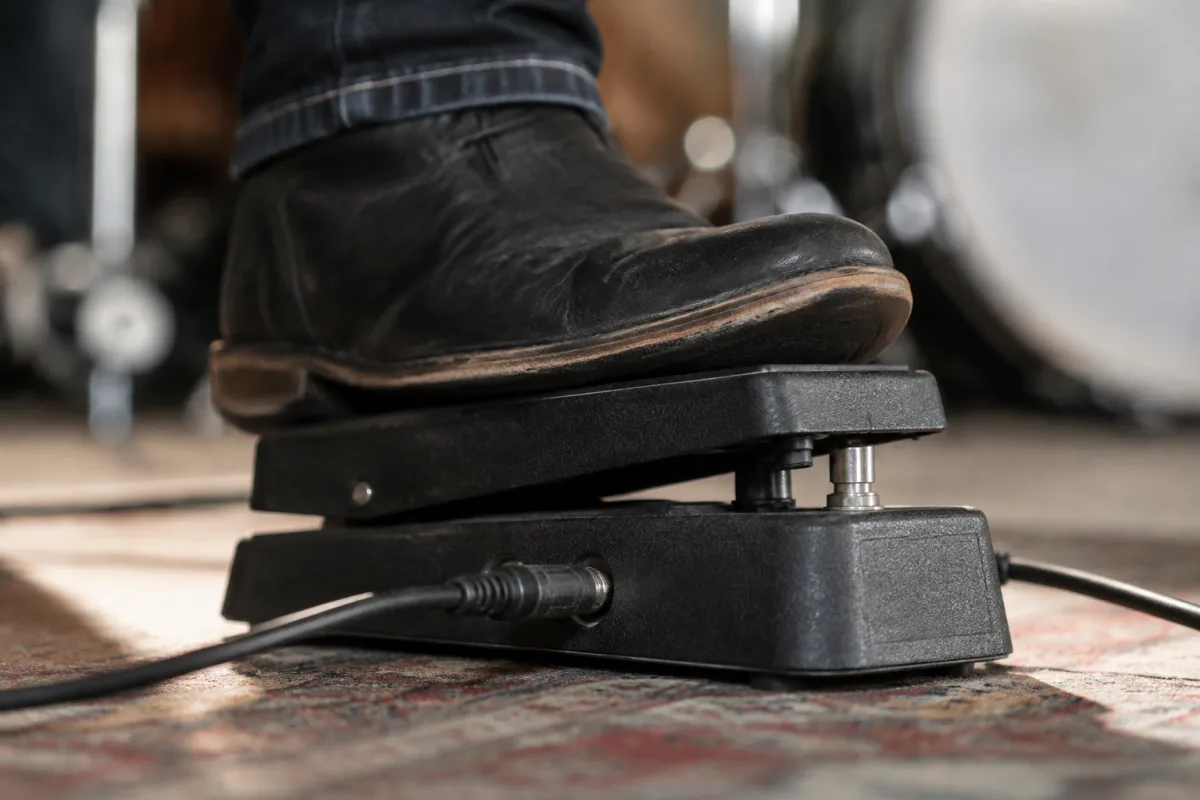
The Vox wah pedal looks intimidating if you've never used one, but it's one of the most intuitive and fun guitar effects available. If you've heard that distinctive "wah-wah-wah" sound and wondered how guitarists achieve it, or if you own a Vox wah and aren't quite sure how to use it confidently, this guide is for you. Learning to use a wah pedal is straightforward, deeply rewarding, and opens up expressive possibilities that transform your playing.
Understanding What a Wah Pedal Actually Does
A wah pedal is a filter effect that sweeps the frequency content of your guitar signal. Think of it as emphasising different parts of your tone's spectrum—low frequencies, mid frequencies, or high frequencies—as you rock the pedal back and forth. Rock your foot forward on the pedal and the sound emphasises high frequencies (bright "wah"). Rock it backward and the sound emphasises lower frequencies (dark "ow"). The result is that expressive, vocal-like "wah-wah" sound that's defined blues, rock, and funk for decades.
Here's the important part: a wah pedal doesn't change your guitar's fundamental tone. It shapes what's already there, making it brighter or darker, more nasal or more wooded. This is why wah pedals respond so differently depending on your guitar, amp, and playing style. A wah pedal is personal—it emphasises your voice, not someone else's.
Getting Started: The Basics of Using a Wah Pedal
A Vox wah pedal is simple to set up, which is why it's so approachable for beginners. Here's what you need to know:
- Power: Most Vox wahs run on a 9V battery (usually included) or AC adapter. Check your pedal model. A battery lasts dozens of hours of use, so you'll replace it infrequently. Mark your battery's purchase date on it so you know when it's aging.
- Placement: Plug your guitar into the input, plug your pedal into your amp, and turn it on. Most wahs turn on when you depress the pedal (toe down) and turn off when you lift your foot. Some models have an on/off switch on the top—check your manual.
- Volume Level: A wah pedal shouldn't dramatically change your overall volume. If it does, check your pedal's volume control (if it has one) or adjust your amp's level to compensate.
That's genuinely it for setup. You're ready to start playing.
First Steps: Moving the Pedal and Hearing the Effect
Here's the practical workflow for using a wah pedal for the first time:
- Play a steady note or chord on your guitar.
- Without moving your foot, listen to the natural tone.
- Slowly rock the pedal forward (toe down) and notice how the sound becomes brighter and more nasal.
- Slowly rock the pedal backward (heel down) and notice how the sound becomes darker and more subdued.
- Find the middle position and notice how it sounds between the extremes.
That's all you're doing—rocking your foot back and forth, listening to how the sound changes. There's no "wrong" way to move the pedal, so experiment freely. Some beginners like slow, smooth sweeps; others prefer quick, dramatic movements. Both are equally valid—the best technique is whatever feels natural to your foot and sounds good to your ear.
Using Wah in Different Musical Contexts
Wah pedals work brilliantly in many situations. Here are some common contexts and how to apply wah expressively:
Lead Solos: Wah shines on lead lines. Rock the pedal as you bend notes or play fast passages, matching the pedal movement to the phrasing. Listen to classic rock solos and you'll hear wah used as an expressive tool, like vocal inflection on a singer.
Rhythm Playing: Use wah on chunky rhythm riffs for aggression and attitude. Slow, controlled pedal sweeps work beautifully with power chords and riffs. The effect is hypnotic and drives the groove.
Funk and Slap Guitar: Wah pairs beautifully with slap and percussive playing. Quick, tight pedal movements match the percussive character of the style. Think of the pedal movement as part of your rhythmic feel.
Blues Bends and Slides: Use wah on blues bends and slides for maximum expressiveness. A slow wah sweep combined with a slow bend creates incredibly vocal, crying tones that are the hallmark of blues guitar.
Common Beginner Mistakes and How to Avoid Them
Mistake 1: Moving the pedal randomly without purpose. Beginners often rock the pedal back and forth without matching it to their playing phrasing. The effect sounds chaotic. Instead, match your pedal movement to your musical phrases—when you bend a note, sweep the pedal; when you play staccato notes, use quick pedal movements. Purpose creates musicality.
Mistake 2: Using wah on every note. Just because you have a wah pedal doesn't mean you should use it constantly. The effect is most powerful when used selectively—playing some phrases without wah, then adding it for emphasis creates dynamic interest. Restraint is sophistication.
Mistake 3: Extremes only—no in-between positions. Beginners often rock the pedal all the way forward or all the way back, missing the nuance of middle positions. The most musical wah sounds often happen in the middle ranges where the effect is subtle rather than dramatic. Experiment with gentle, smaller movements.
Mistake 4: Forgetting that the wah responds to your playing dynamics. A wah pedal's effect interacts with your pick attack and playing strength. Light, gentle playing sounds different from aggressive playing through the same wah setting. As you develop your technique, you'll learn to layer dynamics and pedal movement for maximum expression.
Mistake 5: Assuming one setting is "correct." Unlike some effects, wah pedals don't have preset positions that sound "good." There's no single correct setting. The wah is a tool for expression—explore, move it around, and discover what works for your ears and playing style.
Developing Your Personal Wah Voice
Over time, you'll discover your preferred wah technique—how fast you like to sweep, where you prefer the pedal to sit, and which musical contexts suit wah best. This personal voice is part of developing as a guitarist. Listen to your favourite guitar players and notice how they use wah. You might discover that your style aligns with certain players' approaches, which can guide your own technique development.
Some players barely move the pedal, using it as a subtle filter. Others use extreme, wide sweeps for dramatic effect. Both approaches are equally valid. Your wah voice is yours alone—there's no "right" way to use it, only the way that feels natural and sounds good to your ear.
Maintenance and Care
Vox wah pedals are durable, but basic care extends their lifespan. Keep the pedal clean and avoid stepping on it roughly (which all of us do sometimes—it's fine). If the wah starts sounding scratchy or the sweep becomes jerky, the potentiometer inside might need cleaning—contact Vox or a repair technician. Battery replacement is the primary maintenance most players handle themselves.
Moving Beyond the Basics
Once you're comfortable with basic wah use, you can explore advanced techniques. Some players combine wah with distortion or overdrive for different textures. Others use wah in reverse—stacking it after other effects for subtle tonal shaping. Some models offer different wah voices or frequency ranges. These advances come naturally as your confidence grows. For now, focus on getting comfortable moving the pedal musically and hearing how it responds to your playing.
For a comprehensive look at wah pedals—their history, Vox's different models, and advanced techniques—explore the complete guide to Vox wah pedals. But the fundamentals you've learned here—how to move the pedal, match it to your playing, and avoid common mistakes—are all you need to start using wah expressively and confidently.
Starting Your Wah Journey
The best part about learning wah is that there's no penalty for experimentation. Move the pedal around, listen to what happens, and develop your own style. Every guitarist who uses wah has a unique voice—shaped by their guitar, their amp, their playing dynamics, and their musical taste. You're developing yours right now. Trust your ears, move the pedal with purpose, and enjoy the expressive possibilities that open up.



Comments