


Peavey Evh article
Peavey Evh for Beginners: A Complete Guide
Starting with a Peavey EVH doesn't require advanced knowledge. Learn proper startup, knob control basics, initial tone settings, and how to play without fear.
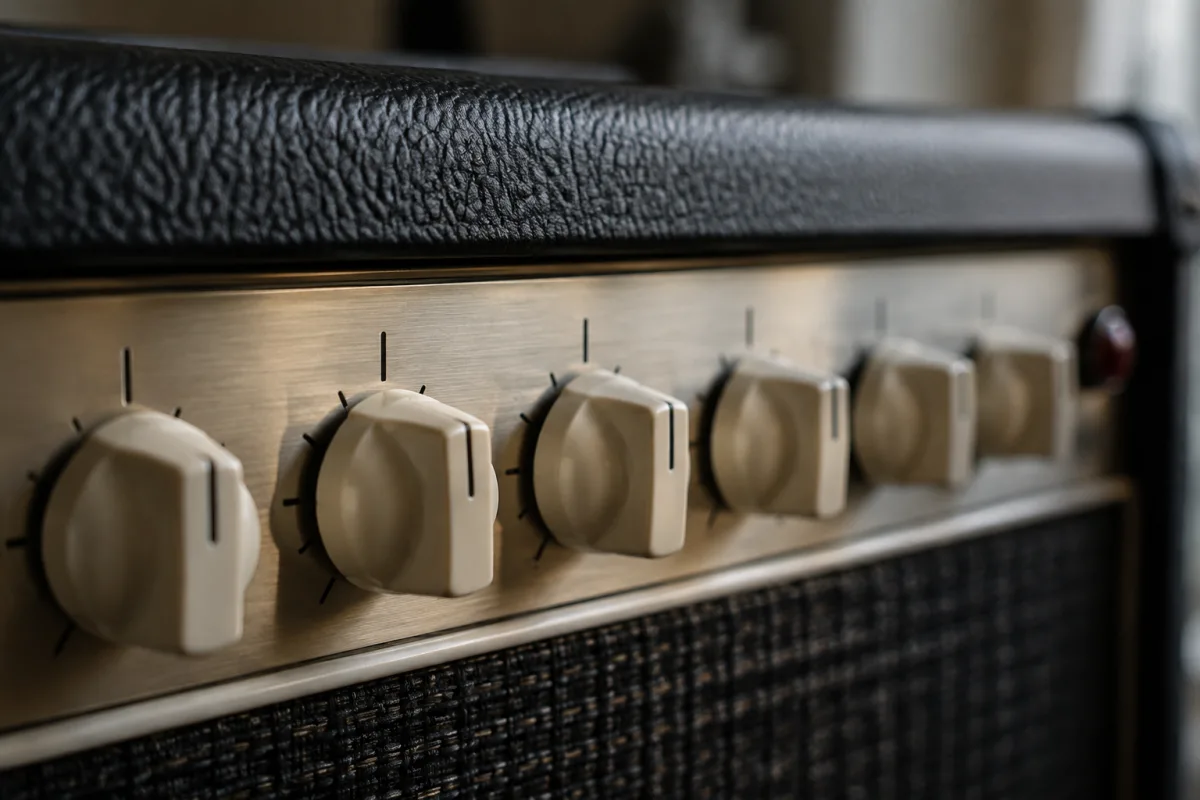
If you've just plugged into a Peavey EVH for the first time, you might feel overwhelmed by the options, intimidated by the tube amp experience, or unsure whether this amp is "too much" for a beginner. Take a breath—Peavey EVH amplifiers are actually beginner-friendly, despite their reputation. They're forgiving, responsive to different playing styles, and reward practice with genuine tone improvements. This guide removes the mystery, walks you through initial setup, shows you how to dial in your first sounds, and helps you understand what's happening when you turn knobs.
The Peavey EVH: What You're Actually Looking At
A Peavey EVH amp has two main sections: the preamp (where your guitar's signal gets shaped) and the power amp (where that signal is amplified to speaker-level volume). Between them sits a master volume that controls overall loudness independent of tone shaping. This architecture might sound complicated, but it's actually your friend—it lets you dial in the tone you want quietly, then control volume separately. You don't need to crank everything to get good tones.
Your Peavey EVH has a standby switch (always use it) and a power switch. Never go straight from cold to full power without using standby. This protects the tubes and transformer. When done playing, flip standby on, wait a few seconds, then power down. Respect this small ritual and your amp will reward you with years of reliable service.
Initial Setup: The First Time Powering On
When you first power on your Peavey EVH, give it 30 seconds for tubes to warm up. The amp will hum slightly—this is normal. If it hums excessively or sounds wrong, power down immediately and investigate. Assuming it sounds normal, you're ready to plug in.
Set your initial controls conservatively: gain at 12 o'clock, master volume low (8–9 o'clock), presence at 12 o'clock, and bass at 12 o'clock. This baseline won't sound brilliant, but it's safe. From there, you'll adjust toward your preferred tone.
Understanding Gain vs. Master Volume
This is crucial: gain shapes tone; master volume controls loudness. Turning up gain adds grit and saturation to your tone without making the Peavey EVH any louder. Turning up master volume makes everything louder without changing tone character. Beginners often mix these up and end up either with clean tone at full volume or distorted tone at whisper levels.
The correct workflow: set your desired tone using gain and the three-band EQ (bass, mid, treble controls). Then use master volume to get your desired loudness. This lets you dial in heavy tones at bedroom volumes without neighbours hating you.
The Three-Band EQ: Bass, Mid, Treble
Your Peavey EVH has dedicated bass, mid, and treble controls. Starting position for all three is 12 o'clock (neutral). From there, experiment: turning bass up adds low-end weight; reducing it tightens the tone. Midrange is where your guitar's character lives—boost it for presence and punch, cut it for scooped, spacious tone. Treble adds brightness and cut (useful in band mixes) or can add harshness if overdone.
A safe starting point: bass at 12 o'clock, mid at 1 o'clock (slightly boosted for presence), treble at 12 o'clock. Play chords, listen, then adjust by half-turns. Small changes have big effects—resist the urge to crank knobs.
Getting Clean Tones from a High-Gain Amp
A Peavey EVH is voiced for high-gain crunch, so clean tones require discipline. Set gain very low (8 o'clock), use the clean channel if your model has one, and keep master volume moderate. Play lightly on your guitar. This combination gives you the cleanest tones this amp can produce.
If you need pristine cleans frequently, a Peavey EVH might not be your ideal amp—they're built for grit. But you can achieve usable clean tones with practice. Most players eventually embrace the amp's natural saturation rather than fighting it.
Common Beginner Mistakes
Don't leave your Peavey EVH running for hours when not playing. Tubes have finite lifespan; running them idle wears them. Power down when done.
Avoid cranking all knobs at once expecting "good sound." Start conservative and adjust by small increments. Large changes compound each other confusingly. Small, methodical adjustments teach you how the amp responds.
Never run the amp into a tiny closed space without ventilation. The amp needs air circulation. If your space is cramped, pointing the amp's back away from walls helps, and running it slightly quieter actually improves tone by reducing room resonances.
Tube Amp Basics You Should Know
Your Peavey EVH uses vacuum tubes instead of solid-state transistors. Tubes are why the amp sounds warm and responsive. They also eventually wear out and need replacing (typically every 1–3 years depending on use). This is normal maintenance, not a problem. Budget £20–£50 per tube when replacements are needed. Have a technician handle this—tube amps carry dangerous voltage.
You'll hear the amp warm up slightly as tubes heat. You might notice a gentle "pop" when powering on or off. Both are normal. If the amp cuts out, distorts weirdly, or hums excessively, power down and seek professional attention.
Pedals and Your Peavey EVH
Running effects pedals through a Peavey EVH opens up possibilities. Start simple—perhaps one overdrive pedal in front of the amp. This layers gain stages: the pedal pushes the amp's preamp, creating dynamic, responsive tone. As you grow comfortable, add more pedals gradually. Keep effects subtle at first; heavy effects can obscure the amp's natural character.
Playing Technique Matters More Than You Might Think
Your Peavey EVH responds to how hard you pick and how clean your technique is. Light picking gives smooth tone; heavy picking adds aggression and sustain. Sloppy muting creates buzz; tight muting sounds articulate. In other words, your playing directly affects the tone. This is good news: improving your technique immediately improves your sound. The amp doesn't hide poor technique, but it rewards good playing generously.
Understanding Your Learning Curve
For comprehensive understanding of Peavey EVH amplifiers—history, circuit evolution, professional tone-dialling techniques, and how to get the most from vintage models—read the complete guide to Peavey EVH. That covers the technical background; this piece is purely about getting comfortable and confident with your amp's basics.
Getting started with a Peavey EVH doesn't require technical expertise or advanced knowledge. Use standby correctly, start with conservative knob settings, adjust by small increments, and let your ears guide you. Within a few weeks of regular playing, dialling in tones becomes intuitive. You'll stop thinking about the mechanics and start focusing on the music. That's when the real learning begins.



Comments