


Bass Guitar Octave Pedal article
The Complete Guide to Bass Guitar Octave Pedal
A bass guitar octave pedal generates synthesised harmonics one or two octaves above or below your played pitch, creating rich, complex bass textures in real time. Perfect for adding power and texture to traditional bass lines.
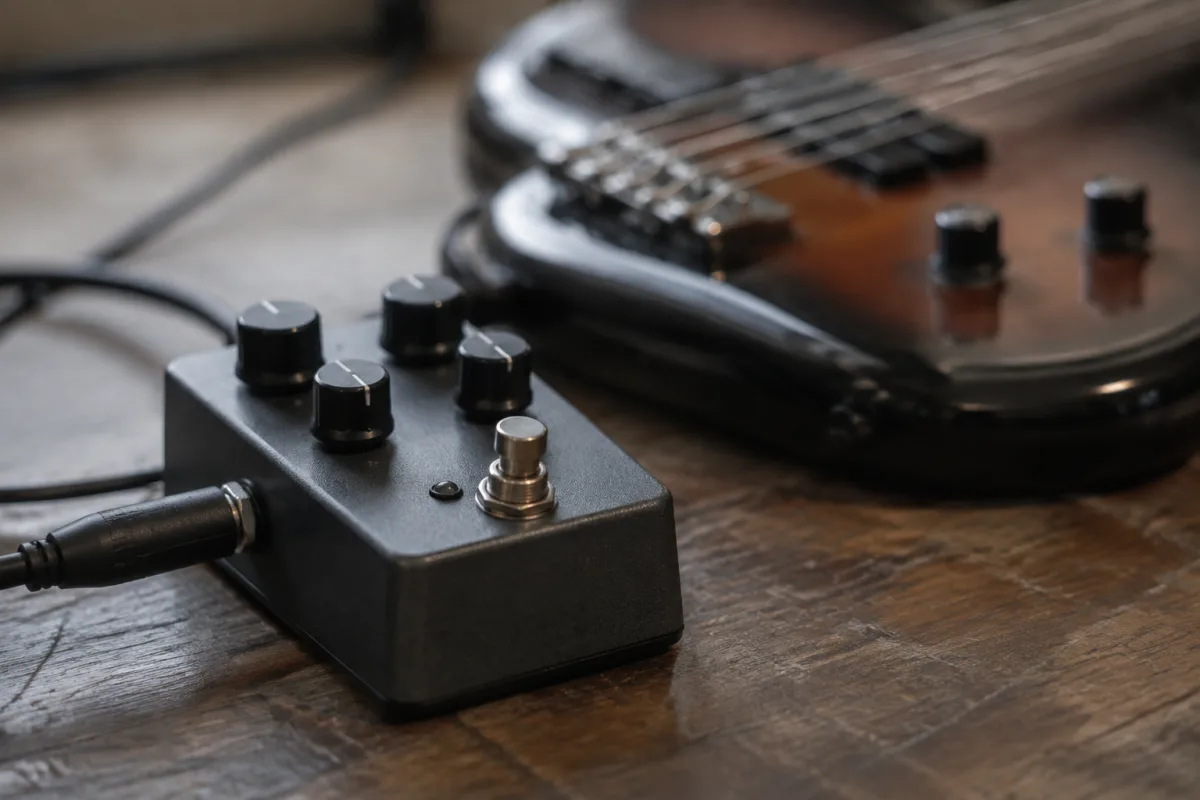
A bass guitar octave pedal is an effects device that generates synthesised notes one or two octaves above or below your played pitch, layering these harmonics with your original bass signal. These pedals transform bass tone from a single fundamental pitch into rich, complex textures that blur the line between traditional bass performance and synthesised basslines. Modern bass octave pedals employ sophisticated digital algorithms to track your pitch accurately and generate clean, articulate harmonics that track rapid playing with minimal latency—essential for believable real-time bass transformation.
Understanding Bass Octave Pedals
Octave effects have roots in vintage octave-up devices employed by pioneering rock and funk bass players seeking to add texture and interest to traditional bass lines. Modern bass guitar octave pedals expand this concept dramatically: generating multiple octaves simultaneously, offering tunable synthesis parameters, and tracking playing technique with accuracy that would astound earlier players. Contemporary bass octave pedals are serious sound-design instruments, not novelty effects.
The fundamental appeal is versatility. A bass line played through an octave pedal can sound thick and aggressive with sub-bass octave layering; bright and musical with one-octave-up harmonics; complex and ethereal with multiple octaves simultaneously. This tonal transformation occurs in real time, requiring only your playing—no additional MIDI control or programming complexity.
Types of Octave Generation
Digital Pitch Tracking
Most modern bass octave pedals employ sophisticated digital algorithms that analyse your input signal, track the pitch accurately, and generate clean, synthesised octaves in real time. This approach offers the greatest accuracy and tracking speed, essential for articulate bass playing where pitch tracking errors ruin performance. Digital pitch tracking handles rapid playing, complex chords and string noise effectively.
Analogue Divider Circuits
Some vintage and modern boutique pedals employ analogue electronics to divide the input frequency by two (octave down) or multiply by two (octave up), generating harmonics through purely electronic means. Analogue approaches often sound warmer and more organic but typically offer less stability and accurate tracking than digital alternatives.
Key Pedal Characteristics
Octave Range and Selection
Premium bass octave pedals offer multiple octave options: sub-bass octave (one octave below your lowest bass string), original pitch, one octave up and two octaves up. This range lets you design anything from deep, sub-heavy textures to high, almost synthesiser-like tones. Less sophisticated pedals offer fewer options but suit players with specific needs.
Mix Control
A critical feature is the ability to blend your original bass signal with the generated harmonics. Full mix control lets you from subtle texture addition (mostly original signal with slight octave enhancement) through equal blending to extreme effects (mostly generated harmonics). This flexibility is essential—different musical contexts demand different balance.
Tracking Accuracy and Latency
Tracking accuracy determines whether the generated octaves are in tune with your playing. Latency (delay between playing a note and the octave pedal responding) is particularly important in bass applications where the low frequencies demand immediate response for convincing performance. Modern digital pedals offer latency measured in milliseconds—acceptable for live performance. Inferior tracking or excessive latency destroys the effect's musical believability.
Sound Character and Tonal Applications
Sub-Bass Layering
Adding sub-bass octave below your bass line creates aggressive, powerful low-end suitable for heavy rock, metal and contemporary music. The doubled low frequency combines with your original signal for massive thickness. This approach dominates modern bass tone-shaping and is the most common application of bass octave pedals.
Upper Octave Harmonics
Mixing in octaves one or two above your bass line creates busier, almost polyphonic texture. This approach suits funk, jazz and contemporary bass work where adding harmonic interest to simple bass lines is valuable. Upper octaves can sound almost synthesiser-like, useful for moments of dramatic tonal shift.
Parallel Octave Stacking
Sophisticated pedals allow simultaneous blending of multiple octaves (sub-bass plus one-octave-up, for example), creating complex, layered textures. This approach suits experimental and progressive contexts where tonal complexity is desired.
Tracking Quality and Performance Reliability
Budget octave pedals sometimes struggle with rapid playing or string noise, producing tracking errors and false notes. Premium pedals employ refined algorithms and robust signal conditioning, tracking accurately even through aggressive playing and noisy signals. For professional performance where reliability matters, investment in quality tracking is worthwhile.
Some pedals include additional features like anti-aliasing filters (reducing noise from high-frequency string artifacts) and input gain controls (optimising tracking to your specific bass and playing dynamics). These refinements contribute to cleaner, more professional results.
Comparison with Bass Synthesisers
Dedicated bass synthesisers offer more sophisticated sound design and complete tonal control than octave pedals. However, synthesisers require separate playing, don't track your left-hand technique and introduce additional complexity. Bass octave pedals maintain your bass playing immediacy whilst adding synthesiser-like layering—a valuable compromise for players wanting synthesis character without abandoning their bass instrument.
Signal Chain Positioning
Most bass players place octave pedals after their primary drive or tone-shaping pedals but before their output/master gain stage. This positioning allows octave synthesis to process your already-shaped tone, integrating the harmonics naturally into your overall bass character. Some advanced players employ multiple octave pedals at different positions for creating stacked effects.
Genres and Musical Applications
Metal and heavy rock bassists employ octave pedals for massive low-end power. Funk and R&B players layer octaves for rhythmic texture. Contemporary electronic and experimental musicians use octave pedals for synthesiser-like bass character within traditional playing contexts. The versatility means bass octave pedals are genuinely useful across multiple genres rather than specialist novelties.
Conclusion
Bass guitar octave pedals transform traditional bass playing into rich, complex tonal territories without requiring dedicated synthesis or additional musical complexity. Modern digital tracking and sophisticated mix controls make these pedals genuinely musical instruments—far beyond their vintage octave-up roots. Whether seeking aggressive sub-bass power or subtle harmonic enrichment, a quality bass octave pedal offers creative possibilities and tonal flexibility worth serious consideration for bass players wanting to expand their sonic palette.


Comments