


Bass Guitar Octave Pedal article
Bass Guitar Octave Pedal for Beginners: A Complete Guide
An octave pedal adds depth to your bass tone by generating notes below your playing. Learn why beginners use them and how to integrate them into your sound.
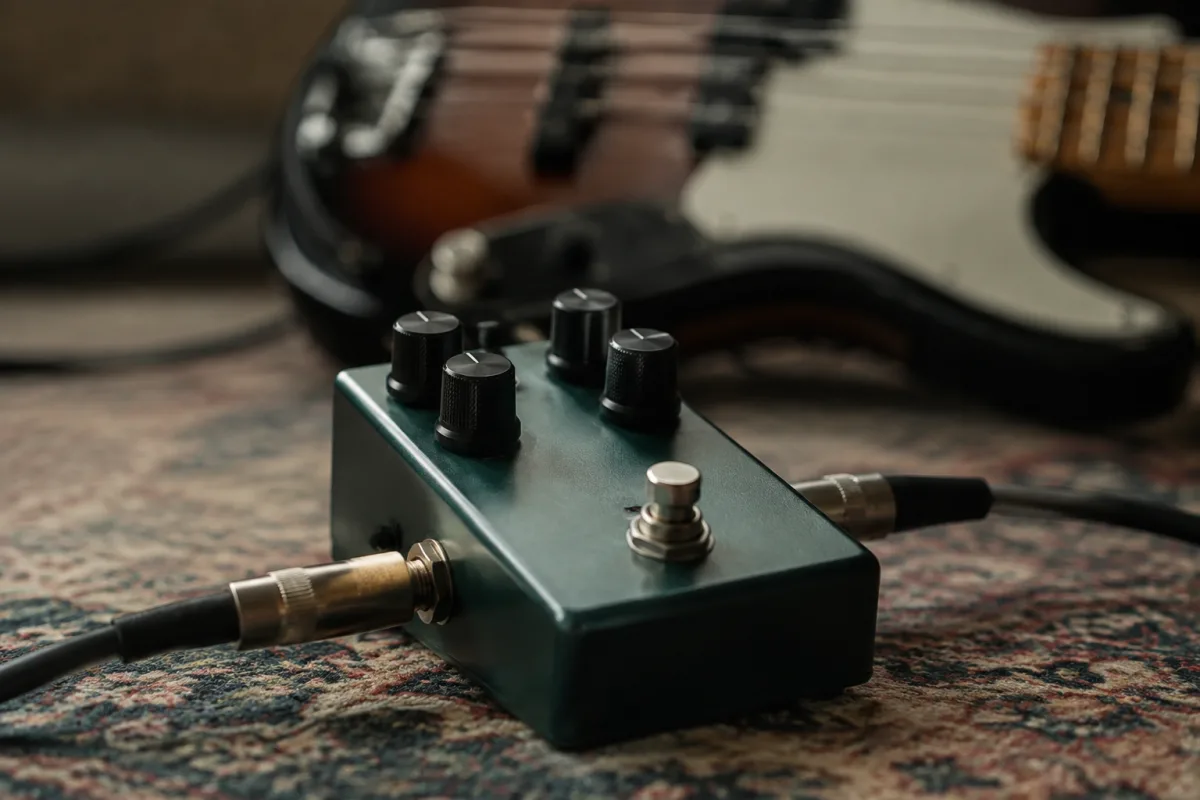
A bass guitar octave pedal opens up new sonic possibilities without overwhelming your pedalboard or technique. This beginner's guide walks you through what an octave pedal does, why you might want one, and how to integrate it into your sound.
What an Octave Pedal Actually Does
An octave pedal generates a tone one or two octaves below your bass notes. When you play a low E, the pedal adds a note two octaves deeper, thickening your tone dramatically. This isn't distortion or overdrive—it's a clean replica of your note at a lower pitch, layered underneath your original signal.
Think of it as an automatic doubler for your bass. Every note you play gets a deeper companion, instantly making your rig sound bigger and more authoritative. This effect works particularly well on held notes and low-register playing.
Why Beginners Use Bass Guitar Octave Pedals
Octave pedals aren't essential, but they offer several advantages. Firstly, they compensate for thin-sounding amplifier setups, making modest rigs sound impressive. Secondly, they inspire creativity—experimenting with octave layers helps you develop melodic sensitivity and understand bass's role in ensemble settings.
Many gigging bassists use octave pedals to fill space in sparse musical arrangements or to add drama during song peaks. Beginners discover that a bass guitar octave pedal often sounds more impressive than spending money on a bigger amplifier.
Entry-Level Octave Pedals
Budget models (£30–£80) like the Boss OC-2 or MXR M288 offer solid octave tracking with straightforward controls. These reliable units handle most musical situations competently, though they occasionally miss notes if played too fast or with sloppy technique.
Understanding your pedal's limitations teaches you to play more deliberately. If a budget bass guitar octave pedal occasionally fails to track your quickest passages, it's often a technique issue—your playing becomes tighter as a result.
Getting Started with Octave Effects
Position your octave pedal early in your signal chain, typically after overdrive but before modulation effects. Start with subtle settings—just enough octave-below to add depth without dominating your original tone. The mix control is critical; experiment until the octave layer supports rather than replaces your core sound.
Play slowly at first. A bass guitar octave pedal tracks better at deliberate tempos. As you become comfortable with the effect and the pedal learns your playing style, speed up gradually.
Common Beginner Mistakes
The biggest error is running your bass guitar octave pedal too loud. The effect should enhance your tone, not hide it. Start at 30% depth and increase gradually. Another mistake is playing too fast through a budget pedal before you've developed consistent technique; this frustrates beginners who blame the equipment when player consistency matters more.
Some beginners use octave all the time, losing the impact of using it selectively. Reserve the effect for sections where it truly serves the music, not every note.
Expanding Your Palette
Once comfortable with down-octave sounds, experiment with up-octave settings. These brighten your tone and create unusual textural moments. Many bass players blend down and up octaves, though this approach challenges tracking accuracy.
Your bass guitar octave pedal becomes most useful when you understand precisely why you're using it—whether for tone thickening, solo definition, or creative texture. This awareness separates occasional pedal tinkerers from musicians commanding their effects intentionally.
Forward-Looking Techniques
Advanced bassists layer multiple octave pedals or combine octave with other effects, but start simple. Learn your bass guitar octave pedal thoroughly before adding complexity. Solid fundamentals with one effect teach more than confused tinkering with many.
Connecting to Further Learning
For comprehensive information on octave pedals and their variations, explore the complete guide to bass guitar octave pedals.
Your Next Step
Try an octave pedal for a week without obsessing over settings. Play familiar songs, noting where the effect feels natural versus forced. This experimentation builds your intuition far better than reading specifications. Most beginners find that a modest octave pedal transforms their confidence and opens creative doors they didn't know existed.



Comments