


Modulation Pedal article
Modulation Pedal for Beginners: A Complete Guide
Perfect entry into effects pedals, this guide covers modulation fundamentals, chorus characteristics, and how to start your effects journey.
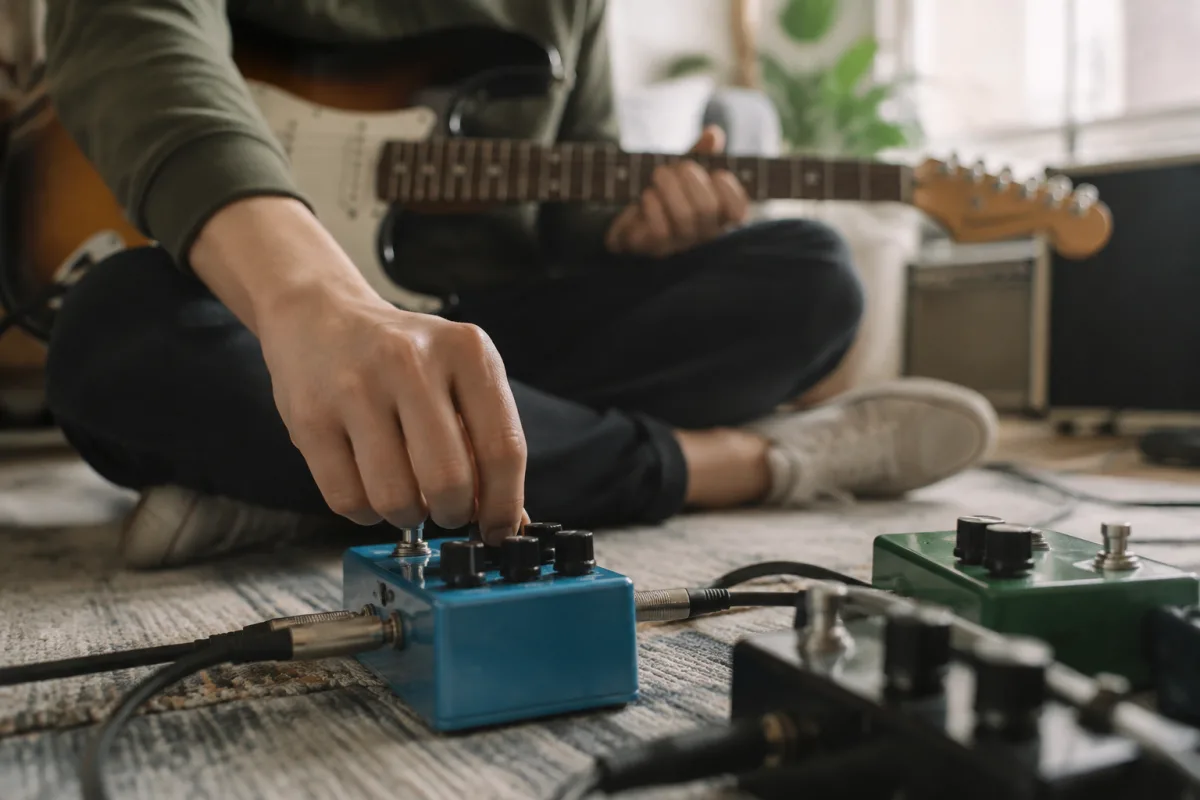
Starting with effects pedals can feel intimidating, but modulation pedals represent one of the most accessible entry points into guitar effects. Unlike distortion or fuzz requiring immediate familiarity with gain, or delay demanding understanding of timing, modulation effects are intuitive—you hear the effect immediately and can dial it to taste. If you're curious about effects but unsure where to start, a modulation pedal will teach you fundamentals whilst sounding genuinely inspiring with minimal learning curve.
What Modulation Effects Do
Modulation effects subtly alter your guitar tone through cyclical changes. Chorus thickens your tone through slight pitch variations; phaser sweeps frequencies creating a whooshing sound; flanger generates metallic jets; vibrato wobbles your note pitch. Beginners often find modulation effects immediately satisfying—unlike distortion requiring adjustment to sounding musical, modulation effects sound pleasant from default settings. Engaging the pedal instantly transforms your tone in inspiring ways. This immediate gratification motivates further exploration whilst building your effects understanding.
Starting Simple: Chorus is Ideal for Beginners
Chorus represents the most beginner-friendly modulation effect. Dial a chorus pedal on and your guitar instantly sounds fuller, richer, more "professional." The effect is subtle enough for rhythm playing, dramatic enough for distinctive tone. Most beginner-friendly choruses offer minimal controls—rate (speed) and depth (intensity) suffice. This simplicity removes decision paralysis; you'll quickly develop intuition for your preferred settings. Chorus pairs beautifully with clean tones and gentle overdrive, making it ideal for discovering effects without requiring distortion familiarity.
Understanding Your First Modulation Pedal Options
| Effect Type | Sonic Character | Beginner-Friendliness | Price Range |
|---|---|---|---|
| Chorus | Thickening, shimmer, width | Excellent - intuitive, pleasant | £50-£150 |
| Phaser | Swooshing, sweeping frequencies | Good - slightly more complex | £60-£160 |
| Flanger | Jet sounds, metallic whoosh | Fair - extreme at default | £70-£180 |
| Vibrato | Pitch wobble, tremolo character | Good - musical and subtle | £60-£140 |
Why Modulation Pedals Build Effects Confidence
Modulation effects teach you pedal fundamentals without frustration. You'll learn footswitch operation, control adjustment, and effect integration naturally through experimentation. Unlike distortion requiring specific gain settings for musical results, modulation sounds good at numerous settings. This encourages exploration—you'll try different rates and depths discovering combinations you enjoy. This playful experimentation builds confidence approaching other effects later. You're learning effects fundamentals whilst having fun, which accelerates genuine understanding.
Chorus: The Perfect Entry Point
Chorus deserves particular focus for beginners. Original chorus pedals from Boss, Electro-Harmonix, and MXR remain classics precisely because they sound great in countless contexts. Modern budget choruses rival expensive alternatives—£50-£80 budget options deliver genuinely professional tone. A simple chorus teaches you everything needed for future effects: how pedals interact with your signal, how controls affect sound, how to integrate effects into your playing. After month of chorus familiarity, exploring phaser or flanger becomes natural progression.
Avoiding Common Beginner Mistakes
First, starting with flangers or phasers when chorus is more forgiving. The extreme character of those effects can overwhelm developing ears; chorus teaches modulation fundamentals more gently. Second, cranking depth maximally—modulation effects typically sound best at moderate settings; excessive depth sounds artificial. Start conservatively, gradually increasing depth as your ear develops. Third, pairing modulation with heavy distortion initially—clean or lightly overdriven tones showcase modulation beautifully; extreme gain obscures the effect. Fourth, assuming effects are only for specific genres—modulation works across rock, pop, country, and blues with appropriate settings.
Practical Setup for Beginners
Your first modulation pedal plugs between guitar and amplifier simply: guitar cable into pedal input, output cable into amp. That's it. No complex signal chains required. Power comes from batteries or USB (most budget pedals offer both). Press the footswitch engaging the effect. Turn the controls discovering how they affect your tone. This straightforward operation removes technical barriers—you're immediately making music with effects. As you develop, you'll learn signal chain organisation and advanced concepts, but initially, simplicity reigns.
Budget Guidance for Beginner Modulation
Quality beginner choruses range £50-£100. Entry-level options under £50 occasionally disappoint with tone quality or control responsiveness; mid-tier £80-£120 options deliver excellent value. Premium modulation pedals (£150-£300) offer expanded controls and subtle tone improvements most beginners won't appreciate. Start affordable; upgrade if the effect captures your imagination. A £70 chorus teaches you everything a £250 model will; the primary difference is expanded features and construction longevity. Save premium investment for effects matching your playing style after development.
Learning Modulation Character Through Playing
Understanding modulation pedals best happens through experimentation rather than reading specifications. Try chorus at different rates—slow settings create ambient texture; faster settings add shimmer and width. Adjust depth discovering your preferences. Play different musical styles discovering how chorus interacts with rhythm versus lead playing. This hands-on learning develops genuine understanding far exceeding theoretical knowledge. Spend time exploring before adding additional effects.
Modulation Complements Your Sound Evolution
Chorus typically sounds better on clean tones initially. Your clean amp tone becomes fuller, more professional-sounding immediately. As you develop, layering chorus with light overdrive creates compelling rhythm tones. Later, combining chorus with other effects generates sophisticated textures. This progression from simple to complex happens naturally as your experience grows. A chorus pedal purchased for clean tone will surprise you with capability as your playing evolves.
Where Modulation Fits in Your Effects Journey
Modulation often follows distortion/overdrive in typical effect chains, though experimentation yields surprising results. Many beginners discover placing chorus early (after tuner) colours everything beautifully. Others prefer chorus after distortion for subtle enhancement of overdriven tones. This flexibility means no "wrong" placement—you'll discover your preference through experimentation. The value of modulation pedals lies partly in this flexibility and capacity for playful exploration.
Maintenance & Longevity
Quality modulation pedals rarely require maintenance. Change batteries annually if using battery power; otherwise, the pedals operate for decades with zero issues. Footswitches occasionally wear after years of heavy use but remain functional even then. Build quality varies by price tier—budget pedals occasionally suffer premature switch failure; established brands rarely experience issues. A £100 chorus from a reputable manufacturer will outlast your interest in it.
Questions Every Beginner Asks
Will modulation make my guitar sound good? Yes—chorus particularly transforms mediocre tones into impressive ones. Do I need multiple modulation pedals immediately? No—master one effect thoroughly before adding others. Will effects improve my playing? No—but they enhance tone after fundamentals are solid. Can I play original music with modulation pedals? Absolutely—modulation is foundational to countless hit songs.
Your Next Steps
Start with a basic chorus pedal. Spend time exploring how it interacts with your tone. Experiment with different rates and depths. Play familiar songs discovering how chorus transforms them. After weeks of familiarity, your natural curiosity might lead toward other effects. Some players develop deep modulation appreciation, exploring every variation. Others maintain simple chorus forever. Neither is wrong—your effects journey follows your interests, not prescribed paths. For deeper exploration of modulation pedals and detailed options, visit our complete guide to modulation pedals.
Conclusion
Modulation pedals represent ideal entry points into effects exploration. Chorus particularly shines for beginners—intuitive, satisfying, and immediately inspiring. By starting simple, experimenting generously, and letting curiosity guide you, you'll develop genuine effects understanding whilst transforming your tone. Your modulation pedal awaits—discover how it inspires your playing.



Comments