


Marshall Class 5 article
Marshall Class 5 for Beginners: A Complete Guide
A beginner's guide to using a Marshall Class 5 amplifier, covering setup, control functions, tone-shaping, practice volumes, and common first-time mistakes.
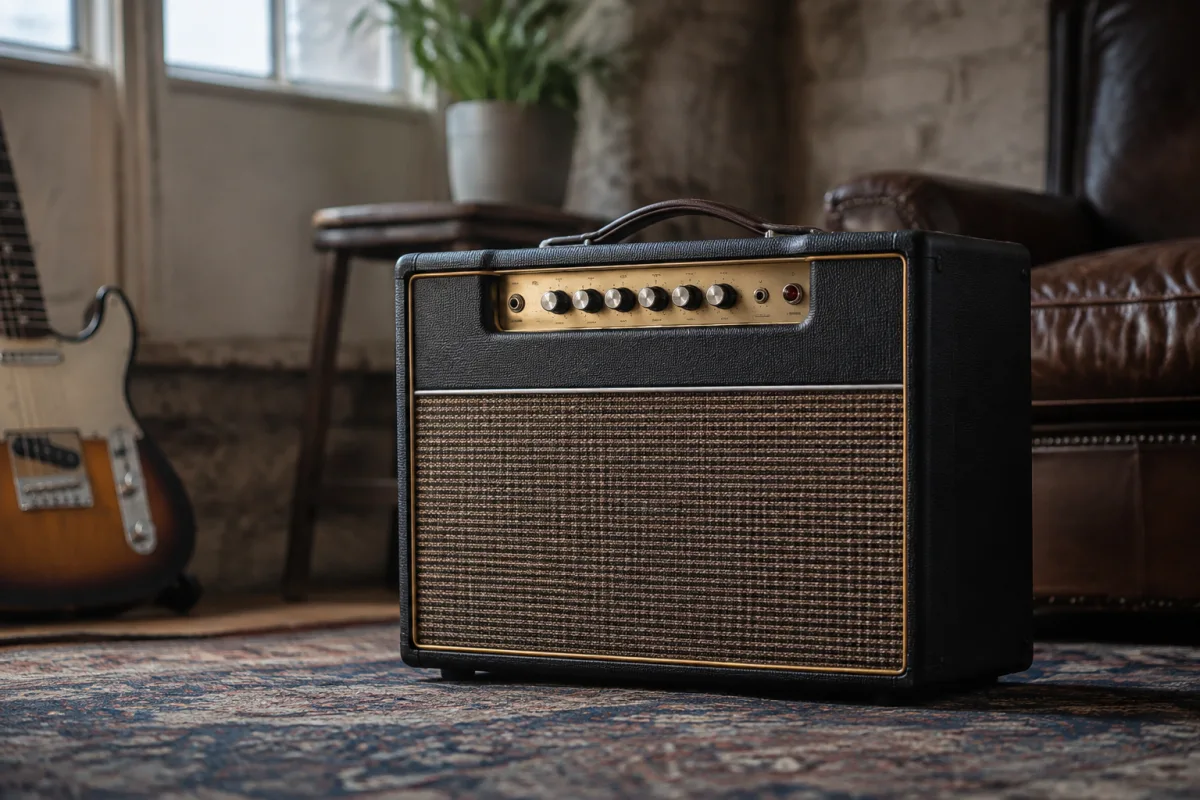
You've just brought home your new Marshall Class 5 amplifier, and you're probably wondering how such a tiny amp can deliver authentic Marshall tone. The answer is simpler than you might think, and getting great sound takes just minutes rather than hours of fiddling. This beginner's guide will walk you through setup, essential controls, and the small details that make the difference between a great-sounding practice amp and a frustrating experience with a Marshall Class 5.
Understanding What Makes Marshall Class 5 Special
The Marshall Class 5 is a 5-watt tube amplifier—small enough to fit on a table, yet powerful enough to deliver the classic Marshall rock tone at home. The Class 5 achieves this through all-tube construction and careful circuit design that captures Marshall's legendary sound without excessive volume. This is crucial to understand: a Marshall Class 5 can sound like a massive stage amp even at whisper-quiet bedroom volumes.
Many beginners mistakenly think "5 watts is weak," then turn up the volume searching for volume that isn't there. Understanding that tube amps don't scale linearly with wattage prevents frustration. Your Marshall Class 5 is designed to sound full and complete at low volumes.
Your First Setup: Getting Connected
Getting your Marshall Class 5 ready to play takes only five steps:
- Plug the power cable into a wall outlet and power on (switch on rear panel)
- Allow 30 seconds for tubes to warm up (you'll hear a subtle change in the amp's character)
- Connect your guitar cable to the input jack on the front
- Set the volume knob to around 2 on the dial (very low)
- Strum gently and listen—you should hear tone immediately
That's genuinely all it takes. Many first-time Marshall Class 5 users expect complexity and feel surprised at how straightforward it is. The simplicity is intentional—this amp prioritises playability over elaborate controls.
The Control Panel Explained: What You Actually Need
Your Marshall Class 5 has remarkably few controls, which is liberating:
- Volume: This is your primary control. Ranges from barely-there (1-2) to full volume (9-10). Start at 2 and gradually increase as you explore tone. Even at full volume, a Marshall Class 5 stays manageable in a bedroom.
- Tone: A single control (not bass/mid/treble separate). Turn clockwise for brighter tone; counterclockwise for darker, heavier tone. Start at 12 o'clock (center) and adjust subtly—this control is sensitive.
- Presence: This adds air and snap to your tone or makes it more compressed. 12 o'clock is neutral. Adjust slightly only after you're comfortable with volume and tone.
- Master Volume (optional rear panel): Some Marshall Class 5 models include this for overall output control. Leave it at maximum until you're confident with the front-panel volume.
That's genuinely the entire control panel. Your Marshall Class 5 intentionally strips away the complexity—the amp wants you focused on your playing, not knob-twisting.
Getting Your First Good Tone
This is where the Marshall Class 5 shines. Follow this sequence:
- Set volume to 2
- Set tone to 12 o'clock (center)
- Set presence to 12 o'clock (center)
- Plug in your guitar and strum a chord
- Listen to the natural tone—it should sound warm and slightly compressed, even at this low volume
- Slowly turn the tone control to find your preference (brighter or darker)
- Gradually increase volume until it matches your playing environment
Within five minutes, you'll have a tone that sounds professional. This is why the Marshall Class 5 is so beloved—the amp does the heavy lifting for you. Poor amplifier design requires constant tweaking; the Marshall Class 5 sounds great with minimal adjustment.
Understanding Tube Warmth: Why It Feels Different
Your first Marshall Class 5 experience might surprise you because tube tone is different from solid-state amps. You'll notice:
- Slight natural compression that makes everything feel punchier
- Warm, organic tone that responds to your playing dynamics
- A subtle bloom or sag when you hit hard—this is intentional and desirable
- At low volumes, the tone feels surprisingly full and complete
This is tube character, and it's what makes the Marshall Class 5 worth owning. Don't mistake the slight compression for something wrong—it's exactly what you want.
Common Beginner Mistakes With Marshall Class 5
Even with such a straightforward amp, newcomers still stumble:
- Assuming 5 watts means quiet: 5-watt tube amps are plenty loud. You're probably playing quieter than you think because the tone is so full.
- Constantly adjusting tone: The tone control is sensitive. Leave it at 12 o'clock for a week before tweaking. Let your ear adjust to the amp's character first.
- Forgetting to let tubes warm up: 30 seconds of warm-up time prevents harsh tone and extends tube life. Don't jump immediately to full volume.
- Expecting the same tone as a 100-watt Marshall stack: This amp sounds like a Marshall, but a small Marshall. It's not trying to replicate a stage amp; it's a professional practice tool.
- Using cheap guitar cables: A cheap cable can make even a Marshall Class 5 sound thin and microphonic. Invest in one decent cable—it makes a difference.
- Leaving the amp on after playing: Always power down when finished. Leaving tubes running unnecessarily shortens their lifespan.
Practice Volume and Headroom
One of the Marshall Class 5's greatest features is usable headroom at bedroom volumes. Here's the secret: this amp doesn't need to be loud to sound good. For practice:
- Set volume to 3-4 for typical bedroom practice
- You'll hear yourself clearly without disturbing neighbours or family
- The tone remains full and professional at this level
- You can push a little harder and the amp responds without distorting uncontrollably
Compare this to solid-state practice amps that sound thin at low volumes—your Marshall Class 5 is built differently.
Overdrive and Distortion: What to Expect
Push the volume knob above 5, and the Marshall Class 5 begins to overdrive naturally. You'll notice:
- The amp naturally breaks up as you increase volume
- There's no footswitch or overdrive channel—just the natural response of tubes to increasing input
- Even light overdrive sounds musical and responsive to your dynamics
- The amp won't sustain indefinitely like a solid-state distortion pedal—it compresses and blooms, then settles
This character is the Marshall Class 5's strength. It responds to your playing, not to preset settings.
Moving Forward: When You're Ready to Explore
After your first week with the Marshall Class 5, you'll be ready to experiment. Try a boost pedal in front to increase sustain. Experiment with the presence control to dial in more snap. Add reverb or delay if you want to expand the palette. But at this point, you'll do so from a position of understanding—not desperation.
Your Marshall Class 5 is designed to grow with you. It's honest in what it does—no pretence, no hidden complexity. That's the Marshall way.
For deeper exploration of tone-shaping, optional effects integration, and advanced techniques with the Marshall Class 5, see our complete guide to Marshall Class 5, which covers everything from pedal integration through studio recording applications.


Comments