


Marshall Class 5 Buying guide
Marshall Class 5: A Complete Buyer's Guide
The Marshall Class 5 is a 5-watt tube amp perfect for home recording and bedroom practise. This guide reveals whether it's right for you.
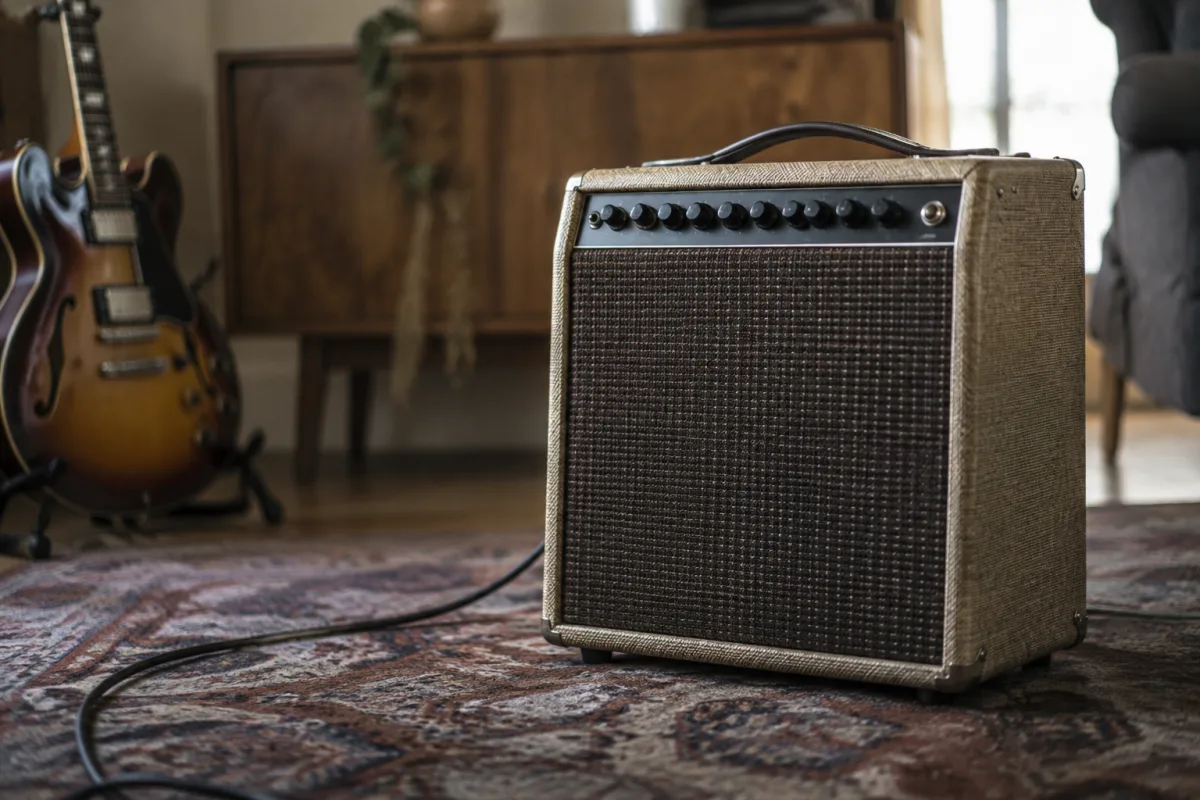
The Marshall Class 5 is a 5-watt tube amplifier designed for bedroom and studio recording, delivering classic Marshall tone at a realistic volume for your home. Buying a Marshall Class 5 requires understanding what 5 watts actually means, whether it suits your needs, and what extras you'll want alongside the amp.
What the Marshall Class 5 Is
The Marshall Class 5 is a compact tube amplifier with 5 watts of power, an EL84 power tube, hand-wired circuits and a single 8-inch speaker. It's built for players who want authentic Marshall crunch at bedroom volumes, without the 100-watt stage rig. Players love it for tone; the trade-off is volume — it's genuinely quiet.
Understanding 5 Watts
Before you buy a Marshall Class 5, understand what its 5-watt rating means. Five watts is very quiet. At bedroom level, even 1–2 watts through the Marshall Class 5 delivers usable tone. At full 5 watts, it's loud enough to annoy neighbours or family but not enough for rehearsal spaces or small venues.
The advantage: you get authentic Marshall tube breakup at low volumes. Most guitarists never push the Marshall Class 5 to full power. Instead, they dial in crunch at 2–3 watts, which is genuinely useful for home recording and practise.
Tone and Distortion
The Marshall Class 5 uses a single-channel design with just a tone control and volume knob. It's gloriously simple — no footswitches, no reverb, no bells. Turn it up past midway and the Marshall Class 5 breaks into classic rock crunch. It's not designed for ultra-heavy metal; it excels at blues, classic rock and punk.
The EL84 power tube colours the tone warmly. High-gain metal players find the Marshall Class 5 lacking (the amp itself is the bottleneck). For everyone else, the tone is genuinely inspiring.
Speaker and Cabinet Considerations
The Marshall Class 5 comes with a built-in 8-inch speaker in a small cabinet. This speaker is adequate but not exceptional; it colours the tone and limits the low-end. Some players buy a Marshall Class 5 and later upgrade to an external speaker cabinet, which opens up the amp's potential.
If you're buying a Marshall Class 5, consider whether you might want to run it into an external cabinet later. The amp has a speaker output, so this upgrade path exists (though external cabinets cost £150+).
Power Scaling Feature
The Marshall Class 5 includes power scaling, letting you reduce volume while maintaining tone. At 5 watts full, 2.5 watts half, 1.25 watts quarter. This is brilliant for bedroom recording because you get real tube breakup at 1–2 watts, which is actually usable volume in a home.
Connections and Features
The Marshall Class 5 is spartan:
- Input: One 1/4" jack (standard guitar cable)
- Output: Speaker out (8 ohms, must be used)
- Power: 120v AC in (check your local voltage before buying)
- Controls: Master volume, gain and tone
No auxiliary inputs, no headphone out, no USB. This is a pure, simple amplifier. If you need effects or amp modelling, a Marshall Class 5 isn't the answer.
Price and Value
The Marshall Class 5 typically costs £200–300 new. Used examples are harder to find but occasionally appear at £150–250. For a genuine tube amp with Marshall heritage, this is reasonable value. Solid-state bedroom amps cost less; boutique tube amps cost far more.
Recording Qualities
The Marshall Class 5 is beloved by recording guitarists. Mic it up with a condenser microphone and you capture beautiful tube tone at bedroom volume. The simplicity works in your favour — fewer options mean fewer things to second-guess. It records surprisingly well for such a small amp.
Common Buying Mistakes
Avoid these when considering a Marshall Class 5:
- Expecting rehearsal-space volume: The Marshall Class 5 is bedroom quiet even at full power. If you need to jam with a band, this amp won't cut it without going through a PA.
- Assuming you'll never use an external cabinet: Many Marshall Class 5 owners eventually buy a cabinet. If budget is tight, start with the amp, but know this upgrade might appeal later.
- Plugging it in without checking voltage: The Marshall Class 5 is available in 120v (US/Japan) and 240v (UK/EU). Plugging the wrong voltage will destroy it. Confirm before buying.
- Expecting digital features: The Marshall Class 5 has no amp modelling, effects or USB. It's analogue and simple; if you need those features, look elsewhere.
- Forgetting the speaker cable: You need a speaker cable (different from instrument cables) to connect the Marshall Class 5 to its speaker. Instrument cables can damage the amp. Budget for the right cable.
Who Should Buy a Marshall Class 5?
The Marshall Class 5 suits bedroom guitarists and recording enthusiasts who want authentic tube tone at realistic volumes. It's not suitable for band rehearsals or small venues. It's perfect for home recording and inspired practise sessions.
If you're disciplined enough to embrace a simple amp without effects or flexibility, the Marshall Class 5 rewards you with beautiful tone that makes you want to play. For musicians who thrive with limitations, it's genuinely magical. For context on Marshall amplifiers and their place in rock history, explore our complete guide to Marshall Class 5 amps.


Comments