


Marshall 1987 Amp article
Marshall 1987 Amp for Beginners: A Complete Guide
Getting started with a Marshall 1987 amp doesn't require technical expertise. This beginner's guide covers safe operation, controls, tone settings, and first steps so you play confidently from day one.
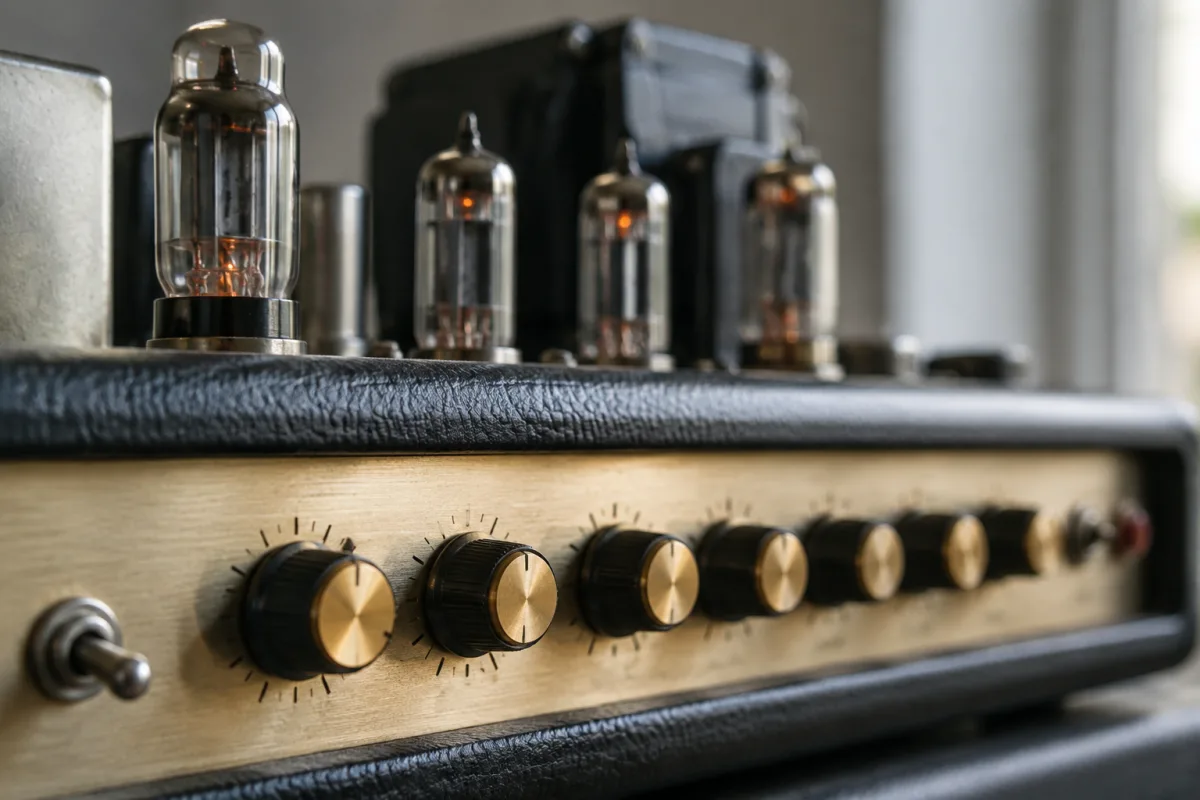
If you've just acquired a Marshall 1987 amp and you're staring at a panel full of knobs and switches, take a breath — you're not alone. This Marshall 1987 amp is one of the most coveted models in rock history, but it's intimidating for players new to tube equipment. This guide walks you through the first steps with your new Marshall 1987 amp, explains what each control actually does, and shows you how to coax brilliant tones without damaging anything or breaking the bank on repairs.
First Things First: Safety and Setup
Before you plug it in, remember that tube equipment runs hot — literally and figuratively. Always power it on with the standby switch first, let it warm up for 30 seconds, then flip standby off. This protects the tubes and transformers. Conversely, when you're done playing, flip standby on, wait a few seconds, then power down. Never flip the power switch directly off without using standby; you'll shorten tube life dramatically.
Position it in a well-ventilated space. Never cover the back or sides with towels or close it in a cupboard. The amp needs air circulation, or the tubes will cook themselves to death. If you're in a bedroom, pointing it slightly away from your ears actually helps — you'll hear the full tone without ears ringing at day's end.
The Gain and Volume Dance
New players often crank both the gain and volume knobs, expecting instant rock. That's the fastest way to annoying neighbour complaints and distorted mud. The gain and volume controls work together, and understanding their relationship transforms your tone on a Marshall 1987 amp.
Start with both knobs at 9 o'clock (well below noon). Plug in your guitar and play gently. Slowly turn up the volume knob first until you reach a comfortable listening level — usually around 11 o'clock. This sets your overall output loudness. Now adjust the gain: turning it up adds grit and sustain to your tone without making it any louder. Gain shapes the character; volume sets the volume. Beginners mix them up constantly.
A good starting point for bedroom playing: volume at 10–11 o'clock, gain at 10–11 o'clock. This delivers satisfying overdrive without waking your housemates.
The Presence and Resonance Controls
These two controls come second to gain and volume in importance, but beginners usually ignore them. Presence adds treble and cut — dial it up and your tone snaps; dial it down and it's smooth and dark. Resonance adds bass thickness and weight.
A sensible starting point is presence around 12 o'clock and resonance around 1 o'clock. Play a few chords. If your tone sounds thin or weak, nudge resonance up. If it's too bright and shrill, dial presence down. These are tone-shapers, not volume controls, so tweak them by small amounts (half a turn) and listen to the change.
Understanding the Channels
Your Marshall 1987 amp offers multiple channels: a clean channel, a crunch channel, and a lead channel. New players often assume they need to switch channels to change tones. You don't — the gain and volume controls on one channel can cover all territory from clean to crunch to roaring lead, and most beginners never touch channel switching.
Start on the lead channel. Its voicing is most forgiving for players learning to shape tone. If you want cleaner sounds, gradually lower the gain; you'll find a sweet spot between crystal-clear cleans and crunchy rhythm tones without ever touching a footswitch.
Getting Clean Tones
Tube amps at bedroom volumes are naturally a bit overdriven. Your Marshall 1987 amp is especially voiced for crunch and lead, so coaxing truly clean tones is harder than on a solid-state amp. Here's the trick: run the volume low (8 o'clock), set the gain even lower (7 o'clock), and make sure your guitar's volume knob is wide open. Now play lightly — this combination gives you the cleanest tones it can muster.
If you need pristine cleans, consider running your guitar through a separate clean boost pedal before the amp, or switching to the amp's dedicated clean channel if it has one. It's built for grit; asking it to sound like a jazz amp is fighting its nature.
Common Beginner Mistakes to Avoid
Don't leave it running for hours when you're not playing. Tubes have a finite lifespan, and running them idle wears them. Power down when you're done.
Never run it into a closed-back cabinet in a tiny room. The amp and cabinet together amplify each other's frequencies, and the result is boomy, muddy tone. If your space is small, you can actually achieve better tone by running it at lower volumes.
Avoid cranking the presence knob all the way up, expecting "brightness." Most new players do this and end up with a shrill, fatiguing tone. Presence at 12 o'clock is almost always enough; dial it back if you've been turning it higher than that.
Don't assume it needs frequent tube replacement. If it's working, leave it alone. Tubes are expensive (£15–£50 each), and replacing them without need wastes money. You'll know when tubes are dying: the amp will lose headroom, distort differently, or cut out intermittently.
Pedals and Your Marshall 1987 Amp
Running effects pedals through it opens up endless tonal possibilities, but don't swamp the amp's natural character. Start with one or two favourite pedals — perhaps a delay and a reverb. Plug them into the amp's effects loop (if it has one), which sits between the preamp and power amp, letting you add space and texture without muddying the core tone.
If it has no effects loop, run pedals in front of the amp. Keep them subtle at first; heavy effects can obscure the amp's beautiful natural tone.
Dialling In Tone: A Simple Roadmap
Here's a repeatable path: start with volume and gain both at 9 o'clock. Slowly raise volume to a comfortable level. Then, while playing a chord progression, gradually increase gain, listening to the tone thicken and grit emerge. Stop when the tone sounds good to your ear — that's your baseline. From there, tweak presence and resonance by half-turns. Save your favourite settings by taking a photo of the knob positions.
When to Seek Help
If it hums, crackles, or cuts out, don't mess with it yourself — take it to a tech. Tube amps carry dangerous voltage even when powered down. A tech visit (£40–£100) is cheap compared to replacing expensive components you've damaged tinkering.
For deeper learning, read the complete guide to Marshall 1987 amps to understand the amp's history, circuitry, and professional-level tone tweaking. That covers the technical deep-dive; this piece is purely about getting started without fear.
It's a tool, not a rocket ship. Treat it with basic respect (standby switch, ventilation, gentle initial handling), start with safe knob positions, and let your ears guide you from there. In a few weeks of regular playing, dialling in tone will feel as natural as adjusting your guitar's volume knob. Enjoy the journey.



Comments