


Bass Guitar Pedal Tuner article
Bass Guitar Pedal Tuner for Beginners: A Complete Guide
A bass guitar pedal tuner ensures accurate tuning and integrates seamlessly into your pedalboard. Discover why it's an essential tool for beginners serious about their craft.
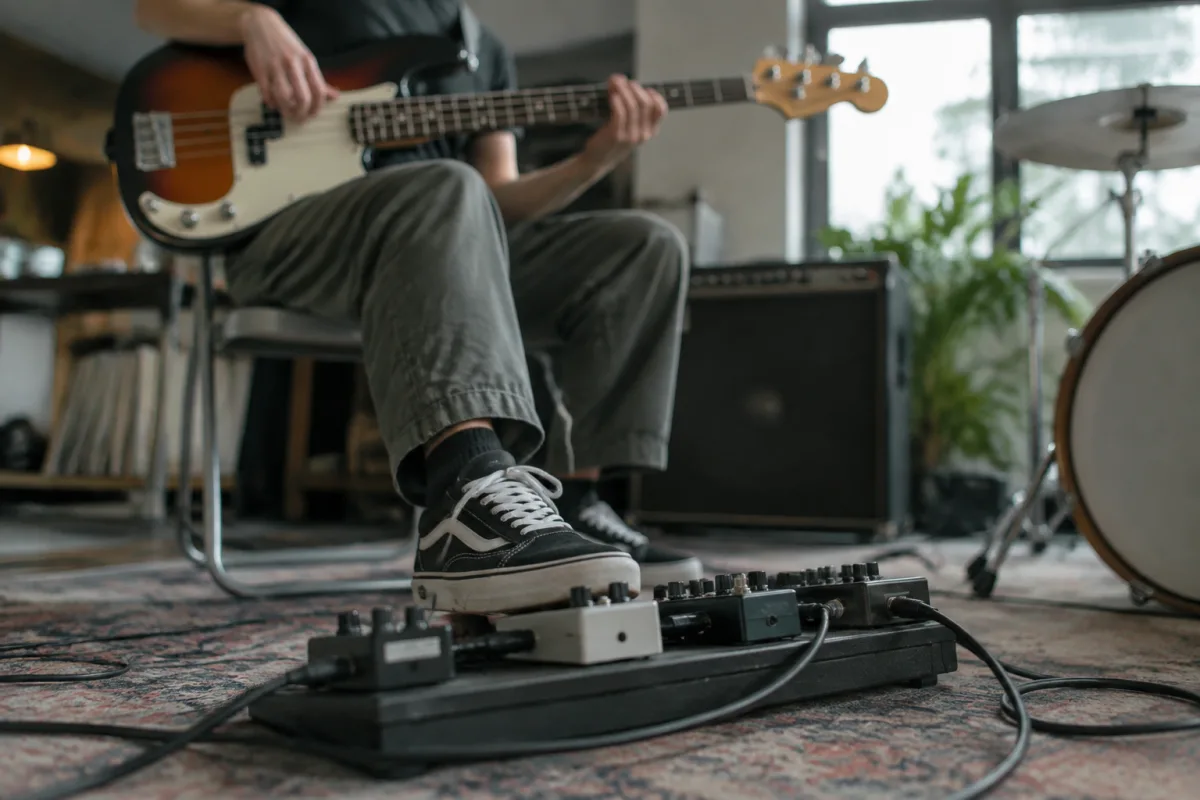
As a beginning bassist, you've probably learned that keeping your bass properly tuned is essential for sounding good and feeling good about your playing. You might be using a smartphone app or clip-on tuner, which work adequately, but a dedicated bass guitar pedal tuner represents a significant upgrade to your setup. If you're feeling uncertain about whether you need one, how they work, or how to choose, this beginner's guide demystifies bass guitar pedal tuners and shows you why they're such a valuable investment for any bassist serious about their craft.
Why Bassist Use Pedal Tuners (and Why You Should Too)
A bass guitar pedal tuner serves a straightforward but critical function: it tunes your bass accurately and quickly, and it does so whilst integrating seamlessly into your effects chain. Unlike clip-on tuners or phone apps that require stopping your playing and fumbling with separate devices, a pedal tuner sits on your pedalboard, ready to use instantly without breaking your flow.
More importantly, a quality pedal tuner includes features specifically designed for bass players. Bass notes have low frequencies that challenge many tuning devices. Dedicated bass pedal tuners have algorithms tuned for these low frequencies, ensuring accurate tuning of your low B string (if you use a 5-string bass) and deep fundamental notes on standard 4-string basses.
Understanding Pedal Tuners: What They Are and How They Work
A bass guitar pedal tuner is simply a tuning device housed in a pedalboard-compatible format. You plug your bass into one side and your effects chain into the other. When you press the pedal to activate tuning mode, it mutes your output and displays tuning information on a built-in display. This allows you to tune during rehearsals or gigs without your band hearing you hunting for proper tuning.
The muting function matters tremendously in live or group playing situations. A squealing bass string trying to find the right pitch sounds terrible and disrupts your ensemble. Pedal tuners eliminate this problem entirely—the output mutes until you've achieved accurate tuning and deactivated the tuner.
Key Advantages of Bass Pedal Tuners for Beginners
Why invest in a dedicated pedal tuner rather than using free or inexpensive alternatives?
- Accuracy for Low Frequencies: Bass notes occupy the low frequency spectrum. Dedicated bass tuners handle these frequencies more accurately than general-purpose tuners or phone apps designed for all instruments.
- Fast Response Time: Quality pedal tuners respond almost instantaneously to string changes, providing feedback as quickly as you can adjust your tuning pegs.
- Large Display: Stage and rehearsal environments can be dimly lit. Pedal tuners feature large, bright displays visible from several feet away, unlike tiny phone screens or small clip-on tuner displays.
- Built-in Muting: The ability to mute your signal whilst tuning prevents audio disasters during performances or rehearsals.
- Integrated Pedalboard Workflow: Rather than hunting for a separate tuning device, your tuner sits on your pedalboard where your feet naturally rest, making tuning a seamless workflow element.
- Pedalboard Integration: Quality pedal tuners pass audio through smoothly without signal loss, becoming invisible to your overall tone when inactive.
Common Beginner Misconceptions About Pedal Tuners
Several myths discourage beginners from investing in quality tuners. Let's dispel them:
"Phone App Tuners Work Fine": Phone apps work reasonably for practice but struggle with low bass frequencies and the acoustic noise of rehearsal spaces. Pedal tuners designed specifically for bass provide superior accuracy and responsiveness.
"Expensive Tuners Sound Better": Tuners don't affect your tone directly—they simply measure pitch. Expensive models offer additional features (like setlist storage) but don't improve fundamental tuning accuracy significantly beyond mid-range options.
"I Don't Need a Tuner if I Use My Ears": Training your ear to recognize tuning accuracy is valuable, but relying exclusively on ear training leads to drifting intonation, especially under performance stress. Combining ear training with tuner-verified accuracy develops proper technique most effectively.
"Clip-on Tuners Are Just as Good": Clip-on tuners can be accurate but require stopping and accessing the tuner, interrupt your playing flow, and often remain backstage when needed. Pedal tuners eliminate these workflow disruptions.
Getting Started: Your First Week with a Pedal Tuner
Day 1-2: Research beginner-friendly bass pedal tuners. Read reviews focused on accuracy, responsiveness, and ease of use rather than premium features.
Day 3-5: Purchase your chosen tuner. Unbox it and familiarize yourself with the interface—typically an on/off switch, display showing note and tuning status, and a foot switch to activate tuning mode.
Day 6: Mount your tuner on your pedalboard in a convenient position (typically at the beginning of your effects chain, right after your bass input). Connect your bass to the tuner input and the tuner output to the first effect or directly to your amplifier.
Day 7 onwards: Begin using your tuner before every practice and rehearsal session. Develop the habit of checking tuning accuracy regularly, even if your bass seems close. This habit prevents intonation drift that accumulates over long playing sessions.
Proper Pedal Tuner Setup and Integration
Position your bass pedal tuner at the beginning of your effects chain—right after your bass and before other pedals. This placement gives you a clean, unprocessed signal to evaluate tuning accuracy. Some bassists prefer tuning before applying heavy effects processing; others find tuning after effects more accurate for their specific setup. Experiment and find what works for your ears.
Connect your tuner using quality short cables. A loose or poor-quality connection creates intermittent signal loss or noise that interferes with accurate tuning. Take time setting up your tuner connections properly—this small investment prevents frustration later.
Understanding Tuning Accuracy and Your Responsibilities
A pedal tuner provides visual feedback that you're tuned accurately, but you're still responsible for turning the tuning pegs. Most tuners display tuning status with visual indicators: a green light typically indicates proper tuning, whilst red indicates you're sharp or flat. Your job is adjusting tuning pegs based on this feedback until you achieve the green light.
Developing fine motor control over your tuning pegs improves with practice. Early on, you might overshoot (turn too far) before achieving accurate tuning. This is completely normal and improves rapidly with repetition. The tuner provides feedback; you provide the mechanical adjustment.
Budget Expectations for Bass Pedal Tuners
Quality bass pedal tuners range from £50 to £200. Entry-level models (£50-£80) offer accurate tuning and reliable functionality for most beginners. Mid-range tuners (£80-£150) include additional features like customisable note names or alternative tunings. Premium models (over £150) add convenience features that matter less to beginners.
For your first bass pedal tuner, budget £60-£100 for a reliable model that will serve you for years. This investment ensures accurate tuning and integrates seamlessly into your pedalboard setup.
Common Mistakes Beginners Make with Pedal Tuners
Avoiding Tuner Use Between Songs: Some beginners think checking tuning feels unnecessary or awkward between songs. Pitch accuracy drifts over time—checking regularly maintains consistent tuning quality. Make it a non-negotiable habit.
Tuning Too Quickly: Rushing tuning increases errors. Take your time adjusting pegs until the tuner confirms accuracy. Ten extra seconds spent tuning carefully prevents songs sounding out of tune.
Neglecting Mute Function Testing: Before your first gig, ensure the mute function works correctly. Test it during rehearsals so you know it responds as expected under performance conditions.
Using Damaged Cables: Poor-quality connections to your tuner result in erratic tuning feedback. Inspect your tuner cables regularly and replace damaged ones immediately.
Maintenance and Long-Term Care
Bass pedal tuners require minimal maintenance. Keep the tuner clean and protected from excessive moisture. Check battery status regularly if your tuner uses batteries (though most modern models include USB power options). Inspect the foot switch periodically—with heavy use during rehearsals and gigs, foot switches eventually need replacement, though this is a simple, inexpensive service.
For comprehensive information about alternative tuning methods and advanced tuner features, explore our complete guide to bass guitar pedal tuners.
Building Tuning Accuracy Into Your Practice Routine
A bass guitar pedal tuner isn't simply a convenience—it's an essential tool supporting consistent performance quality. Professional bassists at all levels rely on accurate tuning to deliver the best possible sound. By establishing proper tuning habits from the beginning of your bass journey, you're building a foundation that supports every aspect of your playing development.
Invest in a quality pedal tuner designed specifically for bass, position it prominently on your pedalboard, and make tuning accuracy a non-negotiable part of every rehearsal and performance. This single investment supports decades of reliable, professional-sounding bass playing.



Comments