


Electro Harmonix Pedal article
Everything You Need to Know About Electro Harmonix Big Muff Pedal
Electro Harmonix pedals deliver character and personality that define classic rock and alternative tones. From the iconic Big Muff to beloved effects like the Small Clone, explore why these pedals remain essential.
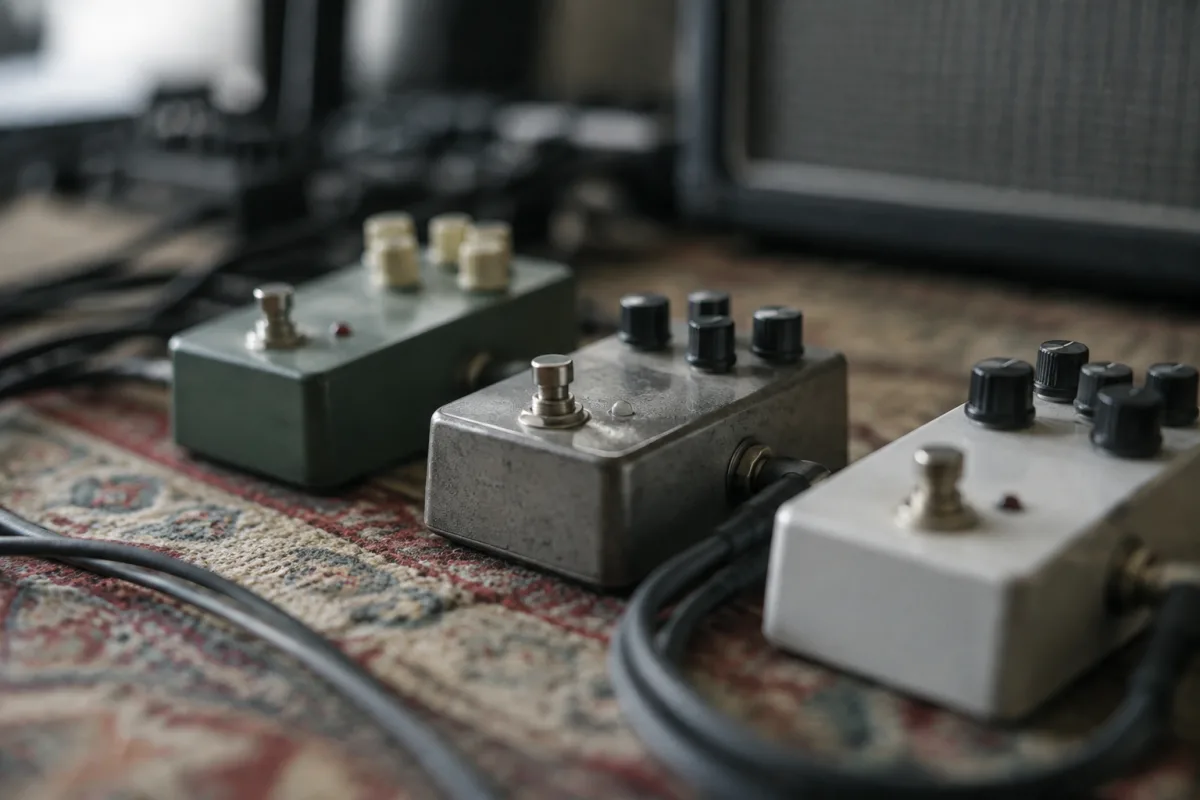
Electro Harmonix has been building pedals and tubes for over 60 years, establishing itself as the brand for players who want character, grit, and the kind of personality that defines classic rock and alternative tones. An Electro Harmonix pedal isn't the first choice if you want clinical perfection—it's the choice if you want something to actually hear, something that bends and colours your tone in ways that sound deliberately musical rather than mathematically correct.
The Philosophy Behind Electro Harmonix
Electro Harmonix distinguishes itself through unabashed analogue design and a willingness to sound like itself. The company doesn't chase digital perfection or try to emulate boutique builders. Instead, Electro Harmonix pedals embrace warmth, harmonic richness, and a slightly lo-fi character that many players find irresistible. This isn't accidental—it's the engineering choice of people who understand that great tone often lives in the imperfections.
The brand's heritage in tube manufacturing influences how they design effects. There's a respect for valve characteristics, an understanding of how saturation and harmonic distortion actually work. This philosophy runs through every pedal Electro Harmonix makes, from the gentlest overdrive to the most extreme fuzz.
The Big Muff: An Icon
No Electro Harmonix pedal conversation starts anywhere except the Big Muff—one of the most iconic fuzz pedals ever built. The Big Muff's tone is unmistakable: thick, fuzzy, gloriously aggressive, and somehow still articulate enough that you can hear what you're playing even when it's completely buried in distortion. Countless alternative rock records are built on the Big Muff's growl.
The pedal itself is straightforward—just tone, volume, and fuzz controls—yet each iteration offers distinct character. Vintage Big Muff units from the 1970s sound warmer and fuzzier than modern versions. Each reissue brings slightly different sonic colour. Musicians collect Big Muffs from different eras specifically for these tonal variations, proof that Electro Harmonix crafted something genuinely timeless.
Beyond the Big Muff: Other Classic Electro Harmonix Pedals
The Small Clone chorus pedal delivers that lush, shimmering texture that defined shoegaze and alternative rock production. Unlike digital choruses that can sound thin, a Small Clone sounds organic and slightly spacey—it's the sound of 80s and 90s alternative guitar.
The Deluxe Memory Man delay reissue brings decades of delay character into modern production. It's not pristine or clinical; it's musical and slightly vintage-sounding, which many players find more inspiring than pin-perfect digital delays. The tape-like warmth influences every delayed note you play.
The Octave Multiplexer creates octave effects that sound almost syth-like—thick, present, and capable of transforming your tone completely. It's a specialist tool, but for players working in experimental or heavy music, it's irreplaceable.
Distortion and Overdrive Options
Electro Harmonix makes surprisingly refined overdrive pedals. The OD Glove offers creamy, smooth overdrive perfect for blues and rock rhythm. It stacks beautifully with fuzz pedals, adding warmth underneath aggression. The tone knob is genuinely useful, giving you control from dark and thick to bright and cutting.
The Double Muff combines two muff circuits in series, offering stacked fuzz possibilities. It's not for everyone—it's specifically for players chasing extreme gain and harmonic richness—but when you need it, nothing else sounds quite like it.
Modulation and Time-Based Effects
The Holy Grail reverb reissue brought algorithmic reverb into the stompbox world at an affordable price. It's not boutique-level reverb, but it's genuinely musical and expressive. For players who want studio-quality reverb without digital latency or MIDI complexity, the Holy Grail remains unbeaten.
The Epitome combines reverb, delay, and modulation—essentially a multi-effects unit in pedal form. It's the choice for players who want atmospheric options without the learning curve of a full-featured digital system. The controls feel immediate and musical rather than menu-diving.
Why Choose Electro Harmonix?
Players choose Electro Harmonix pedals because they sound like something. A Big Muff sounds like a Big Muff; it doesn't try to be neutral or emulate something else. The Small Clone sounds like itself—rich, slightly vintage, characterful. This philosophy means that Electro Harmonix pedals are easier to use as starting points for your tone than generic multi-effects, because they already have personality.
Build quality is solid. These pedals are workhorses used in recording studios and touring rigs. They're not precious or fragile; they're designed to be gigged and recorded with. The warranty support is reasonable, and repair documentation is usually available.
Resale value remains strong, particularly for classic models. Vintage Big Muffs and Small Clones command respect in the secondhand market because players actively seek them out. If you buy an Electro Harmonix pedal, you're unlikely to lose money.
The Downsides
Electro Harmonix pedals aren't for everyone. If you prefer clinical precision or cutting-edge digital algorithms, you'll find them slightly lo-fi. The tone controls are sometimes less surgical than boutique pedals. The vintage character that defines their appeal is explicitly not modern or clinical.
Some pedals are capacitor-heavy, meaning they can be noisy or susceptible to temperature changes. This is part of the analogue charm to some players and a drawback to others. Electro Harmonix is honest about this—the pedals are what they are.
Building a Pedalboard With Electro Harmonix
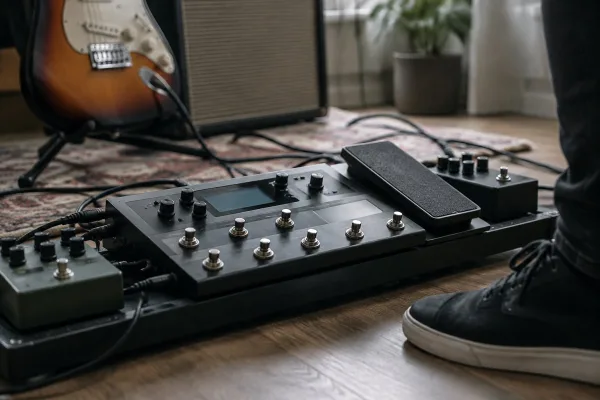
An Electro Harmonix-based pedalboard typically combines a drive pedal, a time-based effect, and a modulation. Many players find that a Big Muff, a Memory Man, and a Small Clone give you an absolutely complete tone suitable for rock, alternative, and experimental music. Add a simple overdrive for rhythm work, and you have everything.
Electro Harmonix pedals tend to stack beautifully—overdrives and fuzzes combine naturally rather than fighting each other, delays respond musically to distortion, modulation sweetens aggressive effects. The analogue character means the interactions sound organic.
Vintage vs. Modern Electro Harmonix
Original 1970s Electro Harmonix pedals (particularly Big Muffs) are sought-after and expensive. They sound warmer and fuzzier than modern reissues, partly due to different component tolerances and partly genuine difference in design. However, modern Electro Harmonix reissues are genuinely good—they capture the character without the expense or reliability risks of true vintage.
The company has been meticulous about authenticity in reissues. Compare a modern Big Muff to the original circuit design and you'll find the same topology, similar components (within modern sourcing constraints), and genuine effort to reproduce the original sound. This respect for heritage distinguishes Electro Harmonix from companies that milk nostalgia without substance.
The Electro Harmonix Community
Electro Harmonix pedals have a devoted following. Online forums and communities actively discuss and modify these pedals, share tone recommendations, and trade stories about their Big Muffs. This community aspect adds value—if you have questions about a pedal or want mod suggestions, other players are usually eager to help.
The Bottom Line
Electro Harmonix pedals remain essential for players chasing tone character over clinical perfection. Whether you're drawn to the iconic Big Muff or exploring the company's deeper catalogue, you're getting pedals designed by people who care about how they sound, not just what specs they hit. That philosophy hasn't changed in six decades, and it's why Electro Harmonix remains relevant.





Comments