


Electro Harmonix Pedal article
Electro Harmonix Pedal for Beginners: A Complete Guide
Starting with Electro-Harmonix pedals opens exciting musical possibilities. This beginner's guide covers effect fundamentals, why Electro-Harmonix suits new players, pedal categories, selection advice, and practical guidance for mastering your first effects pedal.
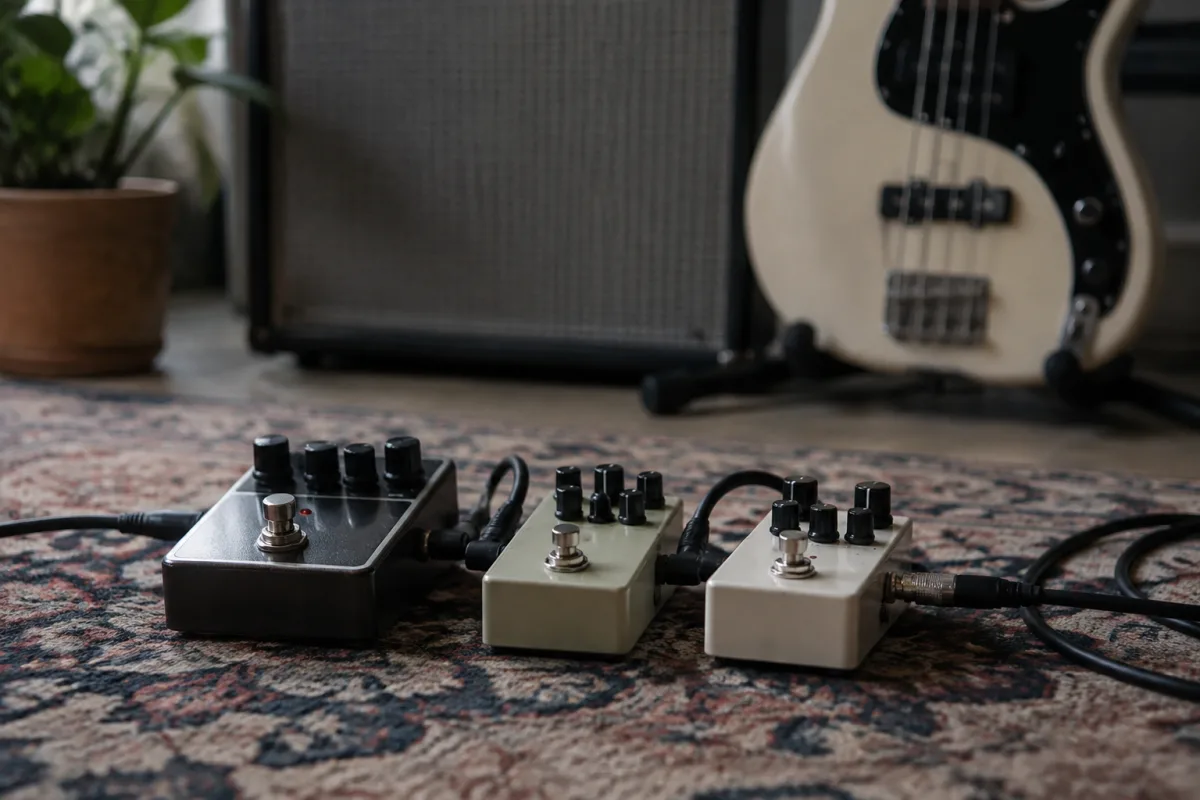
Adding effects to your guitar or bass through pedals represents an exciting musical step. Electro-Harmonix pedals have served musicians for decades, from bedroom hobbyists through legendary studio professionals. Beginning players often feel overwhelmed by effects options, uncertain which pedals actually enhance their playing versus which waste money. This beginner's guide addresses the fundamentals of effects pedals, explains why Electro-Harmonix specifically suits developing musicians, and walks you through selecting your first pedal without overcomplicate your setup or budget.
Understanding Effects Pedals Fundamentally
Effects pedals are standalone devices that process your instrument's signal, altering tone characteristics. A distortion pedal adds harmonic content and aggression. A reverb pedal simulates spatial ambience. A delay pedal repeats notes. Each effect category serves distinct musical purposes. Beginners often assume they need numerous pedals to sound "professional"—this is false. Single-effect mastery outweighs casual access to dozens of effects you don't understand.
Why Electro-Harmonix Suits Beginner Musicians
Electro-Harmonix occupies a unique market position. The brand manufactures professional-quality effects at genuinely affordable pricing. You're not purchasing toys or introductory-level products; Electro-Harmonix pedals are used by touring professionals and studio musicians. Starting with Electro-Harmonix means you're learning on equipment that will serve your entire musical journey, not requiring replacement as your skills develop. The company's reputation for reliability ensures your pedal will function reliably through years of use.
Common Electro-Harmonix Pedals for Beginners
Electro-Harmonix produces several pedals specifically suited to beginning effects users. The Big Muff Pi represents their legendary fuzz pedal—a distortion effect that adds aggressive harmonic content. The Tube Screamer-style overdrive offers gentle distortion and tone shaping. The Holy Grail reverb provides ambient spatial effects. The Memory Man delay adds echo and rhythmic dimension. Starting with one of these categories—choosing based on the sound you want—prevents gear overwhelm and keeps budgets manageable.
Effect Categories Explained for Beginners
Effects generally fall into several categories, each serving distinct purposes:
- Distortion/Overdrive/Fuzz: Adds aggressive harmonic content and sustain. Essential for rock and heavy music. Overdrive adds gentler aggression; fuzz provides extreme character.
- Reverb: Creates spatial ambience, simulating room acoustics. Useful in all genres; adds depth and dimension to tone.
- Delay: Repeats notes at controllable intervals, creating echo effects. Rhythmic dimension and ambient space.
- Modulation (Chorus, Phaser, Flanger): Modulates tone characteristics, creating movement and texture. Subtle or extreme depending on settings.
- Compression: Controls dynamic range, evening out note volumes. Particularly useful for bass and dynamic playing styles.
Choosing Your First Effect Thoughtfully
Begin by honestly evaluating your musical direction. Rock players need distortion. Jazz players might prioritise reverb and compression. Ambient players love delay. Your first pedal should complement your actual playing style and musical goals. Resist purchasing "because it sounds cool" without connecting it to your musical vision. This discipline prevents accumulating pedals you never use.
Quality Versus Quantity Philosophy
One high-quality Electro-Harmonix pedal beats five cheap alternatives. Mastering a single effect deeply teaches you actual effect usage principles that transfer to other pedals. Attempting to use five different effects simultaneously creates sonic chaos and obscures your actual playing. Professional musicians often use remarkably few pedals, chosen specifically for their sound and applied with discipline.
| Beginner Scenario | Recommended Electro-Harmonix Pedal | Purpose | Investment |
|---|---|---|---|
| Rock/Heavy Music | Big Muff Pi or Tube Screamer | Harmonic content and aggression | £80-120 |
| Jazz/Blues | Holy Grail Reverb or Tube Screamer | Spatial ambience and tone shaping | £100-150 |
| Ambient/Experimental | Memory Man Delay or Holy Grail | Echo and spatial effects | £120-180 |
| General Exploration | Micro Reverb (compact size) | Spatial ambience, portable | £70-100 |
Pedal Chain Basics for Beginners
When you eventually add more pedals, order matters. Typically: instrument → tuner → compression → distortion/overdrive → modulation → reverb/delay → amplifier. This signal flow respects how effects interact sonically. Don't overthink this initially; single-pedal learning eliminates chain complications entirely.
Common Beginner Pedal Mistakes
Don't assume maximum effect intensity sounds good. Subtle reverb and delay enhance tone; excessive application destroys clarity. Don't stack multiple distortion pedals hoping for more aggression—one well-chosen distortion pedal outperforms combinations. Don't purchase pedals because other players use them; your musical context differs, potentially making popular effects irrelevant for your playing.
Pedal Power and Connections
Most Electro-Harmonix pedals run on 9-volt batteries or AC adapters (supplied). Expect approximately 20-40 hours battery life before replacement. For regular practice and gigging, power supplies (£20-50) eliminate constant battery replacement and provide reliable operation. Cables connecting instrument to pedal to amplifier (£15-30) should be quality—cheap cables add noise and create connectivity issues.
Learning Through Experimentation
Effects pedals encourage experimentation and creative sound exploration. Don't feel obligated to use effects "correctly"—discover unexpected sonic possibilities through thoughtful knob adjustments. Some legendary guitar sounds emerged from happy accidents with pedal settings. Embrace exploration whilst maintaining discipline about your actual musical goals.
Broader Electro-Harmonix Pedal Context
For comprehensive information on Electro-Harmonix pedal models, technical specifications, and detailed comparisons, review our complete Electro-Harmonix pedal guide, which covers heritage, model variations, and sonic characteristics in depth.
Your First Pedal Investment
Purchasing your first Electro-Harmonix pedal opens sonic possibilities you've only imagined. The impact on your playing and musical expression is often profound—suddenly, tones you've heard in professional recordings become achievable through your own instrument. Start thoughtfully, choose based on your musical goals rather than trend-chasing, and prepare for the creative journey effects pedals enable. That discovery—finding your unique sonic voice through carefully chosen effects—represents the genuine value of investing in quality pedals.


Comments