


Delay Strymon Buying guide
Delay Strymon: A Complete Buyer's Guide
A Strymon delay pedal offers professional-grade effects quality. This guide helps you navigate the model lineup and find which Strymon delay suits your playing.
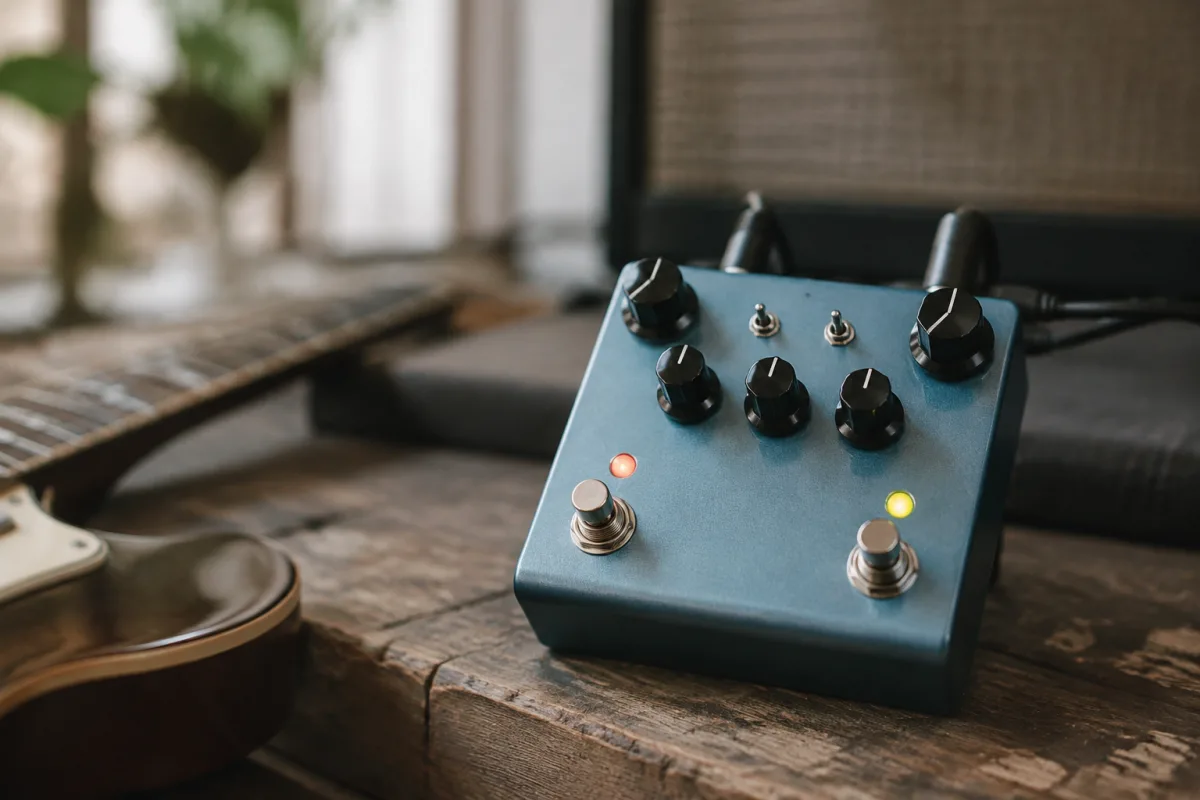
Buying a Strymon delay pedal means investing in professional-grade effects quality, but understanding which model suits your needs prevents overspending. This buying guide focuses on practical criteria: Strymon's delay technology, price tiers, key features worth paying for, and how to match a specific model to your playing style. Whether you're a bedroom guitarist or touring musician, you'll learn what to prioritise when choosing a delay Strymon pedal.
Understanding Strymon Delay Technology
Strymon specialises in algorithms—the digital code that generates sound. Their delay Strymon pedals are renowned for lush, musical tone rather than harsh digital artifacts. A delay Strymon pedal captures the character of classic delays (tape, analogue, digital spring) through meticulous sound design. The brand's reputation stems from obsessive attention to detail: algorithms that age naturally, controls that feel responsive, and a learning curve that rewards exploration. If you've tried budget delay pedals that sound cold or unnatural, a delay Strymon pedal will feel revelatory by comparison.
Strymon Delay Model Lineup Overview
Strymon's delay lineup includes several models, each targeting different players. The TimeLine is their flagship—a powerhouse with over 30 delay algorithms and full programmability, ideal for professional studio and stage work. The BigSky, while primarily a reverb pedal, includes exceptional delay algorithms. For minimalists, Strymon offers simpler delay Strymon models focused on core algorithms without overwhelming menu options. Understanding this variety prevents buying more features than you'll use.
Price Tiers and Value Proposition
A delay Strymon pedal typically costs GBP 300–500 depending on model. This positions Strymon significantly above budget brands like Boss but below ultra-premium boutique options. The price reflects professional build quality, proprietary algorithms, and decades of sonic engineering. For working musicians, a delay Strymon pedal often pays for itself through enhanced tone and stage reliability. For hobbyists, budget alternatives might suffice, but upgrading to Strymon typically generates genuine "wow, this is different" reactions.
Essential Features to Evaluate
When shopping for a delay Strymon pedal, prioritise algorithm quality (how good the delays sound) over algorithm quantity (number of choices). A delay Strymon pedal with five stunning algorithms beats one with fifty mediocre options. Check whether the pedal supports expression pedal control—this lets you automate delay time and feedback, expanding creative possibilities. Investigate whether the delay Strymon pedal can store presets; for touring musicians, recalling gigged-in tones instantly is invaluable. Finally, verify whether the pedal runs on battery or requires USB power; this affects portability and gigging convenience.
Comparing Strymon Delay Models
The TimeLine is Strymon's comprehensive delay pedal, offering 32 algorithms, dual footswitches, expression pedal support, and deep programmability. For experimentalists and professionals, a delay Strymon TimeLine justifies the premium through sheer capability. The Deco, while primarily a tape saturation pedal, includes surprising delay character perfect for understated vintage tones. The BigSky, though marketed as reverb, includes delay algorithms competitive with dedicated delay Strymon pedals. Understanding these overlaps helps you choose the right multi-effect or dedicated delay pedal for your needs.
Sound Character and Musicality
What sets a delay Strymon pedal apart from competitors? Musicality. The algorithms don't just repeat sound—they age it naturally, colour it subtly, and respond dynamically to playing dynamics. A delay Strymon pedal used as an ambient textural device sounds markedly different from the same effect on a budget pedal. Professional players often describe Strymon tone as "alive"—delays that seem to interact with your playing rather than simply repeating it. This quality justifies the premium for serious musicians.
Checking Condition on Used Models
Strymon pedals hold value well, making the secondhand market attractive. When buying used, inspect the footswitches for excessive wear, test all knobs and buttons for smooth response, and verify that the pedal powers up and boots without error. Ask whether the unit has been modded or repaired; this can affect reliability. A well-maintained used delay Strymon pedal at 60–70% of original retail price is excellent value and often preferable to a new budget alternative.
Integration With Your Existing Gear
Before buying a delay Strymon pedal, consider how it integrates with your board. Does your power supply have available 9V outputs? Is your board real estate sufficient? Will your delay Strymon pedal be the centerpiece (justifying dedicated space) or one effect among many (requiring compact mounting)? Compatibility matters more than in isolation; a beautiful delay Strymon pedal that doesn't fit your board architecture frustrates rather than inspires.
Avoiding Common Mistakes
Don't assume more algorithms equal better musicality—focus instead on how delays *sound*. Don't buy the flagship delay Strymon model unless you'll use its advanced features; entry-level Strymon delay options often satisfy serious hobbyists. Avoid buying based on aesthetics alone; Strymon's visual design is beautiful, but tone matters infinitely more. Finally, don't rush into purchase; live with your intended pedal borrowed or in a shop for a day if possible to ensure compatibility with your workflow.
Making Your Final Decision
List your genuine requirements: essential algorithms, programming needs, board space, and budget ceiling. Play through candidate delay Strymon models if possible, listening critically to how they handle your favourite sounds. Research user forums for practical gigging experiences. Trust tone more than specifications; a delay Strymon pedal should inspire you to create and experiment. Once committed, invest time learning its capabilities thoroughly rather than constantly tweaking settings.


Comments